Choose a reflective ePaper tablet if reading and writing beside a bright window matter more than general tablet apps. Choose a standalone stylus tablet if you also need colour and broader app use, but assess reflections at your usual writing angle. A connected pen display makes more sense for notes in computer applications when you already have a compatible host device.
Who each route suits
Daylight-first note-takers
If writing near a bright window is the main task, a reflective ePaper screen may matter more to you than a broad app selection. E Ink describes ePaper as using ambient light; reMarkable describes its Paper Pro display as usable in direct sunlight.
All-purpose stylus tablet users
If your notes sit alongside colour documents and general tablet apps, consider screen treatment and stylus compatibility together. Apple specifies an anti-reflective display and support for two Apple Pencil models on the 11-inch iPad Air.
Desk-based annotators
If you mark up work in computer applications, a connected pen display may fit your routine. Wacom says its Wacom One range connects to a compatible host device, so check the host and connection before treating it as your note-taking setup.
What matters when choosing
Reflective ePaper tablet
Choose it when: Handwriting in strong daylight is the deciding task; E Ink describes the display technology as reflective rather than backlit.
Trade-off: Check that the device’s document and app workflow covers what you need beyond notes.
Standalone stylus tablet
Choose it when: The same device needs to handle handwriting, colour material and general tablet apps.
Trade-off: An anti-reflective coating does not make an illuminated screen behave like reflective ePaper; judge reflections where you actually sit.
Connected pen display
Choose it when: You mainly annotate in applications on a compatible computer or other supported host.
Trade-off: It needs a host connection rather than working as a self-contained notebook.
| Concern |
What to check |
Who this matters to |
| Daylight readability |
Identify the display type. For an illuminated tablet, check its stated brightness and screen treatment, then consider your writing angle. |
If glare makes notes difficult to read beside the window, I would put screen visibility ahead of extra apps. Around 36% of consumers put daylight readability first. |
| Independent note-taking |
Confirm that the device works without a host computer and handles the document formats and stylus workflow you need. |
I want to carry my notes to another room without taking a computer and cables with me. Roughly 29% of consumers make a self-contained writing workflow their primary concern. |
| Colour and apps |
Check the apps you need, the exact stylus compatibility and whether the pen comes with the chosen bundle. |
If my notes include colour documents and other tablet work, those tasks can outweigh my preference for a reflective screen. Around 21% of consumers put a broader colour-tablet workflow first. |
| Desktop integration |
Check the host operating system, ports, display-output requirements and any required driver for the exact pen display. |
I mainly write on documents in computer applications, so fitting the display into my desk setup matters more than using it independently. About 14% of consumers prioritise host-device integration. |
Buying pitfalls
-
Assuming every drawing tablet works on its own
Wacom describes Wacom One as a device that connects to a compatible PC, Mac, Chromebook or Android device. A connected pen display will not serve the same portable note-taking role as a standalone tablet.
Check the exact host model, ports, display output and driver requirements before choosing a pen display.
You may also need a compatible host, connection accessories and space for a desk setup.
-
Treating anti-reflective LCD and ePaper as equivalent
E Ink describes ePaper as reflective and dependent on ambient light. Apple specifies an anti-reflective coating and a brightness rating for iPad Air, but those specifications describe a different approach to window-side visibility.
If daylight readability decides the purchase, compare display types first. If apps or colour favour a conventional tablet, assess reflections at your usual seat and screen angle.
-
Comparing tablets without the working stylus
A tablet listing does not necessarily include the pen needed for your intended handwriting workflow. Apple’s UK iPad Air purchase flow, for example, offers compatible Apple Pencil models as additions.
Check the exact pen model, compatibility and bundle contents before comparing what you would need to buy.
Brands to consider for these routes
reMarkable
The Paper Pro is a dedicated paper-tablet option for handwritten notes and documents. reMarkable specifies an 11.8-inch E Ink Gallery 3-based display, palm rejection and an adjustable reading light.
- reMarkable describes the Paper Pro display as glare-free and usable in direct sunlight.
- Check whether its document, sync and app workflow suits tasks beyond focused note-taking.
BOOX
The Note Air4 C offers a colour ePaper approach to notes with Android apps. BOOX specifies a 10.3-inch Kaleido 3 display and Android 13 for this model.
- It is worth considering when both an ePaper screen and Android app access matter.
- Check whether the exact apps, screen response and colour presentation suit your work rather than assuming they match a conventional tablet.
Apple
The 11-inch iPad Air is a standalone option for handwriting alongside general tablet apps. Apple specifies a fully laminated anti-reflective display rated at 500 nits and support for Apple Pencil Pro and Apple Pencil (USB-C).
- Consider it when colour material and tablet apps are part of the same note-taking routine.
- Confirm the compatible Pencil and whether it is included in the particular purchase; assess reflections at your window-side writing angle.
Wacom
Wacom One is a connected pen-display route for writing in applications on a compatible host device.
- Consider it for desk-based annotation in the software you already use.
- It is not a self-contained notebook. Check your exact host, connection and any driver requirement before choosing a Wacom One variant.
Joybuy products for these needs
These choices cover a reflective ePaper notebook and two standalone tablets for handwriting alongside other tablet tasks. For window-side use, compare the screen approach as well as the pen and bundle supplied with the exact variant.
 No image available
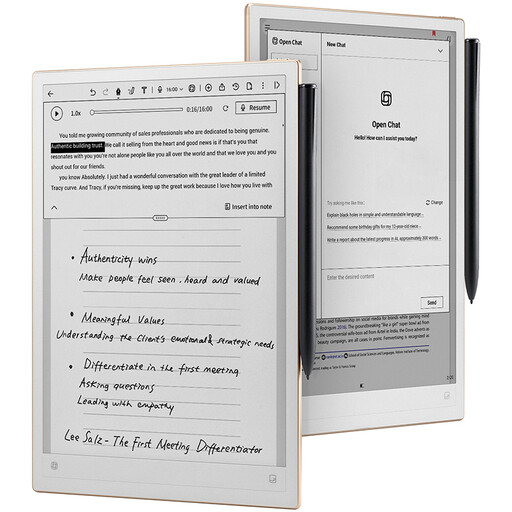
iFLYTEK AINOTE 2, 10.65-inch E Ink tablet with protective case
Consider this for handwritten notes when a reflective screen is your priority beside a bright window; E Ink describes its display technology as using ambient light.
The product title identifies a 10.65-inch E Ink tablet and a protective case. Check the pen bundle and whether its note and document workflow meets your needs.
Joybuy
 No image available
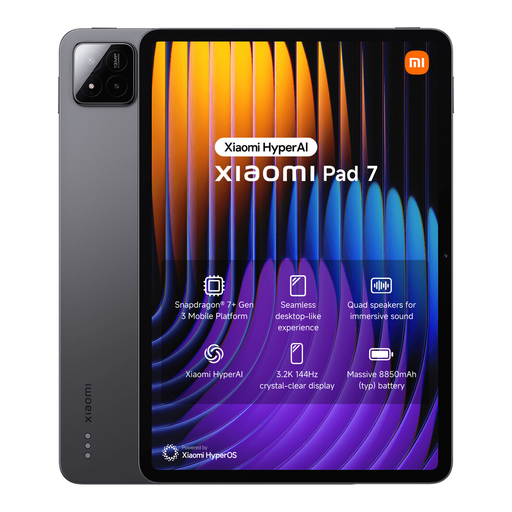
Xiaomi Pad 7 Grey, 8GB RAM, 128GB storage with Focus Pen
Consider this standalone tablet if handwriting needs to share a device with general tablet tasks.
The product title specifies a Focus Pen in the bundle, 8GB RAM and 128GB storage. Assess screen reflections at your usual window-side writing angle before deciding.
Joybuy
 No image available
TECLAST ArtPad Pro 2025, 12.7-inch 2K tablet with stylus, case and keyboard
Consider this standalone option if you want to handwrite and use a larger tablet screen with the listed accessories.
The product title specifies a 12.7-inch 2K display, Android 15 and a stylus, case and keyboard bundle. Confirm the exact supplied accessories and assess the screen at your intended window-side position.
Joybuy
Common questions
Which screen should I consider for notes beside a bright window?
Start with reflective ePaper if daylight readability and reduced glare decide the purchase: E Ink says the technology uses ambient light, and reMarkable describes its Paper Pro display as usable in direct sunlight. An anti-reflective conventional tablet may suit you better if colour and apps matter more, but check it at your intended writing angle.
Will a stylus come with the tablet?
That depends on the exact model and bundle. Apple’s UK iPad Air purchase flow offers compatible Apple Pencil models as additions; other listings may specify a pen in the bundle. Confirm both inclusion and compatibility for the variant you choose.
Can a Wacom One take the place of a standalone note tablet?
Not if you need to write without a connected host device. Wacom describes Wacom One as connecting to a compatible PC, Mac, Chromebook or Android device, making it a different choice from a self-contained notebook for writing away from your desk.


