What to prioritise
Choose the resolution and viewing setup you need for tactical interfaces, then decide whether faster play or connections for several devices should shape the panel choice.
4K IPS at 144Hz
Consider it when: A non-glare surface and 4K tactical-game workspace matter more to you than the higher stated refresh rates of the OLED examples; Gigabyte UK specifies these features for the M32U.
Trade-off: Gigabyte UK lists 4K 120Hz console support for the M32U, rather than its 144Hz monitor maximum.
4K Mini LED at 144Hz
Consider it when: HDR highlights and local dimming are priorities; BenQ UK specifies a 1,152-zone Mini LED backlight for the EX321UX.
Trade-off: The EX321UX is specified at 144Hz, not the 240Hz listed for the QD-OLED examples.
4K QD-OLED at 240Hz
Consider it when: You divide your time between detailed tactical games and fast competitive play; Dell UK and ASUS ROG UK specify 4K 240Hz models.
Trade-off: Long periods showing static, high-contrast interfaces at high brightness call for OLED panel care, as ASUS UK Support advises.
OLED with dual refresh modes
Consider it when: You are willing to change resolution between tactical and speed-led games; LG UK specifies 4K 165Hz and Full HD 330Hz modes for the 32GX850A-B.
Trade-off: Its 330Hz mode is Full HD, so it does not retain the 4K mode’s interface detail.
| Concern | What to check | Who this matters to |
|---|
| 4K maps and interfaces |
Check that your device can output 3840 × 2160 at your intended refresh rate, and measure the space available for the screen and stand. |
If maps, unit positions and text must remain comfortable to read together, screen detail takes priority over a faster alternative mode; around 42% of consumers put map and interface readability first. |
| Speed for mixed play |
Compare refresh rates at the resolution you will use, and check whether response-time figures use GtG or MPRT. |
When fast multiplayer games share time with tactical titles, I may value motion specifications more than maximum 4K detail; roughly 33% of consumers prioritise this mixed-play need. |
| Device and desk fit |
Match HDMI, DisplayPort or USB-C capabilities to each device; check stand depth and any required VESA mounting pattern. |
Sharing one desk screen between devices makes usable connections and placement my main concern; about 25% of consumers place setup compatibility first. |
Joybuy product choices
These choices focus on large 4K screens for tactical-game detail, including OLED models for mixed play and a Mini LED professional display to assess against your gaming setup. Check each exact model’s connection and refresh-rate requirements before choosing.
 No image available
LG UltraGear 32GS95UV-B 32-inch 4K OLED monitor
Consider this large 4K OLED screen if tactical-game detail is your priority and you also want to assess a separate mode for faster games.
Check the exact 32GS95UV-B resolution and refresh-rate combinations before buying; the available figures for its modes conflict. Persistent, high-contrast interfaces call for OLED panel care.
View on Joybuy
 No image available
Samsung Odyssey OLED G8 LS32DG802SUXXU 32-inch Ultra HD monitor
This 32-inch Ultra HD OLED model is a choice to assess if you want a large screen for tactical interfaces alongside other games.
Confirm its refresh rate through your intended input and connected device. Plan panel care if static, high-contrast game elements will remain on screen for long periods.
View on Joybuy
 No image available
Dahua 32-inch curved 4K 165Hz OLED gaming monitor
Consider its 4K screen if you want a large tactical-game display and a curved OLED panel suits your desk and viewing preference.
The product name specifies 165Hz and 0.03ms GtG. Check whether your device and chosen input support the 4K refresh rate you intend to use, and plan for OLED panel care.
View on Joybuy
 No image available
ASUS ProArt Display PA32UCG-K 32-inch 4K Mini LED monitor
This professional display is worth assessing if a large 4K Mini LED screen and matte finish matter to you more than a gaming-specific product label.
Its name specifies 120Hz and HDMI 2.1. Confirm that its inputs and gaming features suit your devices, and check the applicable peak-brightness specification for this exact model.
View on Joybuy
 No image available
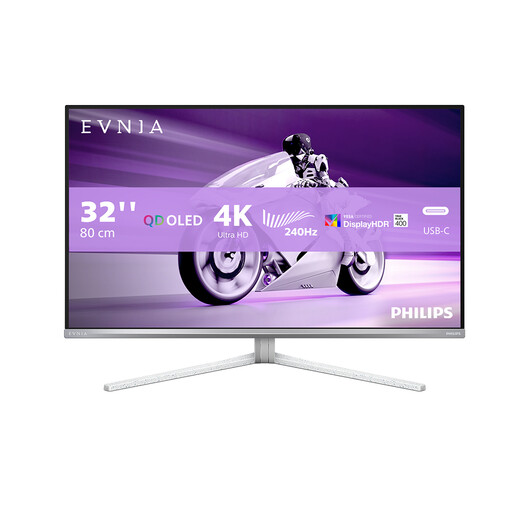
Philips Evnia 32M2N8900 32-inch 4K OLED gaming monitor
Its 32-inch 4K format makes it a choice to assess for large tactical-game maps and interfaces.
Confirm the refresh-rate and response-time specifications for the exact 32M2N8900 variant before choosing it for faster play. Prolonged static, high-contrast images also call for OLED panel care.
View on Joybuy
Common questions
Do tactical games need a 240Hz monitor?
No: if reading maps and interfaces is the main goal, a large 4K 144Hz model is a route to consider. A 240Hz model becomes more relevant if you also prioritise fast competitive play and your device can provide the intended resolution and refresh rate; Dell UK specifies 4K 240Hz for the AW3225QF.
Can a console use a monitor’s maximum refresh rate?
Not necessarily: check the console-specific output for the exact monitor input. Gigabyte UK specifies 4K 120Hz console support for the M32U through HDMI 2.1, although the monitor’s maximum refresh rate is 144Hz.
Is OLED a poor fit for games with static interfaces?
Not automatically, but prolonged static, high-contrast images at high brightness need care. ASUS UK Support advises using OLED-care features and shorter screen-sleep times, and avoiding extended display of the same bright image.
How do I check whether a large monitor fits my desk or arm?
Compare the exact model’s full stand dimensions and mounting pattern with your available space and arm, rather than relying on diagonal screen size. Gigabyte UK lists the M32U at 715.3 × 585.3 × 244.3mm with its stand and specifies 100 × 100mm VESA mounting.


