Small-desk tactical RPG players
You want to reclaim desk space without burying the arrow keys and function-row commands you use for menus, maps and shortcuts.


Start with a 75% keyboard if you need more mouse room but regularly use arrow keys and the function row for tactical RPG menus and shortcuts. Choose TKL when a more familiar navigation layout matters more than minimum width, or consider 65% if space is tighter but dedicated arrows still matter. A 60% board frees more desk space, but its omitted controls require shortcuts or secondary functions.
You want to reclaim desk space without burying the arrow keys and function-row commands you use for menus, maps and shortcuts.
Your desk is particularly narrow, and you are willing to learn Fn-layer commands to use a smaller keyboard.
You also type and switch between devices, so a familiar layout, keyboard height and connection options matter alongside gaming controls.
For tactical RPGs at a small desk, identify the keys you use repeatedly before choosing the smallest layout that accommodates them. Then check the exact model’s key map and physical fit: layout names alone do not establish every key position.
| Concern | What to check | Who this matters to |
|---|---|---|
| Direct-access controls | Check for dedicated arrows and a function row on the exact variant; confirm UK-ISO if you need that key arrangement. | If I repeatedly navigate maps and menus or use F-key shortcuts, I want those inputs within easy reach. Around 42% of consumers would put direct-access controls first. |
| Desk footprint | Measure your available space and compare keyboard dimensions; check which commands a 65% or 60% key map moves to an Fn layer. | When keyboard width crowds my mouse, I may accept more shortcuts to clear working space. Roughly 33% of consumers would make footprint their primary concern. |
| Everyday flexibility | Check keyboard height and switch options, plus the wired or wireless modes you will use. | If the same board handles gaming, typing and other devices, I care about its feel and connections throughout the day. About 25% of consumers would prioritise that flexibility. |
A 60% layout removes the dedicated function row, home cluster and number pad. Razer describes access to those inputs through secondary functions and shortcuts on its Huntsman Mini; that extra step may matter if you use game menus and utility hotkeys often.
Write down your frequent commands before buying. If direct arrows and F-keys matter, compare 75% and TKL layouts too.
Keyboard families can include different regional arrangements, affecting key positions and legends you rely on when typing.
Check the exact variant’s layout label and product photos; look for an explicitly stated UK or UK-ISO version if that is what you need.
Adjustable actuation and other gaming features do not restore dedicated keys omitted by a compact layout or make a keyboard fit your desk.
Settle the layout and connection method first, then decide whether switch customisation matters for how you play.
Changing your mind about a layout and receiving a faulty or misdescribed keyboard are different situations. GOV.UK states that a faulty or misdescribed item must be refunded under the applicable conditions.
Check the retailer’s cancellation and return instructions before ordering, and contact the retailer if the keyboard arrives faulty or not as described.
The Q1 HE is relevant if you want a 75% board with a listed UK-ISO option and configurable keys.
The G515 LIGHTSPEED TKL suits a preference for a familiar TKL arrangement and a low-profile board.
The Huntsman Mini illustrates the 60% route for players willing to use shortcuts in exchange for a smaller layout.
The K70 PRO MINI WIRELESS is another 60% option for buyers considering wireless use and switch customisation.
These keyboards cover compact 75%, 65% and 60% choices for a small desk. Compare each listing’s exact key layout and dimensions with your available space and tactical RPG controls.
 No image available
Consider this 75% model if you want a compact gaming keyboard but still need to check direct access to your regular controls.
The name identifies a wireless UK model. Check its exact physical key arrangement and dimensions against your desk before ordering.
 No image available
This 75% option suits a compact setup if its US QWERTY key arrangement works for your typing and game shortcuts.
The title lists wired, Bluetooth and 2.4G modes, plus PBT keycaps. Check its dimensions against your available desk space.
 No image available
Consider this compact option if desk width is tight and a UK layout matters to you.
Check the exact key map for arrow and function-key access, and confirm that its wired connection suits your setup.
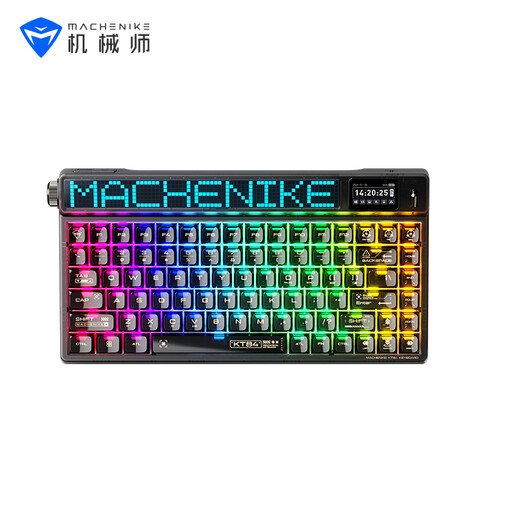 No image available
This is a 75% option for a space-conscious setup if you are comfortable with its US QWERTY layout.
The name specifies Gateron White switches and tri-mode connectivity. Check the exact arrow- and function-key map and the dimensions before buying for frequent tactical-game inputs.
 No image available
Choose a 60% layout only if the smaller keyboard footprint is worth using shortcuts for frequently needed commands.
Check how this model handles your arrow and function-key inputs, confirm its physical key layout and make sure a wired connection suits your desk.
A 75% layout is a sensible starting point if you want dedicated arrows and a function row without a full-size keyboard. Move towards 65% when width is tighter but arrows still matter; choose 60% only if you are comfortable using shortcuts for omitted keys. TKL is worth considering when familiar navigation keys matter more than minimum width.
Neither feature is an established requirement for choosing a keyboard for tactical RPGs. Start with the controls, layout and desk fit you need; consider adjustable actuation if you specifically want to tune key response.
Check the exact variant’s title, layout specification and key photos for a UK or UK-ISO designation. A UK option in one product family does not establish that every variant has the same physical keys.
An online purchase in the UK may carry a cancellation right, subject to the applicable conditions. Check GOV.UK’s consumer guidance and the retailer’s return procedure before ordering; changing your mind is distinct from seeking a remedy for a faulty or misdescribed keyboard.
Contact the retailer about a refund or other applicable remedy rather than relying only on a manufacturer’s warranty. GOV.UK states that a seller must offer a full refund when an item is faulty, not as described or does not do what it is supposed to do; the appropriate remedy can depend on the circumstances.