Family cooks making more than dressing
If you also blend medium batches of soup, sauce or purée, a countertop jug may serve more of your cooking routine. Check that the model can still process the smaller amount of dressing you usually make.


For a modest amount of tahini dressing, consider a blender with a suitable small bowl or cup, or a hand blender used in an appropriate beaker. A larger jug makes more sense if the same appliance will also prepare medium batches for family meals. Whichever format you choose, check the minimum workable quantity and the manufacturer’s guidance for thick mixtures.
If you also blend medium batches of soup, sauce or purée, a countertop jug may serve more of your cooking routine. Check that the model can still process the smaller amount of dressing you usually make.
If you make just enough dressing for one shared meal, a dedicated small bowl, cup or compatible small-batch jar is worth considering. Check its workable quantity rather than choosing by its stated capacity alone.
If dressings and sauces are your main blending jobs, a hand blender may be easier to store than a countertop appliance. Check whether its supplied beaker suits your usual batch and how the parts are cleaned.
Start with the amount of dressing you actually make, then decide whether the blender must also handle larger family-cooking batches. A hand blender and suitable beaker offer a compact alternative to a countertop bowl or jug.
| Concern | What to check | Who this matters to |
|---|---|---|
| Capacity for other meals | Compare the supplied jug and the model’s guidance for medium batches; also check whether it can handle your smaller dressing quantity. | If I also make soup or sauce for the family, I need a vessel suited to those larger jobs. Around 40% of consumers would put broader family cooking first. |
| Control of thick mixtures | Look for manufacturer guidance on thick blends and, where relevant, variable speeds or an approved tamper. | When my tahini mixture starts thick, I want to adjust the blend without assuming that motor power alone settles the question. For around 30% of consumers, control of thick mixtures would be the primary concern. |
| Small-batch fit | Check the minimum workable quantity, the supplied vessel and the exact model’s accessory compatibility. | I make only a modest amount of dressing and do not want to choose a large jug solely because the meal is for several people. That need would come first for around 20% of consumers. |
| Storage and cleaning | Check the storage space required and the manufacturer’s cleaning instructions for the beaker, blades and removable parts. | If I mainly blend dressings after a meal, putting the appliance away and cleaning it matter more to me than having a large jug. Around 10% of consumers would prioritise that routine. |
A family meal does not necessarily call for a large dressing batch: The Vegan Lunchbox describes a small-batch tahini dressing recipe serving four. A large jug’s stated capacity does not tell you its minimum workable quantity.
Estimate how much dressing you usually make, then check the exact blender’s operating guidance and available vessels.
KitchenAid lists its 200 ml small-batch jars for the K400, K150 and K130. Their availability and whether one comes with a particular blender need checking separately.
Confirm the full model number, package contents and accessory compatibility before choosing a jug system for its small-batch option.
Using a small-batch jar may mean obtaining a separate accessory.
The Food Standards Agency identifies sesame as an allergen and lists tahini among foods containing it. Residue on blender parts or shared utensils matters when someone in the household has a sesame allergy.
Prevent cross-contact, clean blades, seals, vessels, lids and utensils according to their care instructions, and follow the household’s allergy-management advice.
The CB100UK is a compact countertop option with separate vessels for smaller batches.
The E310 is a countertop-jug option for cooks who also prepare medium family batches.
The K400, K150 and K130 can be considered as jug systems with model-specific vessel options.
These hand blenders are options for preparing dressing in a suitable beaker. If you also need to blend medium family batches, compare countertop-jug models separately; for any of these hand blenders, check the instructions for your usual quantity and for thick mixtures.
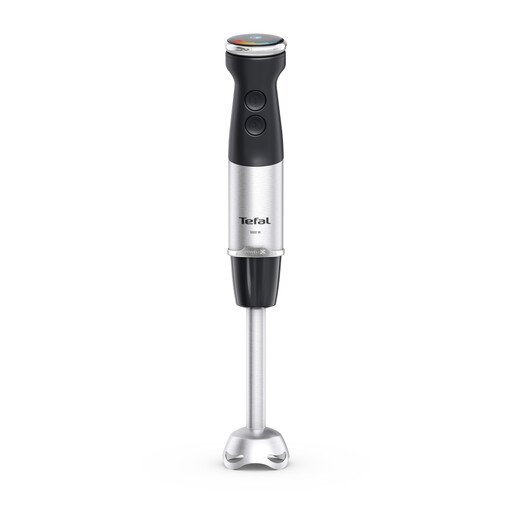 No image available
Consider this hand blender if you want to blend dressing in a separate vessel and adjust the speed as you go. Its product name specifies Powelix Blade Technology and 20 speeds. Check the instructions for the vessel and quantity you intend to use.
 No image available
Consider this variant if you want a hand blender for dressing alongside a beaker, chopper and whisk. Confirm the beaker’s workable quantity and follow the model’s guidance before blending a thick tahini mixture.
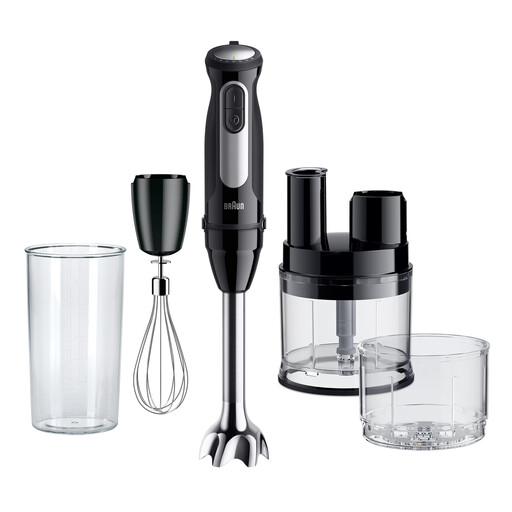 No image available
Consider this variant if the hand blender will also be used with its mini food processor and whisk. Its product name specifies a 1000 W motor and a beaker; check the instructions for suitable batch quantities, thick mixtures and operating intervals.
 No image available
Consider this hand blender if you want a beaker and chopper alongside the blending attachment. Check whether its controls and the beaker’s workable quantity suit your dressing routine, and follow the manufacturer’s guidance for thick mixtures.
No: choose for the amount of dressing you make, not just the number of diners. The Vegan Lunchbox describes a small-batch tahini dressing serving four. A larger jug becomes more relevant if you will also blend medium batches of soup, sauce or purée; check its minimum workable quantity for dressing.
Check the exact model’s guidance for thick mixtures and small quantities, along with its vessel and controls. Ninja describes the CB100UK’s bowl and Smart Torque as options for thicker textures, while Vitamix specifies variable speeds and a mini tamper for the E310; these descriptions do not establish how either will handle your particular recipe.
A hand blender is an option if its container and instructions suit the quantity and mixture you plan to make. KitchenAid describes hand blenders as suitable for emulsifying vinaigrettes and sauces; check the exact model’s beaker, controls and cleaning guidance before buying.
Yes, sesame cross-contact needs particular attention if someone in the household has a sesame allergy. The Food Standards Agency identifies sesame as an allergen and lists tahini among foods containing it. Prevent unintended sharing, clean the blender parts and utensils according to their instructions, and follow the household’s allergy-management advice.