
24/7 Customer Support

Free returns

Same-day & Next-day Delivery

Quality Guaranteed
Download the APP
Categories
As a parent or guardian, finding engaging toys that are both educational and fun can feel like a constant search. In a world full of screens, many are looking for alternatives that can help build foundational skills. A talking pen for toddlers is an excellent tool that bridges the gap between traditional books and interactive play, helping to foster a love for reading from an early age.
This guide is designed to help you understand what makes a good interactive reading pen and how to choose one that suits your child's needs. We will look at key features to consider and offer a recommendation to help simplify your decision.
Choosing the right educational toy requires a bit of thought. When selecting a talking pen, here are a few practical points to consider to ensure it’s a valuable addition to your child's preschool learning activities.
The value of a talking pen lies in its content. Check what is included in the initial set. Does it come with books, talking flash cards and other materials? A comprehensive toddler reading system should offer a variety of content covering letters, numbers, stories and music. Also, consider if the system is expandable. The ability to add new books or content ensures the toy remains engaging as your child grows.
Safety is paramount when it comes to kids learning toys. Always check the manufacturer's recommended age, which for most talking pens is 3 years and older due to small parts. Look for pens made from durable, non-toxic and BPA-free materials. The design should be robust enough to withstand drops and easy for small hands to hold. Ensure any rechargeable batteries and charging ports are secure and require adult supervision.
Beyond simply reading words aloud, what else can the pen do? Many modern talking pens include features like music playback, interactive games and even a recording function. The ability for parents to record their own voice onto stickers, which a child can then play back, adds a wonderful personal touch and can be comforting when you're not there. These features transform the pen from a simple reading aid into a multi-functional learn to read toy.
After reviewing the features that make a talking pen a worthwhile investment, here is our recommendation for a comprehensive and engaging option.
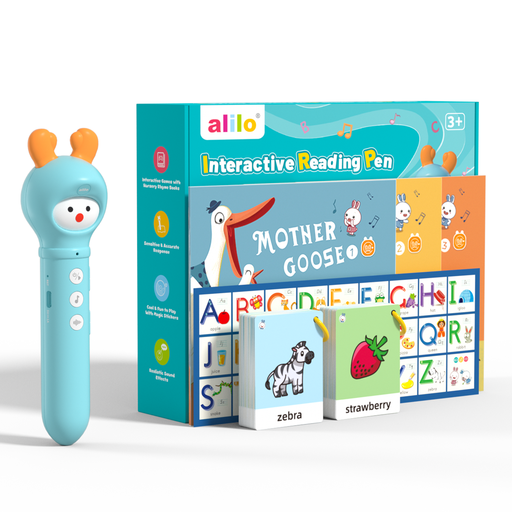
Why It Stands Out
This set from alilo is a complete starter package designed for independent, interactive learning. It’s not just a pen; it’s an entire early education ecosystem. The pen works by simply touching the tip to images or text in the accompanying materials, bringing books and cards to life with sound. The sheer volume of content included makes it a standout choice for parents seeking a comprehensive tool.
The set is pre-loaded with a rich library of audio, including 48 nursery rhymes, 16 stories and 14 bedtime songs, providing hours of entertainment and learning without needing any initial setup.
Pros
Who is it for?
This set is ideal for parents and gift-givers looking for one of the most complete educational toys for 3-6 year olds. It’s particularly well-suited for families who want an all-in-one, screen-free solution that encourages independent play and supports early literacy skills straight out of the box.
A talking pen is a specific type of interactive toy. If you're interested in exploring other ways to encourage learning through play, there is a wide world of engaging gadgets available. From story-telling robots to musical characters, different toys can help develop different skills.
To see a wider variety of interactive educational products, feel free to explore our full range of talking toys.
Talking pens are excellent learn to read toys that support several areas of development. They help build phonics awareness by sounding out words, improve vocabulary by introducing new terms and enhance listening comprehension. The interactive nature also develops fine motor skills as children learn to point the pen accurately.
Yes, absolutely. They provide the interactivity that children find engaging in digital devices but do so in a screen-free format. This helps reduce screen time while still offering a stimulating, modern learning experience that complements traditional book reading.
Most talking pens are designed for children aged 3 and up. This is primarily due to the presence of small parts that could be a choking hazard for younger toddlers. They are most effective for preschoolers and early primary school children (ages 3-6) who are beginning their reading journey. Always check the specific product's age recommendation and safety warnings.