
24/7 Customer Support

Free returns

Same-day & Next-day Delivery

Quality Guaranteed

Unlock Your Welcome Offers: FREE Delivery | Up to 80% OFF | Free 30-day JoyPlus trial
Download the APP
As a Joybuy Product Recommendation Officer, I see countless toys pass through our listings. Talking toys, in particular, promise to light up a child's world with sounds, songs and familiar phrases. Yet, many parents find that the initial excitement fades quickly, leaving them with a toy that gathers dust. The challenge isn't finding a toy that talks; it's finding one that keeps the conversation going.
Before you buy, it's worth knowing the common pitfalls that can turn a promising purchase into a disappointment.
By understanding what to look for, you can choose a toy that offers lasting value and genuine engagement.
To avoid these traps, focus on a few core features that define a quality talking toy. These are the details that separate a short-lived novelty from a cherished companion.
The most important factor is safety. Always check the manufacturer's recommended age range. For children under three, toys must not have any small parts that could become detached and pose a choking hazard. Look for the UKCA mark, which indicates the product meets UK safety regulations. Pay special attention to battery compartments; they should be secured with a screw to prevent a child from accessing the batteries, which can be extremely dangerous if swallowed. This is especially critical for toys using small, round button batteries.
A good interactive toy offers more than just a few pre-recorded sounds. Consider the variety and type of interaction. Does it play multiple songs or just one? Does it respond to different actions, like a press, a shake or interaction with other toys? For younger children, musical toys for toddlers with simple songs and sounds are ideal. For older pre-schoolers, electronic learning toys that teach letters, numbers or involve simple games provide more long-term engagement and developmental benefits. The goal is to find a toy with enough variety to encourage repeat play.
Children's toys need to be durable. For talking soft toys, look for high-quality, surface-washable fabrics that can be easily cleaned without damaging the internal electronics. For plastic toys that make sounds, ensure the material is robust and can withstand being dropped. Finally, check the battery requirements. Toys that use standard AA or AAA batteries are generally more convenient and cost-effective to maintain than those requiring obscure or non-replaceable types.
Matching a toy to a child's personality and stage of development is key. Here are a few recommendations from our catalogue, aligned with different play styles and needs.
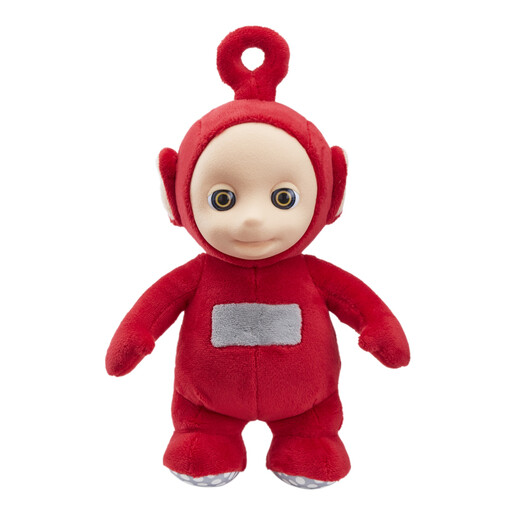
Why This Fits Their Persona: For a toddler who adores a specific TV show, the primary joy comes from having a tangible piece of that world. This toy delivers exactly that, with a simple, intuitive function that brings a familiar friend to life. It's a comforting and recognisable companion.
It avoids the "character over content" flaw because its value is perfectly aligned with its purpose: to be a soft, cuddly version of Po that says her signature phrases. It doesn't over-promise complex features.
Made with supersoft plush material ideal for cuddling. The simple press-tummy-to-talk function is easy for young children (18 months+) to operate independently.
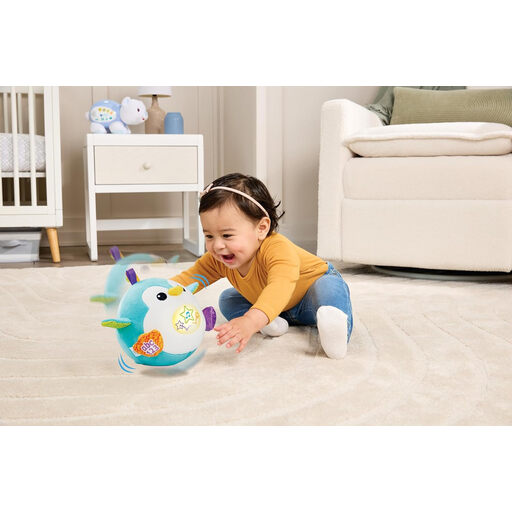
Why This Fits Their Persona: This is for the parent or gift-giver focused on toys that support developmental milestones. It's designed to encourage movement and introduce core concepts like numbers and counting in a playful, interactive way.
It avoids the "one-week wonder" trap by linking physical action (bouncing) to its sounds and phrases. This cause-and-effect play is more engaging for toddlers than simply pressing a static button.
Combines gross motor skill development with learning content. Features high-contrast patterns and a light-up button to capture a baby's attention.
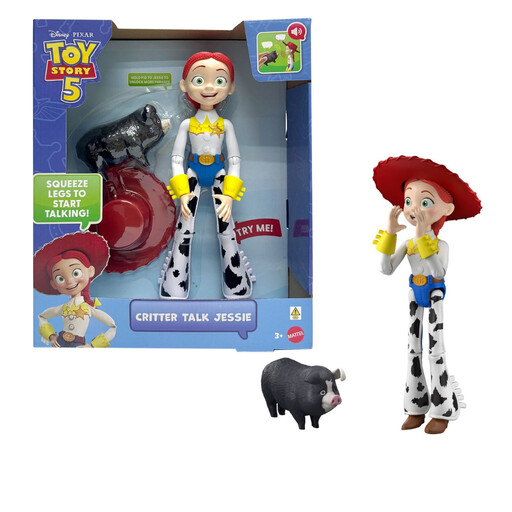
Why This Fits Their Persona: Ideal for pre-schoolers (3+) who are moving into imaginative role-play. This large-scale figure provides a rich foundation for storytelling, with a huge library of phrases and actions that fuel creative adventures.
With over 35 phrases and two distinct play modes, this toy offers a depth of content that prevents it from becoming repetitive. The interactive "critter talk" feature with another figure adds a whole new layer of play.
High replay value due to the large number of sounds and interactive modes. The large 12-inch size is great for role-playing and easy for small hands to manipulate.
We have compiled a complete, real-time list of products that fully satisfy these strict selection criteria and UK safety regulations.
Most talking soft toys are surface washable only. Never submerge them in water, as this will destroy the electronic components. To clean one, first remove the batteries. Use a damp cloth with a small amount of mild soap to gently wipe the surface, then use a second clean, damp cloth to "rinse" away the soap. Allow it to air dry completely before reinserting the batteries. Always check the product's care label for specific instructions.
Age recommendations serve two main purposes: safety and developmental appropriateness. For safety, toys for children under 36 months are rigorously checked to ensure they have no small parts. For development, the recommendation suggests the age at which a child will likely find the toy's features most engaging and understandable. A simple singing toy might be perfect for a one-year-old, while a more complex electronic learning toy with games would be better suited for a four-year-old.
This varies by manufacturer. Some toys, particularly those with a "try me" function in the packaging, will come with batteries included, though these may be for demonstration purposes and have a shorter life. Many others require you to purchase batteries separately. The product description will almost always state whether batteries are included and what type is needed (e.g., 2xAAA Batteries required (not included)). It's always a good idea to have a spare set on hand to avoid disappointment on a birthday or Christmas morning.