What should you check?
Start with the tea pack and its storage instructions, then choose a container that fits both the bags and the place where you make lunch.
| Priority | What to check | Your needs |
|---|
| Pack fit |
Compare the container’s usable space and opening with your usual bags, including any individual wrappers. A stated capacity in litres does not give a tea-bag count. |
I would rather fit the pack I actually use than buy a large jar that takes up unnecessary space. |
| Storage position |
Check the lid and the space needed to open it. Kilner describes a square, clip-top 1-litre jar; Brabantia describes a stackable, silicone-sealed 1.5-litre canister. |
For a visible worktop station, I want to reach the bags easily. In a cupboard, stacking may matter more. |
| Product identification |
Keep the carton or record the tea type, best-before information and storage instructions when decanting. Tetley, Clipper and Typhoo specify cool, dry storage for the cited products. |
If several teas look alike, I want to tell standard and decaf bags apart without guessing. |
| Tea choice |
Check the exact blend and pack for decaf wording, brewing guidance and any hard-water variant. Yorkshire Tea describes a Hard Water blend; Twinings identifies Everyday Decaffeinated as a distinct product. |
I may want a different tea at lunch from the one I drink later, so the container needs to remain clearly identified. |
| Sourcing and disposal |
Read claims on the particular tea pack and check the disposal instructions against your local collection service. Clipper states that its cited Everyday tea is organic and traded in compliance with Fairtrade standards. |
When sourcing or bag materials matter to me, I want to retain the information needed to check those claims. |
Tea brand references
These product-line details can help you decide what information to retain when filling a tea-bag jar; a brand reference does not mean that its tea is included with a container.
Tetley
Tetley Decaffeinated is one black-tea option to identify clearly if you store different bags side by side.
- Ocado’s listing for this product describes plant-based tea bags, a suggested 2–3 minute brew and cool, dry storage.
- Those details apply to the listed decaffeinated product, not every Tetley blend.
PG Tips
PG Tips identifies Original, Gold and decaf choices, making the exact blend worth noting on a jar.
- LIPTON Teas lists these as distinct PG Tips product routes.
- Check the particular pack for bag-material and disposal claims rather than applying brand-level wording to every variant.
Yorkshire Tea
Yorkshire Tea lists Gold, Decaf and Hard Water blends for different tea preferences.
- The company says its Hard Water blend is adjusted for mineral-rich tap water.
- Choose that variant on the basis of your water and taste preference, not as a general claim about all Yorkshire Tea.
Twinings
Twinings Everyday Decaffeinated is a specifically identified decaf tea rather than a claim about the whole range.
- Twinings describes a Kenyan-tea blend and suggests a 2–3 minute infusion for this product.
- Its industrial-composting claim is product-specific; Twinings advises food-waste disposal only where that service is available.
Clipper
Clipper Everyday is relevant if the tea’s stated sourcing attributes affect your choice.
- Clipper describes the cited Everyday product as organic black tea traded in compliance with Fairtrade standards.
- The product calls for cool, dry storage; retain its pack details if you decant the bags.
Typhoo
Typhoo’s cited 80-bag product is an everyday Kenyan black tea.
- Typhoo states 3.125g of tea per bag and instructs shoppers to store this product in a cool, dry place.
- The manufacturer says packaging may differ, so check the pack received for its current details.
Joybuy tea-storage options
These containers are options for keeping tea bags near a working-from-home lunch area. Check the fit of your usual tea pack before choosing either one.
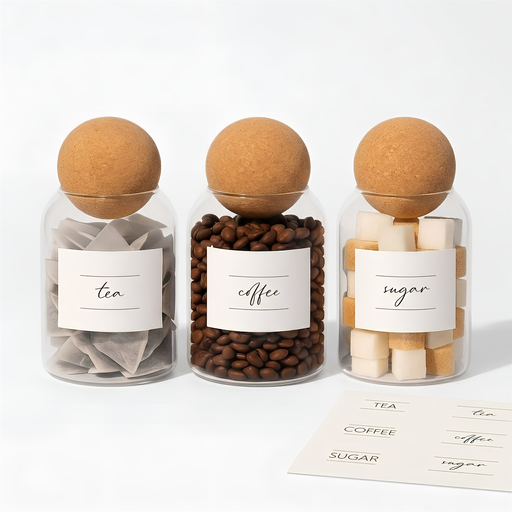 Image unavailable
Argon cork-ball-lid glass tea, coffee and sugar jars, set of three
Consider this set if you want separate jars for tea, coffee and sugar at your lunch station. Check that the opening and usable space of the tea jar fit the bags you normally buy.
View on Joybuy
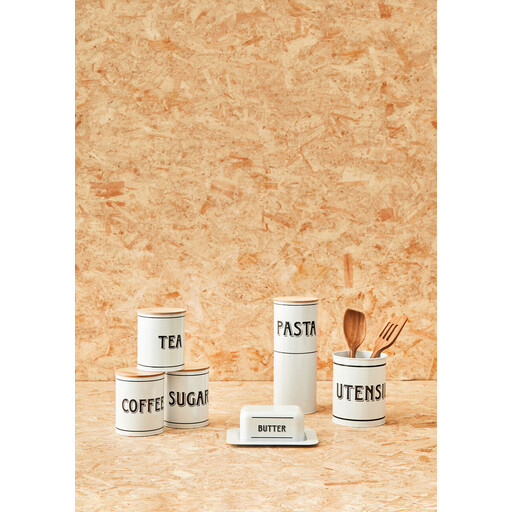 Image unavailable
Maison by Premier Grocer white metal tea canister
A dedicated tea canister may suit a station where you want one container rather than a set. Check its capacity and usable opening against your usual tea-bag pack before buying.
View on Joybuy
Common questions
What size jar should I choose for tea bags?
Choose by the pack you usually open, not a presumed number of bags per litre. Kilner lists a space-saving 1-litre jar and Brabantia lists a stackable 1.5-litre canister, but bag shape and wrapping still determine whether your pack fits comfortably.
Do tea bags need an airtight jar?
A sealed jar is an option for keeping an opened supply in a closed container, but follow the tea’s own storage instructions as well. The cited Tetley, Clipper and Typhoo products each specify cool, dry storage.
Can I use a decorative jar for tea bags?
For a home tea station, choose a clean container intended for food storage and keep the tea identifiable. GOV.UK guidance directed at food businesses says food containers should protect contents from contamination and be marked for food contact; it should not be read as a separate household licensing rule.
How do I choose a decaf tea for the jar?
Choose a pack clearly labelled decaf and identify the jar with that product, rather than relying on the brand name. Twinings Everyday Decaffeinated, Yorkshire Tea Decaf and a PG Tips decaf option are described by their respective brands; check the exact pack if its caffeine wording or brewing instructions matter to you.
Should I keep the tea carton after filling a jar?
Keep the carton, or record useful details before discarding it, so you can identify the tea and refer to its best-before date and storage instructions. This is particularly useful if you store standard and decaf bags in similar jars.


