Drinkers who enjoy regular black tea
An 80-bag box gives a household a familiar afternoon-tea format without choosing a larger bulk pack. Compare the named blend and its brewing instructions if flavour and preparation matter.


For someone who enjoys regular black tea, start with an 80-bag blend they like; if they prefer to limit caffeine, compare decaffeinated black tea instead. Check the blend and brewing instructions before choosing, rather than assuming age alone determines which tea is suitable.
An 80-bag box gives a household a familiar afternoon-tea format without choosing a larger bulk pack. Compare the named blend and its brewing instructions if flavour and preparation matter.
An 80-bag decaffeinated black tea is worth comparing when the person wants to reduce caffeine. NHS Tayside notes that caffeine can aggravate bladder symptoms for some people; age alone is not a reason to assume everyone needs decaf.
Some 80-bag black teas carry organic, Fairtrade, unbleached-bag or plant-based-bag descriptions. Check the claim on the particular pack and the local disposal rules; these features do not mean the tea is decaffeinated.
Choose the tea type first, then compare the pack’s blend, brewing guidance and any sourcing or disposal claims that matter to the household.
| Priority | What to check | Your needs |
|---|---|---|
| Caffeine | Check whether the pack says regular or decaffeinated black tea. NHS Tayside notes that caffeine in tea can aggravate bladder symptoms for some people. | I enjoy regular tea if caffeine suits me; otherwise, I want to compare a clearly labelled decaf box. |
| Blend and brewing | Check the named blend and the instructions on that pack. Tesco lists a 1–2 minute brew for PG Tips Original 80, while its Yorkshire Decaffeinated 80 listing states 4–5 minutes. | A familiar flavour matters to me, and I want to know how long this particular tea is meant to brew. |
| Pack format | Confirm the bag count and the exact variant. An Original, Gold and decaffeinated box from a familiar brand should not be treated as the same tea. | For tea at home, I want an 80-bag box in the blend the drinker actually prefers. |
| Sourcing and bags | Read the specific organic, Fairtrade or bag-material wording. ASDA says PG Tips’ plant-based bags need industrial composting conditions and local acceptance for food-waste collection. | If sourcing or bag disposal influences my choice, I want a claim I can check on the pack and use with my local collection arrangements. |
| Tea with meals | For people following iron-deficiency anaemia dietary advice, University Hospitals Coventry and Warwickshire NHS Trust advises avoiding tea within one hour before or after meals. This guidance concerns serving time, not the size of the box. | If that dietary advice applies in our household, I need to consider when afternoon tea is served alongside food. |
Regular black tea contains caffeine, which NHS Tayside says can aggravate bladder symptoms for some people.
Ask the intended drinker whether they prefer regular or decaffeinated tea before choosing an 80-bag box.
For someone following dietary advice for iron-deficiency anaemia, University Hospitals Coventry and Warwickshire NHS Trust says tea with a meal can reduce iron absorption.
Where that guidance applies, account for its advice to avoid tea within one hour before or after meals when planning afternoon tea.
A plant-based or industrially compostable description does not establish that a bag is accepted by every local food-waste collection.
Check the current pack instructions and your council’s collection rules before disposing of the bags.
These brand examples help distinguish 80-bag tea types and pack claims; check the exact variant when choosing a box.
Tesco lists Tetley Original as an 80-bag, 250 g black-tea box.
PG Tips Original is listed as an 80-bag, 232 g black tea.
Tesco lists both standard and decaffeinated Yorkshire Tea in 80-bag, 250 g boxes.
Twinings English Breakfast is an 80-bag, 200 g black-tea blend.
Clipper has 80-bag organic black-tea options, including Everyday and English Breakfast.
A Tesco listing identifies a Typhoo 80-bag, 232 g tea box.
These boxes include regular black teas and one labelled decaffeinated black tea. Compare the exact variant with the drinker’s caffeine preference and preferred blend.
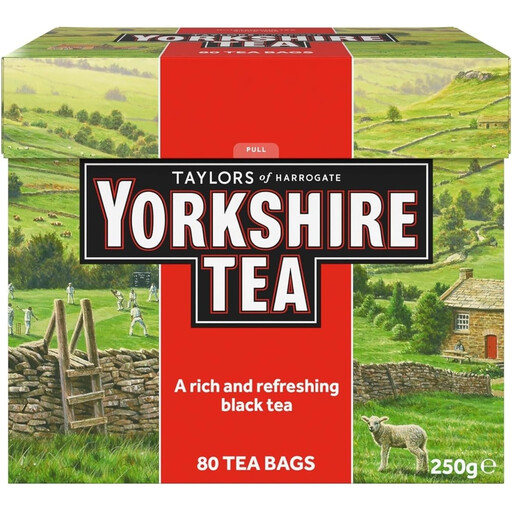 No image available
An 80-bag regular black tea for someone who enjoys caffeinated tea. The product description gives a 3–5 minute brewing instruction; choose a labelled decaf variant instead if caffeine reduction is the priority.
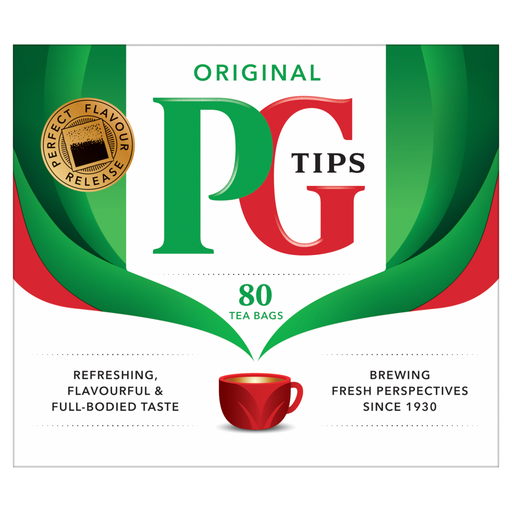 No image available
An 80-bag Original black tea for a drinker who wants a regular caffeinated blend. Check local food-waste rules before disposing of its plant-based bags.
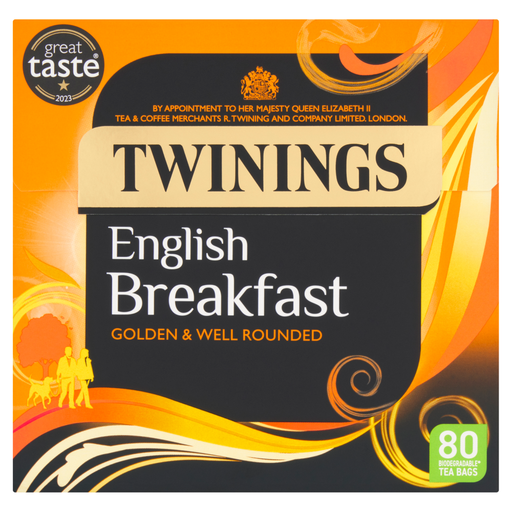 No image available
A named English Breakfast blend for someone who prefers that style of regular black tea. Twinings gives a three-minute brewing basis and describes the bags as industrially compostable; local disposal arrangements still matter.
 No image available
An 80-bag decaffeinated black tea for a drinker who prefers to reduce caffeine. The product description gives a 2–3 minute brewing instruction; check the pack’s decaffeination wording for the exact product claim.
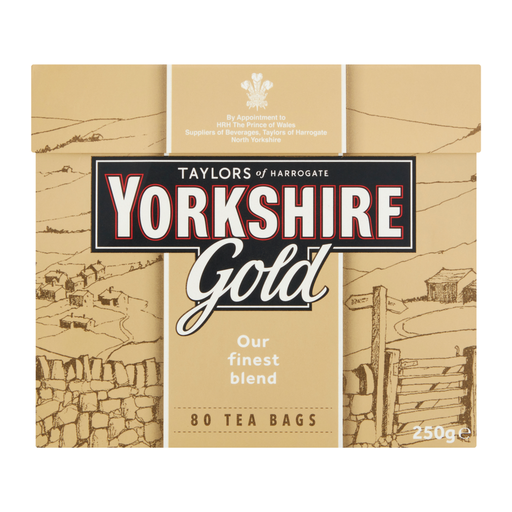 No image available
An 80-bag Gold black-tea variant for someone choosing regular caffeinated tea. The product description gives a 3–5 minute brewing instruction; do not confuse Gold with a decaffeinated Yorkshire Tea box.
Not on the basis of age alone. Compare an 80-bag decaf black tea if the drinker prefers less caffeine; NHS Tayside notes that caffeine can aggravate bladder symptoms for some people.
Yes. NHS guidance includes tea and coffee among drinks that count towards daily fluid intake; an 80-bag purchase does not mean tea has to be someone’s only drink.
For someone following dietary advice for iron-deficiency anaemia, University Hospitals Coventry and Warwickshire NHS Trust advises avoiding tea within one hour before or after meals because tea with a meal can reduce iron absorption. That advice is specific to this dietary concern, not a rule for every tea drinker.
No. The stated instructions differ by product: Tesco lists 1–2 minutes for PG Tips Original 80 and 4–5 minutes for Yorkshire Decaffeinated 80. Follow the instructions on the box you choose.
Only where the specific bag and local collection arrangements allow it. ASDA says PG Tips’ plant-based bags are biodegradable in industrial composting conditions when the local council accepts them in food waste; check the pack and council guidance before disposal.