Hosts with guests who prefer different teas
Serve a main black tea alongside a separately labelled decaf or other tea option, so guests can identify what they are choosing.


For an afternoon tea party, choose a main black tea in a pack that fits the expected cups and refills, and add a clearly labelled decaf option if guests may want one. Individually wrapped bags suit a self-serve table; if you use a jar for unwrapped bags, keep it dry and away from steam and direct sunlight, following the tea’s storage instructions.
Serve a main black tea alongside a separately labelled decaf or other tea option, so guests can identify what they are choosing.
Individually wrapped, string-and-tag bags let guests select an envelope without handling the remaining bags. Twinings lists an English Breakfast pack in this format.
If organic ingredients and Fairtrade sourcing matter to you, check the exact pack. Clipper states both for its Everyday black tea.
Work out the likely number of cups first, then decide how guests will select their tea and where any opened bags will be kept.
| Priority | What to check | Your needs |
|---|---|---|
| Bag count | Count guests and likely refills. Compare the stated number of bags with what you expect to use after the party. | I want enough for another round without choosing a large opened pack that will sit unused. |
| Tea choice | Check the blend and look for explicit decaf labelling. Keep different teas clearly identified on the table. | Some guests may want black tea, while others would prefer a decaf option. |
| Serving format | Check whether bags are individually wrapped; bag count alone does not establish this. Decide whether guests will take envelopes or select from a jar or tray. | For self-service, I would rather guests could take one clearly labelled bag at a time. |
| Storage | Read the exact pack directions. If using a jar, keep it dry and away from steam; the Yorkshire Tea listing also specifies storage away from direct sunlight. | I want the table display to fit the tea’s storage instructions, not just look tidy. |
| Stated credentials | Check organic or Fairtrade wording on the specific tea, rather than applying a brand-wide description to every blend. | If sourcing credentials matter for this gathering, I want to know which pack actually states them. |
A standard black-tea pack does not provide a decaffeinated choice. Yorkshire Tea, for example, lists decaf as a separate blend.
If guests may want decaf, set out an explicitly labelled product separately from the main tea.
A high bag count helps only if it fits the cups and refills you expect, as well as your plans for the remaining opened tea.
Estimate portions before choosing between a smaller pack and a bulk box.
A decorative jar does not replace cool, dry storage; the Yorkshire Tea product directions also specify keeping bags away from direct sunlight.
Put only the serving quantity in a dry jar away from steam and sunlight, and store the remainder according to its pack directions.
The PG Tips Original listing at Tesco describes biodegradability under industrial composting conditions and qualifies food-waste disposal by local council acceptance.
Read the wording on the exact pack and check your council’s collection guidance before disposing of the bags.
Tetley lists Decaf Original Tea alongside its everyday tea range.
Tesco lists PG Tips Original as a 40-bag black-tea pack.
Yorkshire Tea lists standard, decaf and hard-water blends as distinct choices.
Twinings lists English Breakfast in both a 300-bag box and a 50-envelope string-and-tag format.
Clipper describes its Everyday 40-bag product as organically grown black tea traded in compliance with Fairtrade standards.
Typhoo lists Premium black tea in 80- and 240-bag formats.
These options include a decaf tea and regular black-tea packs in different bag counts. Compare them with your guest numbers and preferences; check the listing if individually wrapped portions matter for your table.
 No image available
A separately labelled decaf choice for guests who prefer it. The product name specifies 80 tea bags and 277g; check the listing for individual wrapping if you plan to set out separate portions.
 No image available
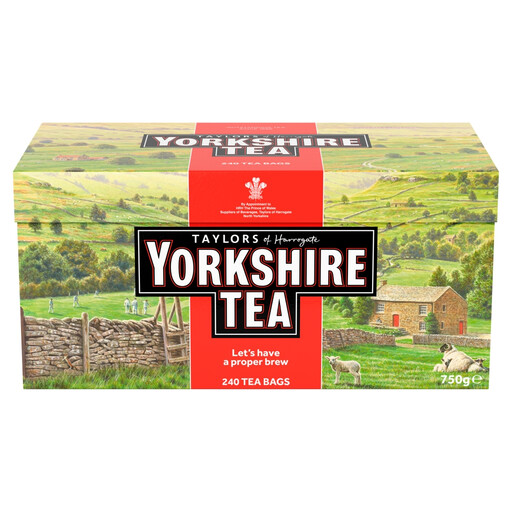
A regular black-tea pack to consider when planning repeated rounds. It contains 240 tea bags and weighs 750g; compare that count with expected use and follow the listing’s cool, dry storage direction away from direct sunlight.
 No image available
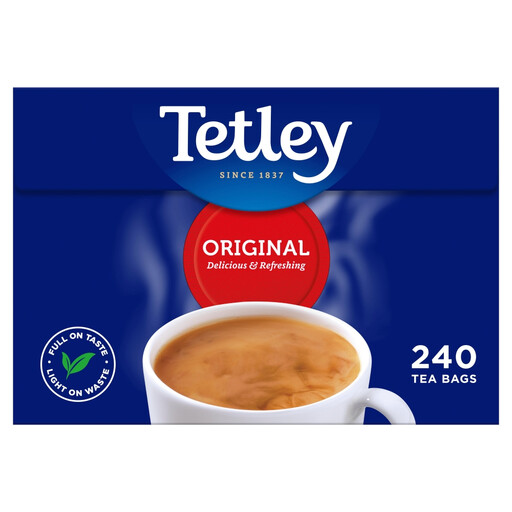
A regular black-tea option for a gathering where the stated 240-bag count fits expected cups and later use. The pack weighs 750g; choose a separately labelled decaf product if guests need that alternative.
 No image available
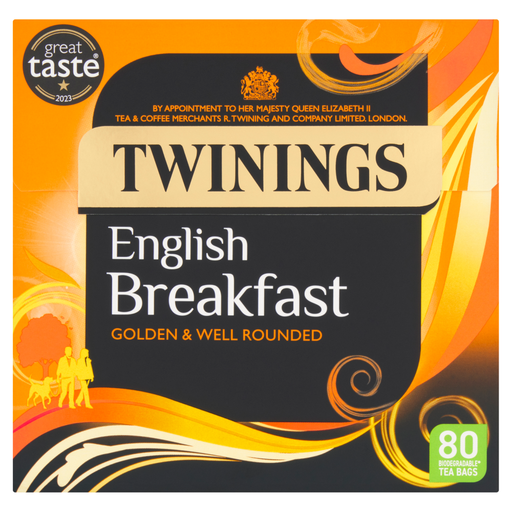
A regular English Breakfast black tea in an 80-bag, 200g pack. If individual envelopes are important for self-service, check this listing’s format rather than assuming it matches Twinings’ separately listed envelope product.
 No image available
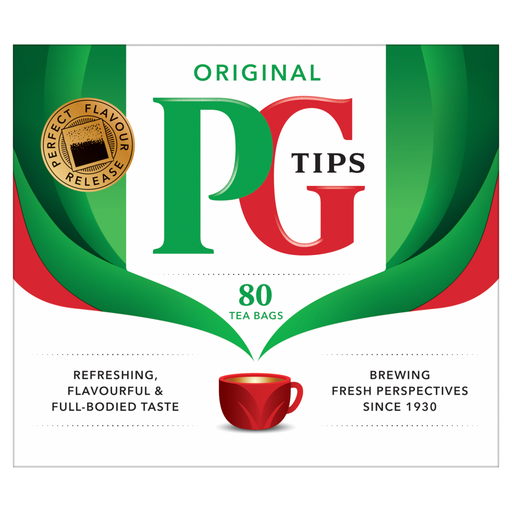
A regular black-tea option with 80 bags and a stated weight of 232g. Check whether that quantity covers expected refills; for disposal, follow the exact pack wording and local council guidance rather than assuming the bags suit home composting.
Start with the number of guests and the cups and refills you expect, then check the pack count. Clipper lists a 40-bag Everyday pack, Typhoo an 80-bag Premium pack, and Twinings both a 50-envelope serving format and a 300-bag English Breakfast box; choose a count that also fits your likely use after the party.
Put out a separately labelled decaf product if guests may prefer to limit or avoid caffeine. Regular black tea should not be mistaken for a decaf blend; Yorkshire Tea lists decaf as a distinct product route.
Yes, provided the jar is dry and its placement follows the tea’s storage directions. Keep it away from steam; the Yorkshire Tea Joybuy listing specifies cool, dry storage away from direct sunlight. Individually wrapped bags are another way to offer self-service portions without decanting unwrapped bags.
Do not assume so. The PG Tips Original listing at Tesco describes biodegradability in industrial composting conditions and says food-waste disposal depends on local council acceptance. Check the wording on your pack and your council’s collection guidance.