Airport café and food-counter buyers
Choose a core black tea with a brewing method staff can repeat during queues. Match the pack size to turnover so replenishment and storage remain manageable.


For a busy airport counter, start with an everyday black tea in a pack size that suits turnover, then set a brewing method for that exact product. A named English Breakfast blend can serve as a separate menu option, while sourcing and tea-bag disposal claims need checking against the selected pack and the outlet’s arrangements. The Food Standards Agency says retail and catering businesses must provide allergen information for food and drink, including relevant additions served with tea.
Choose a core black tea with a brewing method staff can repeat during queues. Match the pack size to turnover so replenishment and storage remain manageable.
For self-service stations, consider how often packs need replacing and whether a separate English Breakfast or decaf option fits the menu.
Check Fairtrade or Rainforest Alliance statements on the exact tea being purchased rather than applying a claim from one product across a brand’s range.
Choose the menu role and service method first; then compare pack sizes and product information against the way the outlet actually serves tea.
| Priority | What to check | Your needs |
|---|---|---|
| Everyday blend | Check that the selected product is black tea and distinguish an everyday blend from a named English Breakfast or decaf option. Check the current ingredient list for the exact pack. | I need a straightforward core tea for customers ordering with milk or breakfast food; a separate breakfast blend would give the menu another choice. |
| Brew method | Compare instructions for the actual product. Tesco lists 1–2 minutes for PG Tips Original 500 bags, while Yorkshire Tea’s general method says 4–5 minutes. Set one staff method for the tea chosen. | During a queue, I need a steeping time staff can follow consistently without treating different brands’ instructions as interchangeable. |
| Pack size | Compare the stated bag count with expected cups per day, available dry storage and stock rotation. A larger box does not establish the right size for every outlet. | How often will this station need replenishing, and can it store the selected pack between deliveries? |
| Sourcing and disposal | Read sourcing and tea-bag disposal claims on the exact pack. Before specifying food-waste disposal, confirm what the airport’s waste contractor accepts. | If the menu calls for a stated sourcing attribute, I need to know which product carries it and how its used bags will be handled. |
| Allergen information | Keep current ingredient information for the tea and additions served with it. The Food Standards Agency says retail and catering businesses must provide allergen information for prepacked and non-prepacked food and drink. | Staff need a reliable way to answer questions about milk and other additions, not just the plain tea bag. |
Instructions differ: Tesco lists 1–2 minutes for PG Tips Original 500 bags, while Yorkshire Tea’s general guidance is 4–5 minutes. A shared timer would not follow both methods.
Choose the tea before writing the station guide, and train staff on its stated preparation method.
A product’s material or compostability claim does not establish what an airport waste collection accepts.
Check the selected pack’s instructions and the airport waste contractor’s rules before directing staff to a disposal bin.
The Food Standards Agency’s allergen-information requirement applies to retail and catering food and drink. Milk and other additions need to be covered by the outlet’s information process as well as the tea.
Maintain current ingredient and allergen records for everything served with the cup, and make them accessible to staff.
A catering pack changes replenishment and storage needs; its suitability depends on how quickly that outlet uses its stock.
Estimate cups per day and check available dry storage before selecting a pack size.
An everyday black-tea option for counters considering a larger replenishment pack.
A catering-format option where a stated Fairtrade sourcing claim matters to the menu.
A named English Breakfast tea to consider as a separate breakfast-menu or lounge choice.
A one-cup black-tea option for an outlet that wants a stated amount of tea per bag.
An everyday black-tea range with a 160-bag product listed by ASDA.
An everyday black-tea range with separate decaf and hard-water variants identified by Yorkshire Tea.
These everyday black-tea and English Breakfast packs offer different bag counts for an airport counter, lounge or self-service station. Choose a pack for the menu and turnover, then check its own brewing instructions before setting a service method.
 No image available
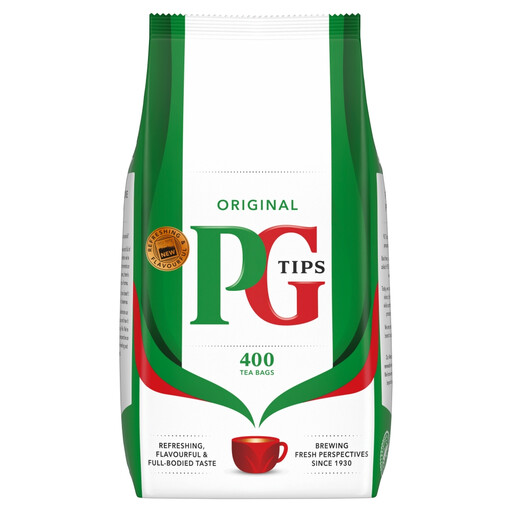
A 400-bag black-tea pack to consider where turnover calls for a larger supply. The listing identifies Rainforest Alliance Certified tea; check this pack’s brewing instructions before setting a counter-service time.
 No image available
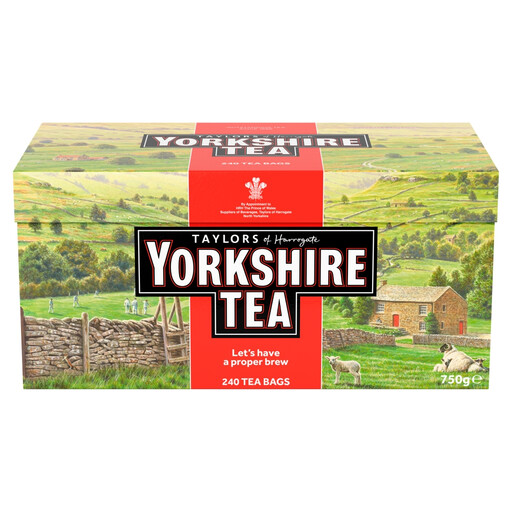
A 240-bag black-tea pack for an outlet able to accommodate a longer steep. Yorkshire Tea’s general method recommends 4–5 minutes, which needs planning for immediate counter service; check the exact pack instructions.
 No image available
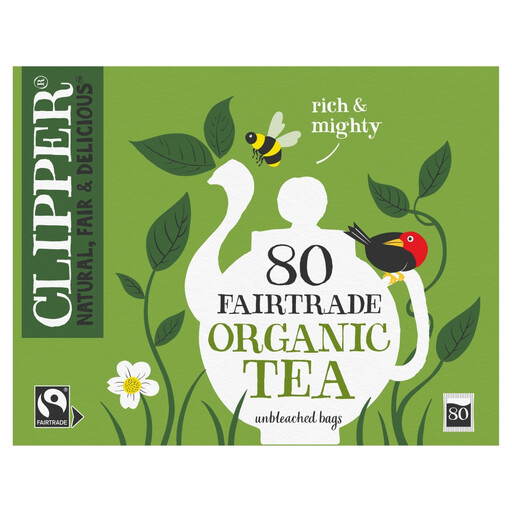
An 80-bag black-tea pack for a menu considering the Organic Fairtrade product described in the listing. Check the exact pack’s sourcing statement and brewing instructions before using either in menu or staff guidance.
 No image available
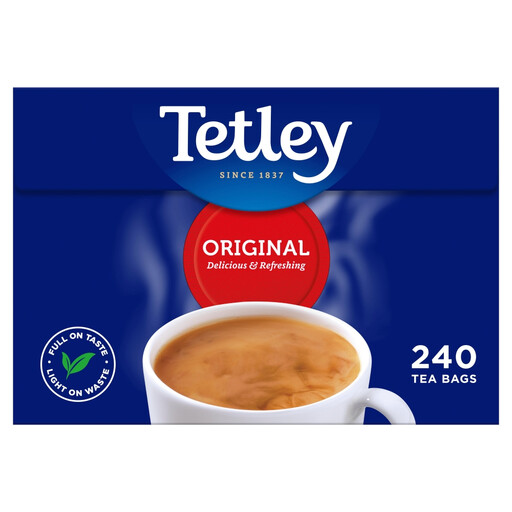
A 240-bag black-tea pack for a standard menu where that quantity fits turnover and storage. Check this variant’s brewing instructions before writing the staff method.
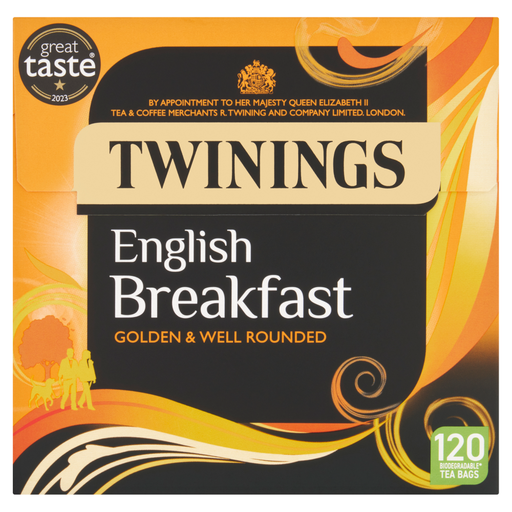 No image available
A 120-bag English Breakfast option to stock alongside an everyday tea if the menu calls for both. The listing identifies 100% black tea; check this pack’s brewing instructions rather than using the timing listed for Twinings’ 300-bag product.
An everyday black tea is a straightforward core choice when the menu serves conventional tea with milk. Compare the exact pack’s brewing method and bag count: Tesco lists 1–2 minutes for PG Tips Original 500 bags, ASDA gives Tetley Original 160 bags a 2–3 minute recommendation, and Clipper lists 2–4 minutes for its 440-bag Fairtrade Everyday product.
Write a method for the product actually served, including its stated water and steeping instructions. Typhoo gives its One Cup product a 1–5 minute range, whereas Yorkshire Tea’s general guidance is 4–5 minutes, so staff should not interchange their timings.
Yes. The Food Standards Agency says retail and catering businesses must provide allergen information for prepacked and non-prepacked food and drink. Keep information current for the tea and for additions served with it, including milk where used.
Do not assume so from a plant-based or compostability claim. Check the selected bag’s disposal instructions and confirm that the airport’s waste contractor accepts it in the intended collection.
A separate decaf tea is worth considering when the menu calls for a reduced-caffeine choice. Yorkshire Tea identifies a decaf variant, but it is a distinct product and should not be treated as the standard everyday blend.