Everyday black-tea drinkers
If tea with milk is part of your routine, compare everyday, Gold-style and English Breakfast blends by the cup you want. A familiar brand name alone does not tell you whether its different blends will taste alike.


Choose the cup style before the brand: an everyday or Gold-style black blend is a starting point for regular tea with milk, English Breakfast offers a robust black-tea style, and Earl Grey brings bergamot-led citrus flavour. If lower caffeine or hard water matters, look for a blend made for that purpose; check organic, Fairtrade and Rainforest Alliance claims on the exact pack rather than assuming they apply across a brand.
If tea with milk is part of your routine, compare everyday, Gold-style and English Breakfast blends by the cup you want. A familiar brand name alone does not tell you whether its different blends will taste alike.
If you want something distinct from plain black tea, Earl Grey offers bergamot-led citrus flavour. English Breakfast takes a different route: Twinings describes it as a robust black-tea blend.
Decaf, a hard-water blend or a particular sourcing label may matter more than flavour style alone. Check the exact tea and pack: those characteristics need not apply to every product from the same brand.
Start with flavour and how you serve the tea, then check any requirements that could rule out an otherwise appealing blend.
| Priority | What to check | Your needs |
|---|---|---|
| Cup style | Compare plain everyday or Gold-style black tea, robust English Breakfast and bergamot-flavoured Earl Grey. Check flavourings if you want unflavoured tea. | I usually add milk, so I want to start with a black-tea blend intended for that kind of cup. If I want citrus aroma instead, Earl Grey is a separate choice. |
| Caffeine | Look for a decaffeinated version of the black-tea style you prefer. Twinings says UK decaffeinated teas typically contain no more than 0.2% caffeine; decaf does not necessarily mean caffeine-free. | For an evening cup, I want lower caffeine without automatically switching from black tea to a different type of drink. |
| Water hardness | Consider a hard-water-specific blend if mineral-rich water changes your usual brew. Yorkshire Tea says hard water can make tea taste darker and thicker. | My usual tea tastes darker or thicker than I prefer when made with local hard water. |
| Sourcing claims | Read the exact pack for organic, Fairtrade or Rainforest Alliance wording. The labels refer to different standards and should not be treated as substitutes. | A particular sourcing claim matters to me, so I want to identify which claim applies to the tea I am buying, not just the brand. |
| Disposal | Check separate instructions for the tea bag and outer packaging. A plant-based material claim alone does not establish a home-composting or local-collection route. | I want to know where the used bag and each part of the packaging can go under my local collection rules. |
Everyday black tea, robust English Breakfast and bergamot-flavoured Earl Grey are intended to make different kinds of cup.
Decide whether you want a plain black-tea blend or a citrus-flavoured one before narrowing the choice by brand.
Small traces of caffeine may remain in decaffeinated tea; Twinings says UK decaf teas typically contain no more than 0.2% caffeine.
Check the exact product wording if the distinction between decaffeinated and caffeine-free matters to you.
A Rainforest Alliance claim does not, by itself, establish that a tea is Fairtrade or organic.
Look for the specific mark and wording you want on the selected pack.
A description of the bag’s materials does not tell you which disposal system accepts it.
Follow the pack instructions and your local collection guidance for the bag and its packaging.
These ranges illustrate different blend and label choices; a brand-level description does not establish the characteristics of every pack.
Its range includes standard Yorkshire Tea, Yorkshire Gold, decaf and a blend named for hard water.
Twinings describes English Breakfast as robust black tea and Earl Grey as a bergamot-led citrus style; it also offers decaffeinated teas.
Clipper describes its Organic Everyday Tea as a black-tea blend and its Organic Everyday Decaf as a decaffeinated blend with Assam.
PG Tips Original is an everyday black-tea option. A Sainsbury’s listing describes the bags in its 240-bag pack as made from paper and cornstarch.
An ASDA listing identifies Tetley Original 240 Tea Bags as black tea and describes the bags as plant-based.
Typhoo lists Premium, Gold and Decaf tea-bag products, alongside different pack formats.
These options cover everyday black tea, decaf, Earl Grey and a blend for hard water. Choose the style or requirement that matters to you before comparing packs.
 No image available
An everyday black-tea option when lower caffeine is the deciding factor. The 80-bag pack is described as organic and Fairtrade; check its label for the claims you need. Decaffeinated tea is not necessarily caffeine-free.
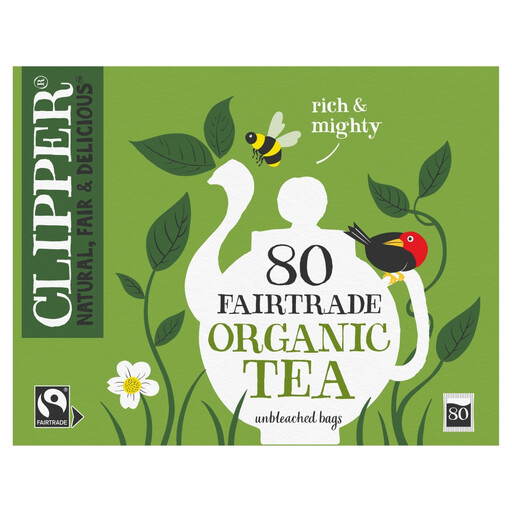 No image available
An everyday tea-bag choice if the organic and Fairtrade claims are part of your selection. This is an 80-bag, 232g pack; confirm the claims on the pack you buy.
 No image available
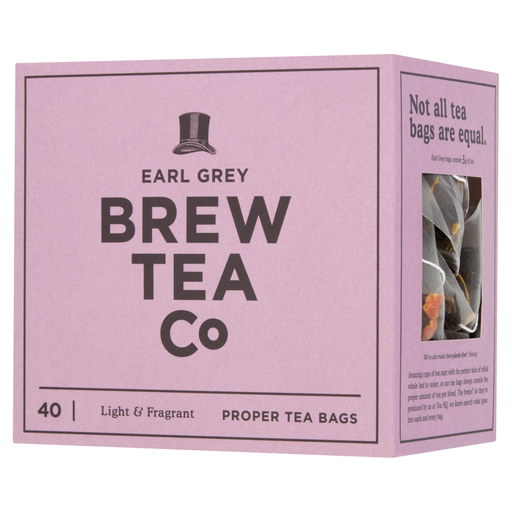
Choose this Earl Grey option when you want a flavoured alternative to plain everyday black tea. The pack contains 40 tea bags and weighs 120g; Earl Grey is a distinct style rather than an unflavoured blend.
 No image available
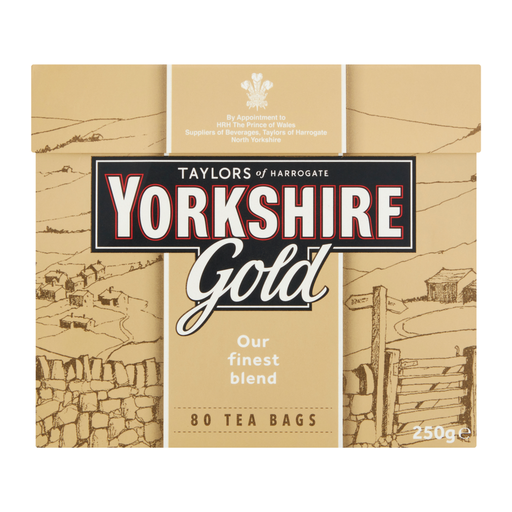
A Yorkshire Tea Gold option for someone comparing plain black-tea blends for everyday use. It is an 80-bag, 250g pack; the Gold name is not, by itself, an organic or Fairtrade claim.
 No image available
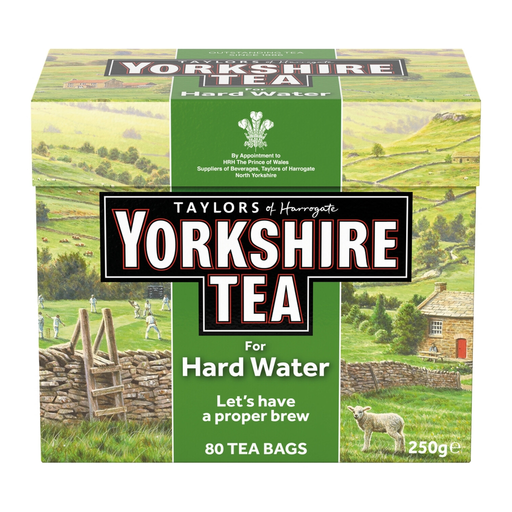
Consider this specialist blend if hard water makes your usual tea darker or thicker than you prefer. The pack contains 80 tea bags and weighs 250g; its hard-water purpose does not make it a general upgrade for every cup.
Choose English Breakfast for a robust black-tea style, particularly if you usually add milk. Choose Earl Grey if bergamot-led citrus flavour is what you want; Twinings describes these as distinct styles.
No. Twinings says UK decaffeinated teas typically contain no more than 0.2% caffeine, so small traces may remain. Check the exact product if you need to distinguish decaf from caffeine-free.
Consider it when local hard water makes ordinary tea darker or thicker than you prefer. Yorkshire Tea identifies minerals in hard water as a cause of that change; the specialist blend need not be your default if you do not notice the issue.
No. They are different claims, so look for the particular wording or mark that matters to you on the exact tea pack. A claim associated with a brand or another product in its range does not establish what is on your chosen pack.
Do not assume they can. A plant-based materials description alone does not give a home-composting instruction; check the tea-bag pack and your local collection guidance before disposing of it.