Breakfast tea drinkers who add milk
Choose between a conventional everyday black tea and a named English Breakfast blend if you want a more explicitly full-bodied flavour profile.


For a weekend breakfast with milk, start by choosing between a familiar everyday black tea and a named English Breakfast blend: Twinings describes the latter as a full-bodied blend of Assam, Ceylon and Kenyan teas. If hard tap water makes your usual cup darker or thicker, Yorkshire Tea offers a blend made for that condition. If organic and Fairtrade credentials matter, check the claims on the exact pack rather than assuming they apply across a brand.
Choose between a conventional everyday black tea and a named English Breakfast blend if you want a more explicitly full-bodied flavour profile.
If tea made at home tastes darker or thicker than you prefer, water hardness is worth considering before changing to another standard blend. Yorkshire Tea describes this effect of mineral-rich water and offers a Hard Water blend.
If organic and Fairtrade claims guide your choice, check the particular product rather than treating either credential as a brand-wide promise.
Start with the cup you want at breakfast, then check whether your water, caffeine preference or sourcing requirements change the choice.
| Priority | What to check | Your needs |
|---|---|---|
| Breakfast flavour | Look for a stated blend and flavour profile. Twinings describes its English Breakfast as a full-bodied combination of Assam, Ceylon and Kenyan teas; check the pack’s brewing time before adding milk. | I usually add milk and want to choose deliberately between a familiar everyday tea and a named English Breakfast blend. |
| Water hardness | Consider whether hard tap water is changing the cup. Yorkshire Tea says minerals can make tea darker and thicker and offers a blend formulated for hard water. | My usual tea tastes too dark or thick at home, so I want to account for the water before changing blends. |
| Sourcing claims | Read the claims on the exact product. Clipper states that its 40-bag English Breakfast contains organically grown black tea traded in compliance with Fairtrade standards; those details do not establish the claims for other packs. | Organic or Fairtrade status matters to me, and I want the particular pack to state the credential I am looking for. |
| Caffeine preference | Check whether a pack is labelled decaffeinated rather than assuming that all black tea bags have the same caffeine content. If a precise limit matters, check the product information for that variant. | For a later cup, I would rather choose a clearly labelled decaffeinated option than use my regular breakfast tea by default. |
| Pack and preparation | Check bag count against how quickly your household uses tea and the space available for storage. Follow the timing on the chosen pack: Twinings specifies 2–3 minutes for a strong cup of its 300-bag English Breakfast product. | A large pack suits me only if we will use it and have somewhere suitable to keep it; I also want clear brewing instructions for the blend I choose. |
Organic, Fairtrade and other sourcing statements describe different things and may apply to particular products rather than an entire range.
If a credential is decisive, read the exact listing and delivered pack. Clipper states organic and Fairtrade claims for its specified 40-bag English Breakfast product; check other variants separately.
Yorkshire Tea says minerals in hard tap water can make tea darker and thicker, so a different standard blend may not address the condition affecting your cup.
If that description fits your tea at home, consider trying a blend labelled for hard water. Do not assume it will suit a household without the same water issue.
Its black-tea range includes standard, Decaf and Hard Water blends, making the variant important to the choice.
Twinings describes its English Breakfast blend as full-bodied and made with Assam, Ceylon and Kenyan teas.
Clipper offers an English Breakfast product that expressly states organic and Fairtrade sourcing claims.
Tetley Original is an everyday black-tea option listed in a 240-bag pack by Morrisons.
A UK listing describes PG Tips Original as a black tea sold in a 210-bag format.
Typhoo Original provides another everyday black-tea choice in an 80-bag format.
These options cover everyday black tea, a hard-water blend, English Breakfast, and packs labelled organic, Fairtrade or decaffeinated. Choose by the variant and pack size you need rather than treating them as interchangeable breakfast teas.
 No image available
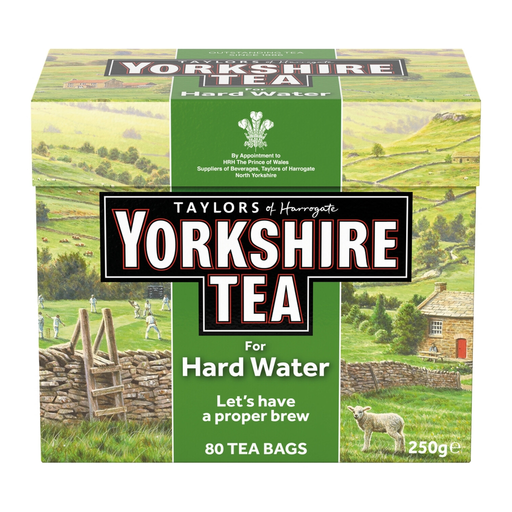
Consider this variant if hard tap water makes your usual tea darker or thicker. It is an 80-bag, 250g pack; the hard-water formulation is a targeted choice, not a general upgrade for every household. Follow the brewing directions on the pack.
 No image available
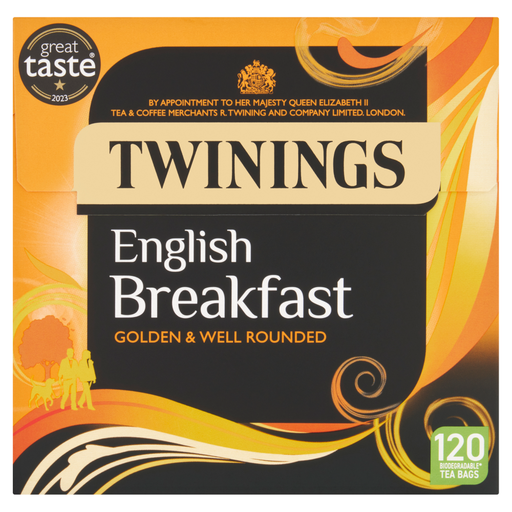
A named English Breakfast option for shoppers seeking a full-bodied black-tea blend, particularly with milk. This variant contains 120 bags and weighs 300g; use its own pack directions rather than the timing stated for a different Twinings pack.
 No image available
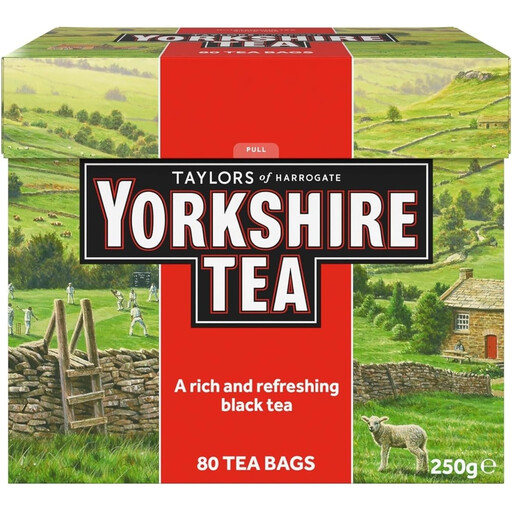
This is the standard Yorkshire Tea variant for an everyday breakfast cup, not the separately named Hard Water blend. The pack contains 80 bags and weighs 250g; choose the hard-water variant separately if that condition is shaping your tea.
 No image available
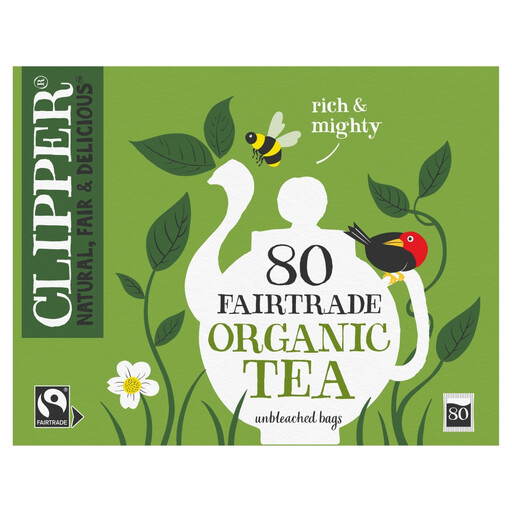
An 80-bag, 232g option labelled Organic Fairtrade for shoppers who want to check those sourcing claims on their tea. Confirm the claims on the exact listing and delivered pack; do not assume that details for Clipper’s 40-bag English Breakfast also describe this variant.
 No image available
This decaffeinated variant offers a different choice from a regular breakfast blend. Its title specifies 80 bags and 277g and states Organic Fairtrade claims. Check the exact pack if those claims or a precise residual caffeine amount matter to your choice.
A named English Breakfast blend is worth considering if you want an explicitly full-bodied profile: Twinings describes its blend of Assam, Ceylon and Kenyan teas that way. An everyday black tea remains an option if you prefer your familiar cup; brew according to the chosen pack before adding milk.
Consider whether your tap water is hard. Yorkshire Tea says minerals in hard water can produce a darker, thicker cup and offers a blend formulated for that condition; it is a targeted option rather than a reason for every household to switch.
Follow the timing on your particular pack, as it differs between products. The UK Tea & Infusions Association gives 90–98°C as the water-temperature range for black tea and advises adding milk last when brewing in a mug; Twinings specifies 2–3 minutes for a strong cup from its 300-bag English Breakfast product.