Self-service breakfast hosts
If guests make tea at a buffet or guest station, individual bags provide portions that are straightforward to set out and count. Bettys lists a Yorkshire Tea pack containing 240 tea bags.


Choose a 240-count tea-bag pack if a continental breakfast needs individually portioned tea for self-service. Choose loose leaf for pot service when someone can measure the tea and use an infuser or strainer; plan the quantity by weight and serving size, not by treating it as a box of 240 bags.
If guests make tea at a buffet or guest station, individual bags provide portions that are straightforward to set out and count. Bettys lists a Yorkshire Tea pack containing 240 tea bags.
Loose leaf suits brewed-to-order or table service when staff have time to measure portions and use infusers or strainers. Taylors of Harrogate lists Yorkshire Tea loose leaf by weight, while Whittard gives a 2g-per-cup preparation basis for its English Breakfast tea.
Whittard and Fortnum & Mason offer loose-leaf breakfast blends in smaller packs. Check the chosen tea’s portion guidance against the number and size of servings planned.
Choose this when: Guests or staff need to make separate mugs at a self-service breakfast; Bettys lists Yorkshire Tea in a 240-bag pack.
Trade-off: A 240-bag pack is not loose leaf, so it does not serve a requirement to measure tea for pots.
Choose this when: Staff can measure tea and brew it in pots using an infuser or strainer.
Trade-off: Order by the chosen tea’s weight-based recipe and serving size, rather than assuming a pack contains 240 portions.
| Priority | What to check | Your needs |
|---|---|---|
| Format and portions | Confirm whether the order calls for 240 separate tea bags or loose tea sold by weight. Taylors of Harrogate lists Yorkshire Tea in both formats. | I need guests to make individual mugs, or I have staff who can portion loose tea for pots. |
| Brewing routine | Bettys advises infusing its Yorkshire Tea bag for 4–5 minutes. Whittard specifies 2g per 200ml cup for its English Breakfast loose tea; check the recipe for the product you choose. | During breakfast service, the preparation method needs to fit the equipment and staff time available. |
| Tea choice | Check the blend description and how guests will serve it. Bettys identifies its 240-bag Yorkshire Tea pack as black tea; Fortnum & Mason describes its loose-leaf Breakfast Blend as an Assam blend. | I want to choose a breakfast tea that fits the drinks offered to guests, including whether milk will be available. |
| Product information | Keep the current pack label or manufacturer information accessible when serving guests. GOV.UK guidance addresses allergen information for prepacked and non-prepacked food and drink. | If I run a breakfast venue, staff need current information they can consult when guests ask about ingredients or allergens. |
A 240-count pack contains individual bags; loose tea is sold by weight and needs a way to measure and strain it. The formats require different preparation.
Decide whether the requirement is 240 separate bags or tea for approximately 240 cups before ordering.
Serving estimates depend on the chosen recipe and cup size. Whittard bases its English Breakfast guidance on 2g per 200ml cup, while Fortnum & Mason provides separate guidance for its Breakfast Blend.
Use the exact product’s portion guidance and the venue’s serving size to work out how much loose tea to order.
Staff answering an ingredient or allergen question need information for the tea actually being served, particularly after a product or supplier changes.
Keep the current pack label or manufacturer information to hand. GOV.UK guidance covers allergen information and staff training for food businesses.
These brand ranges illustrate the format choice; a brand’s inclusion here does not indicate that its products appear in the Joybuy selection below.
Taylors of Harrogate lists Yorkshire Tea bags in 40, 80, 160 and 240 counts, and loose tea in 250g and 1kg formats.
Twinings lists English Breakfast in both loose-tea and tea-bag formats, including a 125g loose tea and a 300-tea-bag pack.
Ringtons lists Breakfast Tea bundles of 200 and 400 bags, alongside a 200-bag Decaf bundle.
Whittard lists English Breakfast loose tea in a 100g pouch and 140g caddy, with guidance of 2g per cup.
Fortnum & Mason describes its loose-leaf Breakfast Blend as an Assam blend and lists 125g and 250g formats.
Bettys lists a Yorkshire Tea 240-bag pack and separate 1kg Bettys Tea Room Blend loose teas for soft or hard water.
These Joybuy options are 240-bag packs for individually portioned breakfast tea, not loose-leaf teas for pot service.
 No image available
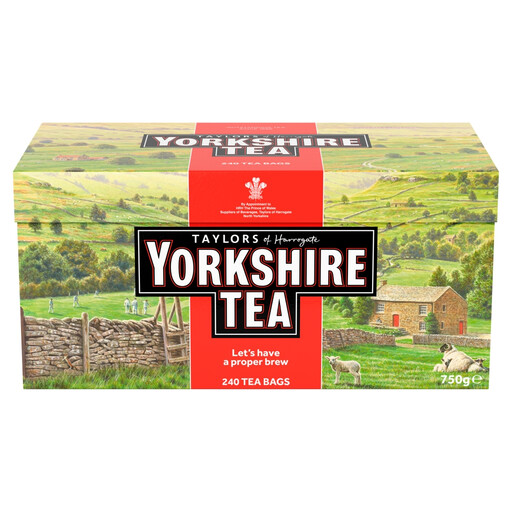
This black tea comes in 240 individual bags for a self-service breakfast, rather than as loose leaf. The listing names a 750g pack, but check the selected variant and pack weight before ordering; also check the pack’s brewing directions.
 No image available
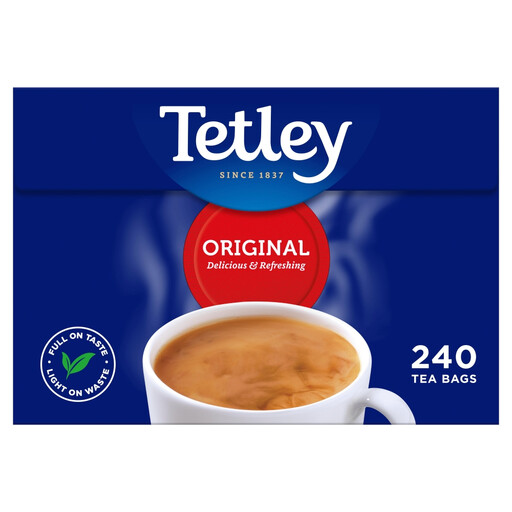
This black tea is packaged as 240 individual bags for mug-by-mug service, not loose-leaf pot brewing. The product name specifies 750g; check the pack’s brewing directions when planning service.
No. Bettys lists Yorkshire Tea as a pack of 240 individual tea bags, while Taylors of Harrogate lists its loose tea separately by weight. Use the bag count for portioned service and a weight-based plan for loose-leaf brewing.
Start with the chosen tea’s brewing guidance and your actual serving size. Whittard specifies 2g per 200ml cup for its English Breakfast loose tea; Fortnum & Mason gives its own 2g guidance for Breakfast Blend. Apply the recipe for the product you order rather than converting its weight into a bag count.
Bettys advises pouring freshly boiled water onto a bag in a mug and infusing it for 4–5 minutes according to taste. Its product guidance says to store the pack in a cool, dry place away from direct sunlight.
Keep the current pack label or manufacturer ingredient information available to staff for the tea being served. GOV.UK guidance addresses allergen information for prepacked and non-prepacked food and drink, as well as allergen management and staff training for food businesses.