Managers of busy breakfast buffets
A stated bag count helps them plan replenishment, while the original pack provides the storage and date information needed when tea is moved to a display jar.


For a busy hotel breakfast buffet, choose an everyday black-tea pack whose bag count suits the rate at which staff replenish the station; add a separately labelled decaf option if guests need one. A jar does not establish that the tea or container suits the service: check its capacity and cleaning arrangements, follow the tea’s storage instructions, and keep the original product and date information available when refilling it.
A stated bag count helps them plan replenishment, while the original pack provides the storage and date information needed when tea is moved to a display jar.
A separate decaf or other tea choice needs clear identification at the station, with each product’s information kept available after its bags leave the original pack.
They need to check the exact bag material and their waste contractor’s collection rules before using compostability claims on buffet signage.
Start with expected tea use and the varieties to display. Then check how staff will refill, identify and store each tea without losing the information on its original pack.
| Priority | What to check | Your needs |
|---|---|---|
| Pack size | Compare stated bag counts with expected breakfast use and how often staff can refill the jar. Keep reserve stock under the product’s storage conditions. | I want enough everyday tea for service without putting more bags on display than staff can rotate and track. |
| Tea choice | Identify each tea by its exact product name. Use separate, labelled containers for standard and decaf bags rather than relying on their appearance. | Guests looking for decaf should be able to distinguish it from everyday black tea at the buffet. |
| Product information | Keep the original pack or a controlled record linked to each jar. The Food Standards Agency says UK catering businesses must provide applicable allergen information for both prepacked and non-prepacked food and drink. | I need staff to be able to identify the tea and provide the relevant product information after the bags have been decanted. |
| Jar and storage | Check the jar’s capacity, lid, cleaning process and place on the counter against the intended bags and refill routine. Follow the exact tea’s storage instructions; Yorkshire Tea, for example, specifies cool, dry storage away from direct sunlight. | The display needs to fit the station while keeping tea dry and making refills straightforward for staff. |
| Waste route | Check the material claim for the exact pack and ask the waste contractor which bags its collection accepts. Industrial compostability does not establish home-compost or local collection acceptance. | If we give guests disposal instructions, I want them to match the bags in use and our collection arrangements. |
Once bags leave their pack, staff may lose access to the information needed to identify the tea, follow its storage instructions and answer allergen questions.
Keep the original carton or pouch available and link each jar to the exact product and its date information. The Food Standards Agency advises using stickers or another method to track food removed from its original packaging and following the manufacturer’s storage instructions.
A large pack does not determine how many bags should sit on the counter. The refill routine still needs to preserve product identification and date tracking.
Estimate breakfast use and refill intervals before choosing a pack and jar capacity; keep the remaining bags according to the pack’s storage instructions.
Standard and decaf bags can be difficult to identify once separated from their packs, making the buffet information less dependable.
Give each tea its own labelled container and retain the corresponding original product information. Do not use bag shape or colour as the only identifier.
Yorkshire Tea’s claim for its original UK boxed bags concerns industrial composting, while the PG Tips retail listing makes food-waste disposal conditional on local acceptance.
Check the exact pack and confirm acceptance with the hotel’s waste contractor before changing disposal instructions.
These pack examples can help with planning; each format and material claim applies to the product cited, not every tea sold under the brand.
Tetley Original is listed in a 240-bag pack by Waitrose & Partners and as 3 × 240 bags by Costco UK.
Tesco lists PG Tips Original in a 210-bag pack; Costco UK lists a 4 × 210-bag format for catering or shared offices.
Yorkshire Tea lists Original tea-bag formats from 40 to 1040 bags, as well as other tea variants.
Twinings lists English Breakfast in a 300-bag format and All Day Decaf in a 40-bag food-service pouch.
Clipper lists Fairtrade Everyday One Cup in a 1120-bag format, with cool, dry storage instructions.
Typhoo lists an 1100-bag Everyday Tea pack and describes food-service and wholesale formats from 40 to 1100 bags.
These tea-bag options cover everyday black tea and a separate decaf choice for a breakfast buffet. They are tea products, not storage jars; choose a container against the number and type of bags you intend to display.
 No image available
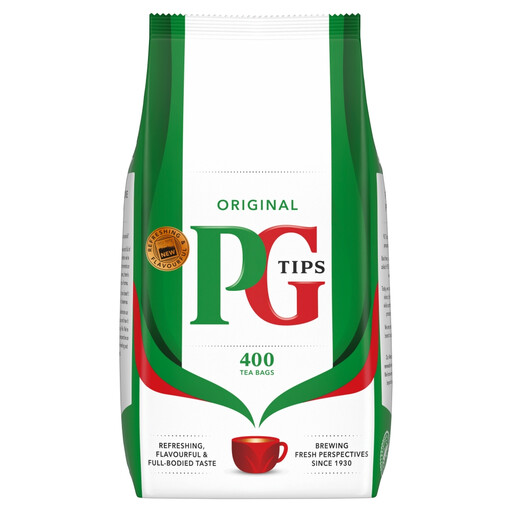
A 400-bag everyday-tea pack to consider when staff expect frequent black-tea refills. Keep the original pack information available when replenishing a buffet jar, and check the jar’s capacity separately.
 No image available
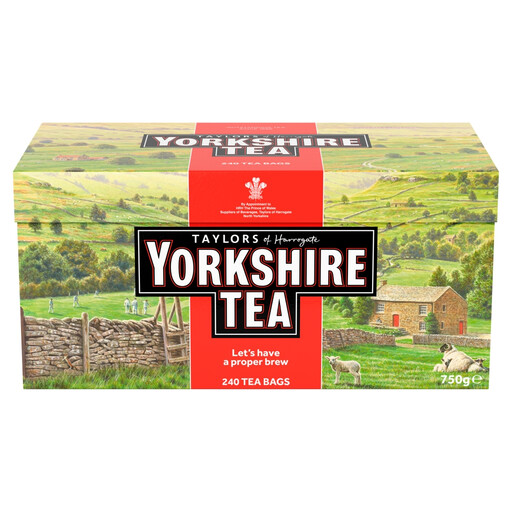
A 240-bag black-tea option for planning regular buffet refills. Yorkshire Tea’s Original product instructions specify cool, dry storage away from direct sunlight; retain the delivered pack’s information when decanting.
 No image available
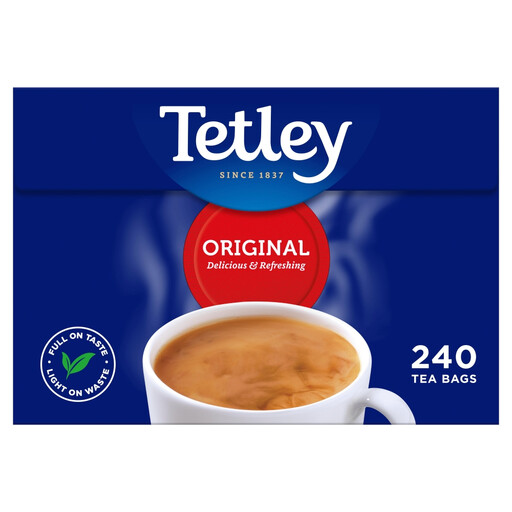
This 240-bag black-tea pack offers a stated quantity for an everyday buffet tea. The Waitrose & Partners listing for Tetley Original specifies cool, dry storage; use the delivered pack’s instructions and date information for refills.
 No image available
An 80-bag decaffeinated tea option for a separately labelled buffet container. Keep it distinct from standard tea and retain its own pack information and date details when refilling.
 No image available
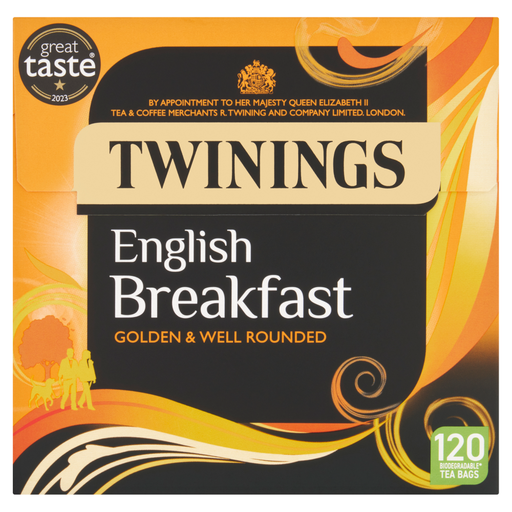
A named English Breakfast tea in a 120-bag pack. Consider the stated count against expected use at its station, and keep the pack information available if the bags are transferred to a jar.
Yes, provided the jar fits the hotel’s food-safety process and staff can still identify and track the tea. The Food Standards Agency advises using stickers or another method to track food removed from original packaging and following the manufacturer’s storage instructions on the original label.
No. The Food Standards Agency says UK retail and catering food businesses must provide applicable allergen information for both prepacked and non-prepacked food and drink. Keep the exact tea’s original information available so staff can provide the details relevant to that product.
Choose a container and location that let staff follow the exact tea’s storage instructions. Yorkshire Tea specifies cool, dry storage away from direct sunlight for its Original tea; the cited Tetley, Typhoo and Clipper product information also specifies cool, dry storage. Check how the jar will be cleaned and closed between refills.
Not automatically. Yorkshire Tea describes bags in its original UK boxes as industrially compostable, and the cited PG Tips retail listing conditions food-waste disposal on local acceptance. Check the exact pack and ask the hotel’s waste contractor before giving guests disposal instructions.