Small refreshment stands
If you expect to serve one everyday tea, an identifiable retail carton may be enough. A jar is worth considering when it makes a small working supply easier to reach and can be kept clean and dry.


For a short car boot sale, keeping tea bags in their original cartons is a straightforward way to retain product identification and instructions. Decant a working supply into a jar only if it is suitable for food contact and you can keep the tea dry and clearly identified; a compartment box makes more sense when you intend to offer several separate varieties. Choose the tea and pack size around expected cups, and follow each product’s own brewing directions.
If you expect to serve one everyday tea, an identifiable retail carton may be enough. A jar is worth considering when it makes a small working supply easier to reach and can be kept clean and dry.
If you plan to serve standard tea alongside decaffeinated, green or flavoured options, separate and identify each variety rather than mixing bags in one jar.
If caffeine level, ingredients or sourcing attributes matter to your selection, check the exact pack. A familiar brand name alone does not identify every variant it sells.
Choose it when: the sale is short, quantities are modest or you need several packs’ details close to hand.
Allow for: repeated opening outdoors, while protecting the carton from rain and spills.
Choose it when: a clearly identified working supply of one tea is easier to serve from a jar suitable for food contact.
Allow for: retaining the original pack details and checking capacity and practicality for outdoor handling separately.
Choose it when: you deliberately offer several varieties and need to keep them distinct.
Allow for: checking that each compartment keeps its tea identifiable and protected during service.
| Priority | What to check | Your needs |
|---|---|---|
| Storage suitability | For decanted bags, check that the container is suitable for food contact, can be kept clean and dry, and holds the working supply without losing its identity. The Food Standards Agency explains why materials intended to contact food are regulated. | I want to reach the tea easily without relying on an unidentified or unsuitable jar. |
| Weather protection | Check how you will protect cartons or containers from rain, spills and damp surfaces. Clipper, Typhoo and the PG Tips Original listing specify cool, dry storage for their respective teas. | If the stand is outdoors, I need a place to keep the tea dry throughout service. |
| Brewing routine | Read the exact pack’s directions and plan how you will prepare successive cups. For example, Morrisons lists 1–2 minutes for PG Tips Original, while Yorkshire Tea’s brewing guide recommends 4–5 minutes. | I want to give customers a consistent drink without assuming every tea uses the same brewing time. |
| Variety and identification | Decide which tea types you intend to offer, then keep each product and its current pack information identifiable. Check whether separate cartons or compartments suit that choice. | A decaffeinated or green option matters to me only if I can identify it reliably when serving. |
| Pack quantity | Estimate expected cups before choosing a pack size; count any separate tea varieties individually. A stated bag count does not establish how many bags a jar or compartment will hold. | I would rather plan the main supply around likely servings than choose a large box solely for its size. |
| Ingredients and add-ins | Keep current product information available and account for milk or other additions actually served. Food Standards Scotland says food businesses must provide allergen information for prepacked and non-prepacked food and drink and manage allergens during service. | If I serve drinks with add-ins, I need to know what is in each drink and how the ingredients are handled. |
An instant coffee jar’s former use does not, by itself, establish its suitability for holding decanted tea bags. The Food Standards Agency’s food-contact guidance concerns materials that can transfer constituents to food.
Check that the jar is suitable for its intended food-contact use, and keep it clean, dry and clearly identified. Otherwise, use the tea’s original packaging.
Extra compartments do little for a stand serving just one tea; a display box also does not replace the need to identify its contents.
Estimate servings and decide which varieties you will actually offer before choosing between cartons, a jar and a compartment box.
Brand instructions differ: Morrisons lists 1–2 minutes for PG Tips Original, whereas Yorkshire Tea’s guide recommends 4–5 minutes. One routine may not match both products.
Use the directions on the exact pack when planning how drinks will be prepared at the stand.
Decanting or offering several varieties can make it harder to identify the ingredients and instructions for the drink being served, particularly when add-ins are available.
Retain current pack information, label the tea in each container and account for the ingredients you add. If you operate as a food business, check the applicable requirements with your local authority before trading.
Yorkshire Tea describes everyday, decaffeinated and hard-water blends, giving you distinct variants to check against the drinks you intend to offer.
PG Tips Original is an everyday black-tea option; Morrisons lists an 80-bag pack containing black tea.
Twinings lists English Breakfast and Strong English Breakfast tea bags, as well as tea-storage jars and compartment boxes.
Clipper’s Everyday and English Breakfast product information identifies organically grown black tea traded in compliance with Fairtrade standards.
Typhoo offers everyday tea in several pack quantities for planning different supply sizes.
Tata Consumer Products describes Tetley as a tea brand covering different tastes and occasions.
These are tea-bag packs for a car boot sale refreshment supply, including everyday and decaffeinated options. If you intend to decant them, choose and check a suitable storage container separately.
 No image available
A separately identified decaffeinated option if you plan to offer a choice alongside everyday tea.
The pack contains 80 tea bags; the product details identify decaffeinated black tea and organic and Fairtrade attributes. Check the exact pack’s brewing directions before service.
 No image available
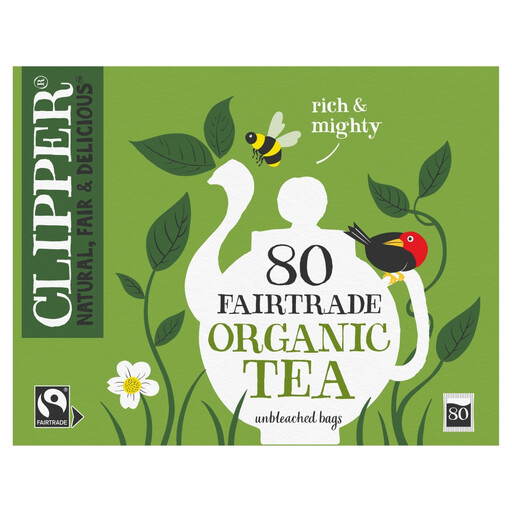
An everyday black-tea pack to consider when organic and Fairtrade attributes are part of your selection.
It contains 80 tea bags and is identified as organically grown black tea. Keep the pack dry and use its own brewing directions when serving.
 No image available
A decaffeinated black-tea option to keep identifiable if you offer more than one tea.
This is an 80-bag, 250g pack; its product details give a 2–3 minute brewing recommendation. Retain the current pack information for service.
 No image available
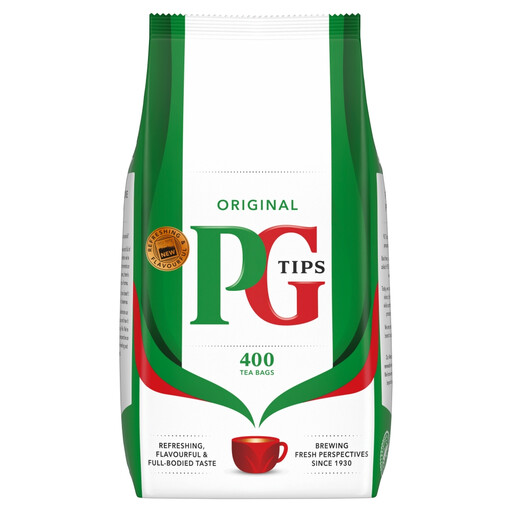
A larger everyday black-tea pack if your estimated number of cups warrants 400 bags.
The stated pack weight is 1.16kg. Store it in cool, dry conditions and check this pack’s brewing directions rather than using timings from another PG Tips format.
 No image available
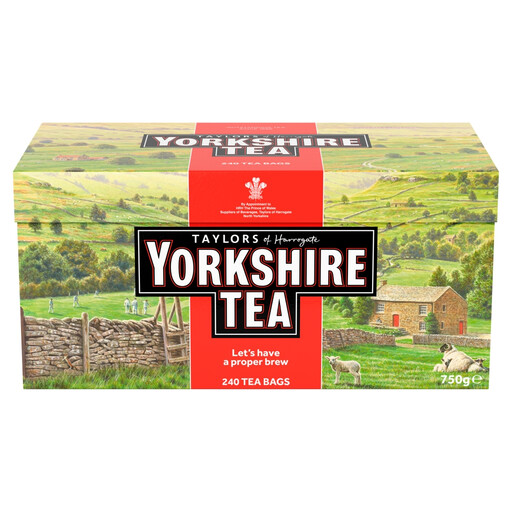
A larger black-tea supply to compare with your expected number of servings.
The box contains 240 tea bags and weighs 750g. Keep it dry and check the exact pack’s brewing directions for your service routine.
Consider it only if the jar is suitable for the intended food-contact use and can be kept clean, dry and clearly identified. Its former use alone does not establish suitability. Keep the tea’s original pack available for its current ingredients and preparation directions.
Not necessarily. A suitable jar can make one working supply easy to reach, but the original carton keeps its product information close to the tea and may be simpler for a short sale. Protect either format from damp conditions; use separate identified storage if you offer several varieties.
Follow the exact product’s directions rather than setting one time for every tea. Morrisons lists 1–2 minutes for PG Tips Original 80 Tea Bags, Twinings gives 2–3 minutes for its English Breakfast 80 Tea Bags, Typhoo states 1–5 minutes for its 80 Premium Tea Bags, and Yorkshire Tea’s guide recommends 4–5 minutes.
Yes. Food Standards Agency guidance says food-business registration applies to businesses selling food and drink, including from temporary premises such as stalls; Food Standards Scotland also directs food businesses to register with their local authority. Ask the relevant local authority how the requirements apply to your planned activity before trading.
Keep the current information for the tea and every addition you actually use, and identify what goes into each drink. Food Standards Scotland says food businesses must provide allergen information for prepacked and non-prepacked food and drink and manage allergens during preparation and service.