Care-home catering managers
Choose a tea service around residents’ preferences and the home’s food-safety procedures. A coffee-pod service calls for a separate assessment of its machine and operating process.


For a routine tea service, tea bags allow a care home to offer standard and decaffeinated tea without adding a coffee-pod machine. Treat pods as a separate coffee-service decision: establish demand for coffee, then assess a specific machine and compatible pods alongside cleaning, maintenance, staff procedures and residents’ individual drink requirements.
Choose a tea service around residents’ preferences and the home’s food-safety procedures. A coffee-pod service calls for a separate assessment of its machine and operating process.
Keep standard and decaffeinated choices in view, while preparing each resident’s drink according to their current eating-and-drinking plan where one applies.
Assess the named pod machine, compatible products and the staff procedures for cleaning, maintenance and serving before adopting it.
Choose when: residents need tea, including a choice of standard and decaffeinated products, prepared to their individual requirements.
Account for: brewing, additions and serving still need staff attention; tea bags do not provide pod-made coffee.
Consider when: the home wants a separate coffee offer and has identified a machine and compatible pods.
Account for: the machine adds cleaning, maintenance and staff-use procedures; pods do not replace a tea offer.
| Priority | What to check | Your needs |
|---|---|---|
| Drink choice | Confirm whether the menu needs tea, coffee or both. For decaf tea, check the exact product’s caffeine information rather than assuming it is caffeine-free. | I want residents to have drinks that reflect their preferences, with a decaf choice where needed. |
| Individual preparation | Check each applicable eating-and-drinking or swallowing plan before preparing a drink. The Medicines and Healthcare products Regulatory Agency warns that mixing a PEG-based laxative with a starch-thickened liquid can counteract thickening. | If someone needs a prescribed fluid consistency, the preparation method must follow their individual instructions rather than a standard serving routine. |
| Equipment and hygiene | For a pod service, confirm machine compatibility and documented cleaning, maintenance and staff-use procedures. In England, the Care Quality Commission requires provider equipment to be clean, suitable, maintained and properly used. | Our staff need a drink-service method they can operate within the home’s food-safety procedures. |
| Ingredients and allergens | Keep current information for each drink product and additions such as milk, creamers or flavourings. Food Standards Agency guidance for institutional caterers covers care homes. | I need staff to be able to check what goes into the drink actually served, including any additions. |
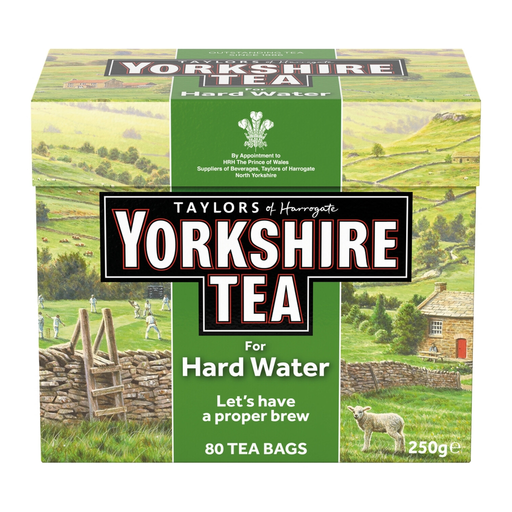
| Tea blend | Compare the exact tea-bag variant with the home’s menu. Yorkshire Tea describes a Hard Water blend for mineral-rich tap water; confirm local water conditions before choosing it for that reason. | If our water is hard, I want to consider whether a hard-water tea variant fits residents’ preferences. |
Pods and tea bags serve different drinks. Removing tea bags could remove a tea option while adding a machine that staff must operate, clean and maintain.
Set the resident drinks menu first; assess a named pod system separately if the home also wants to serve coffee.
Twinings states that UK decaffeinated teas typically contain no more than 0.2% caffeine and that its decaf teas are tested below that level. This statement does not establish the caffeine content of another product.
Check the exact pack and follow any individual instructions about caffeine.
The Care Quality Commission identifies swallowing difficulties as a risk requiring management. The Medicines and Healthcare products Regulatory Agency also warns that PEG-based laxatives can counteract starch-thickened liquids when mixed together.
Follow the resident’s current professional recommendations and the home’s approved preparation process before changing a drink or thickener routine.
Tetley’s owner says a significant portion of its tea-bag portfolio can be industrially composted where suitable food-waste collection exists. That does not establish the disposal route for every pack.
Check the exact packaging and whether the home’s waste collection accepts it.
These brand ranges offer different tea-bag choices; check the exact product rather than assuming a feature applies across a brand.
A conventional tea-bag option for a routine tea menu.
Its stated range includes Decaf and Hard Water variants.
Offers decaf tea, including individually wrapped pyramid bags described by Twinings for smaller catering settings.
Lists an Organic Everyday Decaf black tea for homes considering that type of tea-bag option.
Lists standard, decaf and one-cup tea bags in several pack counts.
These tea bags are options for a care home’s tea service, not coffee-pod or machine choices. Compare the decaf and hard-water variants against the drinks the home intends to serve.
 No image available
A decaffeinated black tea-bag option for a tea menu that includes decaf. The pack is labelled 80 tea bags, 250g; check its caffeine information against any individual restriction and follow the resident’s drink plan.
 No image available
A hard-water tea variant to consider if the home’s water conditions make that distinction relevant. The pack is labelled 80 tea bags, 250g; check the exact product separately if a decaf choice is required.
Not as a like-for-like replacement: tea bags provide tea, while coffee pods require a compatible machine to make coffee. Keep a tea option where residents need one, and assess any additional pod service as an equipment and staff-process decision.
Not necessarily. Twinings states that UK decaffeinated teas typically contain no more than 0.2% caffeine and that its own decaf teas are tested below that level; check the exact product and any individual caffeine instructions.
Follow that resident’s current eating-and-drinking or swallowing recommendations before serving tea or coffee. The Care Quality Commission identifies swallowing problems as a risk requiring management; do not assume that an ordinary drink or a particular format meets a prescribed fluid consistency.
Keep current ingredient and allergen information for the exact drink products and any additions served, including milk, creamers or flavourings. Food Standards Agency guidance for institutional caterers covers care homes and calls for staff to be able to locate accurate information.
The home needs a process for the specific machine’s use, cleaning and maintenance, as well as compatible pods. For CQC-regulated services in England, the Care Quality Commission requires provider equipment to be clean, suitable, properly maintained and properly used.