What should you check before buying?
Start with when you plan to drink the tea and whether you want caffeine. Then compare the pack and any water, ingredient or sourcing requirements that matter to you.
| Priority | What to check | Your needs |
|---|
| Caffeine and timing |
Read the exact product’s caffeine description and brewing guidance. Decaf does not necessarily mean zero caffeine; check an infusion’s ingredients before relying on a caffeine-free claim. |
For a late study break, I would rather compare decaf tea and a labelled caffeine-free infusion than assume regular or green tea contains no caffeine. NHS Borders advises children and young people to avoid caffeine for four hours before bedtime. |
| Water and flavour |
Check whether your tap water is mineral-rich and whether the pack identifies a hard-water blend. Compare brewing instructions for the particular tea. |
If my usual tea tastes darker or thicker with local tap water, a hard-water blend is worth considering. Yorkshire Tea describes mineral-rich water as a reason this can happen; the blend is not a caffeine-reduction choice. |
| Sourcing claims |
Check which organic or certification claim applies to the exact product and whether it appears on the current pack. Keep sourcing separate from caffeine status. |
I want to choose using a stated sourcing claim, not assume every tea from the same brand has identical credentials. Clipper describes its Everyday product as organic black tea traded in compliance with Fairtrade standards. |
| Ingredients |
Read the current ingredient and allergen information for the exact pack, particularly for flavoured blends and infusions. Check any product-specific dietary statement you rely on. |
When an ingredient matters to me, I need the label for the tea I am actually buying rather than an assumption based on its flavour or brand. |
| Pack and format |
Compare bag counts and the stated pack weight. Confirm that you are ordering tea bags rather than capsules intended for a machine. |
For repeated revision breaks, I may prefer a larger bag count; for occasional use, a smaller pack may be enough. A tea bag is not a coffee-machine pod. |
Which tea brands are relevant?
These brand examples illustrate different tea-bag routes; the claim and suitability still need to match the particular pack.
Tetley
A familiar tea range to compare when choosing between regular tea and a labelled decaf variant.
- Tetley lists Decaf Original in its range.
- Tetley says caffeine in a prepared cup varies with factors including tea quantity and infusion time; green tea should not be assumed caffeine-free.
PG Tips
An everyday black-tea reference for earlier revision sessions when caffeine reduction is not the aim.
- Lipton Teas describes PG Tips Original as a full-bodied blend.
- A Sainsbury’s listing makes sourcing and bag-material claims for Original x160; check the current pack rather than extending them to every PG Tips product.
Yorkshire Tea
A brand to consider when mineral-rich tap water affects the cup you prefer.
- Yorkshire Tea describes its hard-water blend as intended for water containing many minerals.
- A hard-water blend addresses water conditions, not a need to reduce caffeine; check the named variant.
Twinings
A reference for comparing a named decaf tea with other choices for later study breaks.
- Twinings lists an Everyday Decaffeinated 80 Tea Bags product.
- Twinings says UK decaffeinated teas typically contain no more than 0.2% caffeine; decaf does not mean that every prepared cup is caffeine-free.
Clipper
A product-specific sourcing reference for shoppers comparing organic and Fairtrade claims.
- Clipper describes its Everyday tea as organically grown black tea traded in compliance with Fairtrade standards.
- That Everyday product is black tea; its sourcing claims do not make it a decaf option.
Typhoo
An everyday-tea range whose named variants include Premium, Gold and Decaf bags.
- Typhoo lists both regular and decaf tea-bag products.
- Check the variant’s current ingredients and caffeine description; the existence of a decaf line does not make its other teas decaf.
Tea-bag options on Joybuy
These options cover decaf tea bags, a camomile infusion and a blend labelled for hard water. Choose by the drink and pack you want, rather than treating the hard-water blend as an evening decaf alternative.
 No image available
Clipper Organic Fairtrade Decaf Everyday 80 Tea Bags 277g
A decaf black-tea option for later study breaks if you prefer tea to an infusion. The listing states 80 bags, 277g and organic and Fairtrade sourcing claims. Decaf does not establish zero caffeine; check the current pack if the residual amount matters to you.
View on Joybuy
 No image available
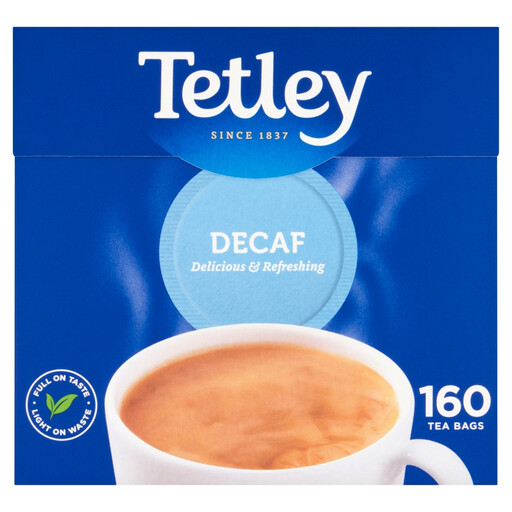
Tetley Decaf Tea Bags 160 Pack 500g
A decaf black-tea choice when you expect to make tea across repeated study breaks. The pack is labelled as 160 tea bags and 500g. Check its current caffeine information if you need to know the residual amount.
View on Joybuy
 No image available
Tetley Green Tea Decaffeinated 50 Tea Bags 100g
This is a labelled decaffeinated green-tea option if you want green tea while reducing caffeine. The pack states 50 bags and 100g. Decaffeinated is not the same as caffeine-free, so check the current label if that distinction matters.
View on Joybuy
 No image available
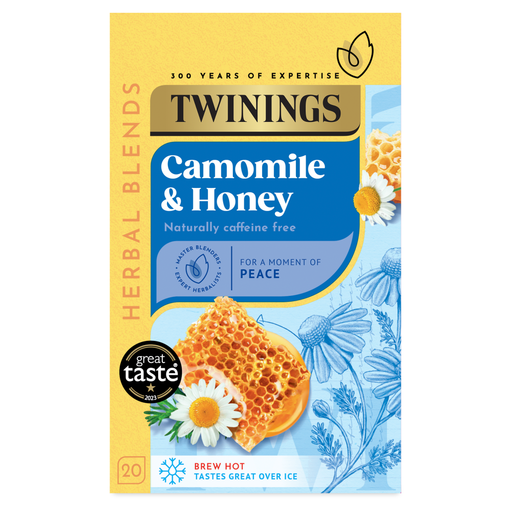
Twinings Camomile Honey & Vanilla Tea Bags 20 Pack
A 20-bag camomile infusion for shoppers who would rather have an infusion than black or green tea. Its product description claims it is caffeine-free; confirm the current blend’s caffeine, ingredient and allergen information if those details determine your choice.
View on Joybuy
 No image available
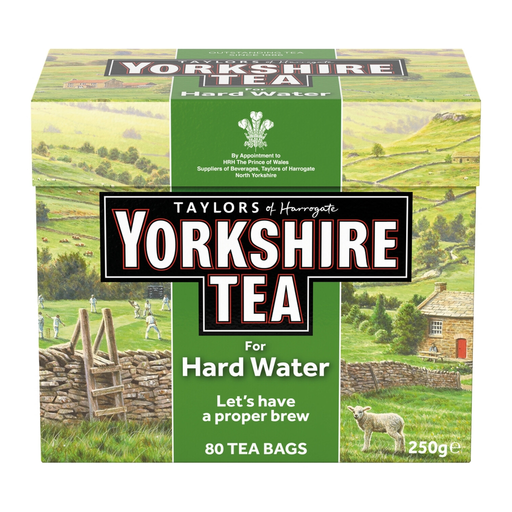
Taylors of Harrogate Yorkshire Tea for Hard Water 80 Tea Bags 250g
Consider this black-tea blend if mineral-rich tap water affects the tea you make at home. The pack is labelled as 80 bags and 250g. Its hard-water purpose does not establish reduced caffeine; check the current pack if you are choosing a drink for late revision.
View on Joybuy
Questions about tea for revision
Can I use tea bags instead of coffee pods?
Tea bags are brewed in hot water, while coffee capsules need a compatible machine. Check the product format before ordering; a tea-bag pack is not a substitute capsule for a coffee machine.
What can I choose for a late revision break?
Compare a decaf tea with an infusion whose exact label says caffeine-free. Decaf may retain some caffeine, and not every infusion has the same ingredients. NHS Borders advises children and young people to avoid caffeine for four hours before bedtime.
Is green tea always caffeine-free?
No. Tetley says green and black tea come from the same plant and that caffeine in the prepared cup depends partly on how the tea is brewed. If reducing caffeine matters, check whether the particular green tea is labelled decaffeinated rather than relying on its colour.
When is a hard-water tea blend relevant?
Consider one when your tap water is mineral-rich and ordinary tea tastes darker or thicker than you prefer. Yorkshire Tea describes those effects of hard water; a hard-water blend addresses the water condition, not caffeine content.
Should I read the ingredients on plain or flavoured tea bags?
Yes, if an allergy, intolerance or dietary requirement affects your choice. Read the current ingredients and allergen information for the exact pack rather than assuming that products with similar names have the same formulation.


