What should you check before buying?
Start with the type of tea you will drink, then check its preparation, bag count and any pack-specific sourcing or disposal information.
| Priority |
What to check |
Your needs |
| Format |
Check whether the pack contains conventional tea bags or a product intended for a machine. Follow its mug and water instructions. |
I am making tea with a kettle and mug, so I need tea bags rather than coffee pods. |
| Caffeine |
Check for an explicit decaf label and any stated residual caffeine information. A shorter brew does not turn ordinary black tea into decaf. |
For a lower-caffeine choice, I want the product itself to be labelled decaf. |
| Blend and water |
Check the tea type and the pack’s brewing time. If hard water affects your cup, compare a blend formulated for hard water with an ordinary blend. |
Does my local water make my usual tea look or taste different? If not, I can start by trying a standard blend. |
| Pack size |
Compare the number of bags with how often you expect to make tea. Check whether the pack suits a first trial or regular cupboard use. |
I would rather try a blend before stocking up if I do not yet know whether I like it. |
| Sourcing and disposal |
Read the individual pack’s sourcing claims and tea-bag disposal instructions. Recycle Now says plant-based sealing materials can require industrial processing; check what your local collection accepts. |
Certifications matter to my purchase, and I need a disposal route that matches both the pack and my local collection. |
Which brands offer relevant options?
These brand and product-line examples can help narrow your search; check the particular pack for the attributes that matter to you.
Tetley
Tetley offers teas for different tastes and occasions, according to its parent company, Tata Consumer Products.
- Tata Consumer Products says a significant portion of its tea-bag portfolio has moved to plant-based bags suitable for industrial composting through food-waste schemes where available.
- That portfolio statement does not establish the material or disposal instruction for every Tetley pack.
PG Tips
PG Tips Original is a conventional black-tea option for a kettle-and-mug shop.
- The 40-bag product listed by Tesco gives a 1–2 minute brewing guide.
- Its plant-based bags are described as biodegradable under industrial composting conditions where the local council accepts them in food waste; that is not a home-composting instruction.
Yorkshire Tea
Yorkshire Tea offers standard, decaf and hard-water-specific options.
- Yorkshire Tea says its hard-water blend is adjusted for mineral-rich water that can make tea darker and thicker.
- The hard-water formulation addresses a particular water condition; it is not a reason on its own to choose that blend for every home.
Twinings
Twinings has named black-tea blends and a decaffeinated English Breakfast option.
- Twinings states that its English Breakfast Decaffeinated 20 Envelopes product is decaffeinated to 0.02% caffeine.
- Check the exact product when caffeine matters: Twinings notes that caffeine in regular tea varies with tea type and brewing conditions.
Clipper
Clipper has an everyday black-tea product for shoppers checking organic and Fairtrade declarations.
- Clipper describes its Organic & Fairtrade Everyday 80 Tea Bags as organically grown black tea traded in compliance with Fairtrade standards, with a 2–5 minute infusion guide.
- Those sourcing declarations do not determine whether the blend or brewing time suits your taste.
Typhoo
Typhoo’s One Cup black-tea bags are intended for individual mugs.
- Typhoo states that its 100-bag One Cup product contains 2g of tea per bag and gives a 1–5 minute brewing range.
- A 100-bag pack is a larger commitment if you are still trying the blend.
Tea-bag options on Joybuy
These tea bags cover everyday black tea, decaffeinated black and green tea, and packs with organic and Fairtrade sourcing claims. Compare the stated bag counts and the particular pack’s instructions against what you plan to drink.
 No image available
Tetley 80 Decaffeinated Tea Bags 250g
A decaffeinated black-tea option if you want to reduce caffeine while stocking up on tea bags. The pack contains 80 bags; check its residual caffeine information if you need a specific limit, and follow its disposal instructions.
View on Joybuy
 No image available
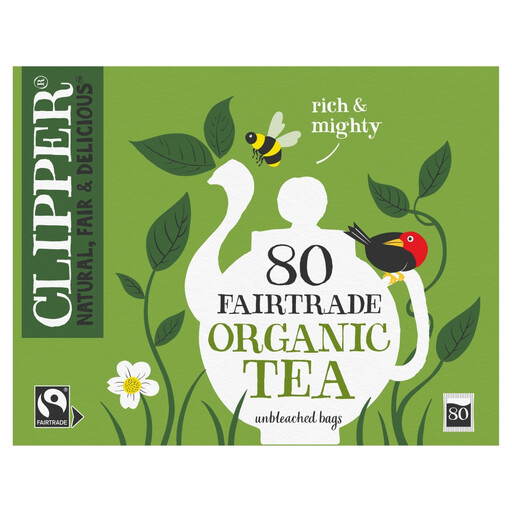
Clipper Organic Fairtrade 80 Tea Bags 232g
An 80-bag black-tea pack to consider when organic and Fairtrade sourcing declarations matter to you. Clipper gives a 2–5 minute infusion guide for its matching Organic & Fairtrade Everyday product; check this pack’s disposal instructions before discarding used bags.
View on Joybuy
 No image available
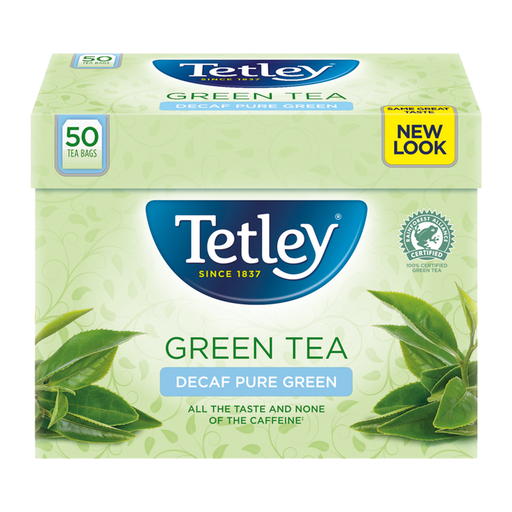
Tetley Green Tea Decaffeinated 50 Tea Bags 100g
A decaffeinated green-tea choice if you prefer green tea to the black-tea options. This is a 50-bag pack; decaffeinated does not mean caffeine-free, so check the pack if a particular caffeine limit, brewing method or disposal instruction matters.
View on Joybuy
 No image available
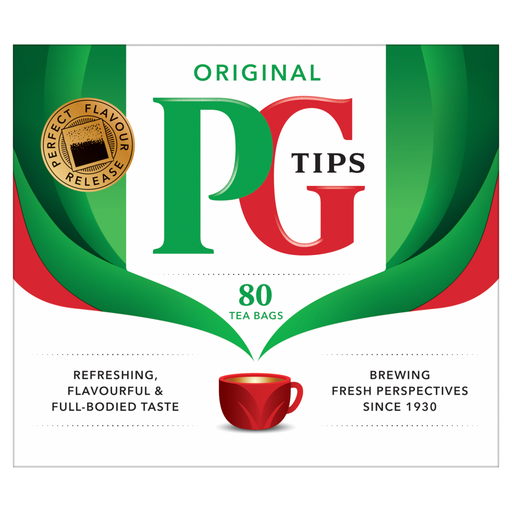
PG Tips 80 Original Tea Bags 232g
An 80-bag black-tea pack for an everyday kettle-and-mug choice. Check this pack for its brewing time; its tea-bag disposal guidance describes industrial composting conditions, so follow the pack and your local collection rules rather than assuming home compostability.
View on Joybuy
 No image available
Clipper Organic Fairtrade Decaf Everyday 80 Tea Bags 277g
An 80-bag decaffeinated black-tea option with organic and Fairtrade attributes described in the product listing. Check the pack for residual caffeine, brewing guidance and the disposal conditions that apply to these bags.
View on Joybuy
Questions about your first pack
Do ordinary tea bags need a coffee-pod machine?
No. Conventional tea-bag instructions from PG Tips and Yorkshire Tea describe making tea with water and a mug. Only check machine compatibility if you are buying a separate pod product.
Should I buy standard black tea or decaf first?
Choose standard black tea for a conventional everyday brew if you do not need to reduce caffeine; choose a product explicitly labelled decaf if you do. Decaf is not necessarily caffeine-free, so check the exact product if its residual caffeine level matters.
When should I consider a hard-water blend?
Consider one if your water is hard and it affects the tea you make. Yorkshire Tea says minerals in hard water can make tea darker and thicker and describes its Hard Water blend as adjusted for that condition; otherwise, a standard blend is a starting point.
Can used tea bags go in food waste or home compost?
Follow the individual pack and your local collection guidance. Recycle Now says plant-based sealing materials can require industrial composting, so a food- or garden-waste collection that accepts the bags is different from assuming they will fully break down in home compost.
How should I store tea bags after my first shop?
Keep them cool and dry, following the pack’s storage instructions. Typhoo gives cool, dry storage guidance for its One Cup black tea bags.


