Households that take tea with milk
If you want a black tea alongside a cooked breakfast, compare a regular English Breakfast blend with a blend explicitly labelled strong. Brew each according to its pack before judging how it tastes with milk.


For a Full English breakfast with milk, start with a regular English Breakfast blend if you want body without deliberately choosing the strongest option; consider a blend labelled strong if your usual cup tastes too light. Twinings describes its regular blend as having body and a light finish and its Strong English Breakfast as bold, but those descriptions are not a cross-brand strength test. If hard water is changing your cup, consider a hard-water blend before choosing a stronger tea.
If you want a black tea alongside a cooked breakfast, compare a regular English Breakfast blend with a blend explicitly labelled strong. Brew each according to its pack before judging how it tastes with milk.
If everyday tea tastes too light for you at breakfast, a strong-labelled blend is a more direct starting point than assuming every English Breakfast tea has the same intensity.
If hard tap water changes your usual brew, consider a blend made for that condition. If reducing caffeine matters, look for a product explicitly labelled decaffeinated rather than relying on how light the tea tastes.
Choose the type of cup you want, then check the brewing instructions and any household requirements on the exact pack.
| Priority | What to check | Your needs |
|---|---|---|
| Strength with milk | Check whether the blend is labelled regular or strong. Follow its stated infusion time and milk guidance before changing how long you brew it. | I want the tea to keep the flavour I like after adding milk, without choosing a stronger blend by default. |
| Blend character | Read the description of the exact English Breakfast blend. Twinings describes its regular version as having body and a light finish; its Strong version is described as bold. | A rounded breakfast cup appeals to me more than a blend deliberately labelled strong. |
| Hard water | Consider a hard-water-specific blend if your tap water affects your tea. Yorkshire Tea says minerals in hard water can make the cup darker and thicker. | At home, I need to account for the water I brew with, not just the strength named on the box. |
| Sourcing and ingredients | Check organic or Fairtrade wording on the exact product if those attributes matter to you. Read its ingredients and brewing guidance separately; sourcing labels do not describe its flavour. | I care how the tea is sourced, but I still want to choose its taste and preparation on their own terms. |
| Caffeine and pack label | Choose a clearly labelled decaffeinated product if reducing caffeine is important. Check the current pack for ingredients and allergen information. | I want to know whether the tea is decaffeinated, or check the label before serving it to someone with an allergy. |
Brands describe their blends differently and give different infusion times. A strong label describes a particular product; it is not a standardised comparison across brands.
Start with the brewing instructions on a new pack. If the resulting cup is still too light for you, try a blend explicitly labelled strong.
Yorkshire Tea says minerals in hard water can make tea darker and thicker. More tea strength does not address the water condition behind that change.
If hard water is affecting your usual cup, consider a hard-water-specific blend before switching to a stronger breakfast tea.
Organic and Fairtrade wording identifies sourcing attributes, not how strong the brewed tea will taste or how it will work with milk.
Check those attributes if they matter to you, then read the blend description and brewing guidance to decide whether the tea suits your breakfast cup.
A lighter-tasting black tea is not necessarily decaffeinated. Ingredients and allergen information also need to be checked for the product you are serving.
Look for an explicit decaffeinated label when reducing caffeine matters, and read the ingredients and allergen information on the purchased pack.
These ranges offer different starting points for the breakfast-tea decision; a brand description is not an independent taste comparison.
Its UK range includes regular, Strong and Decaffeinated English Breakfast tea bags.
Clipper offers an Organic Fairtrade English Breakfast tea.
Its range includes a blend specifically made for hard water.
PG Tips Original is an everyday black-tea option rather than a product named English Breakfast.
Tetley’s standard tea is an everyday black-tea option.
Typhoo offers an everyday tea made with Kenyan tea.
These options cover a named English Breakfast blend, strong-labelled tea, a hard-water blend, organic Fairtrade tea and decaf tea. They serve different breakfast-cup preferences rather than one interchangeable blend style.
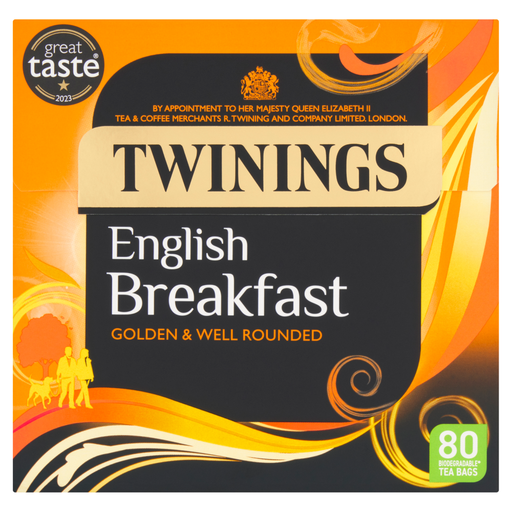 No image available
A named English Breakfast option if you want to start with that blend style for a cup alongside a cooked breakfast. Follow the brewing guidance on this pack before deciding how it tastes with milk.
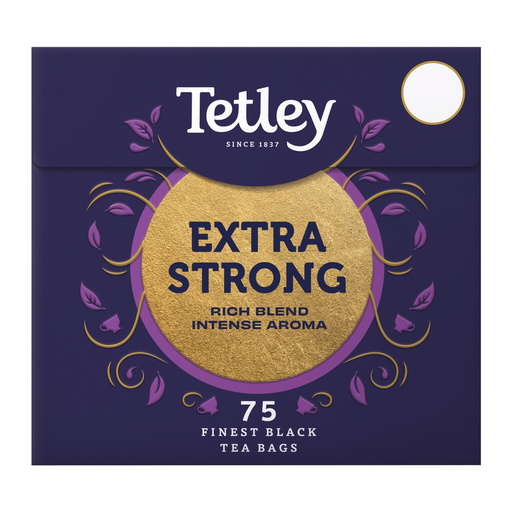 No image available
Consider this strong-labelled option if ordinary tea tastes too light at breakfast. Check this pack’s brewing instructions; the product name does not identify it as an English Breakfast blend.
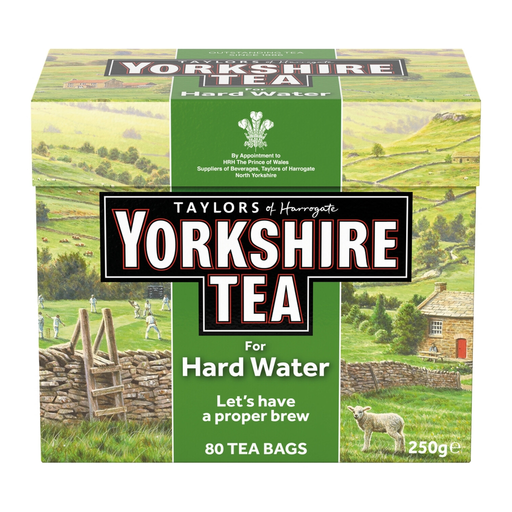 No image available
Consider this blend if hard tap water is affecting your usual breakfast tea. Yorkshire Tea describes its hard-water blend as made to balance the darker, thicker cup that minerals can produce; check the pack for brewing guidance.
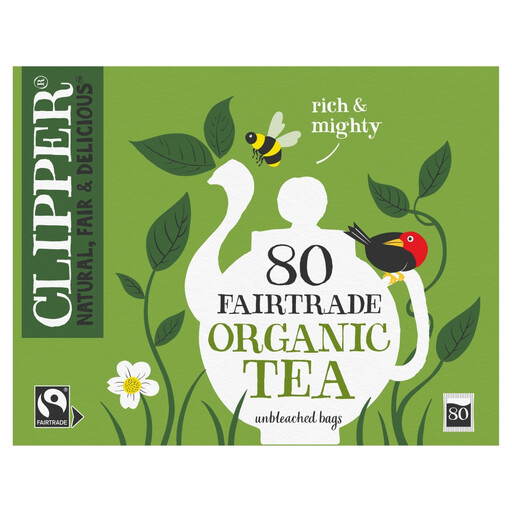 No image available
An option when organic and Fairtrade wording matters to your choice. If you specifically want Clipper’s English Breakfast blend, check the exact pack identity rather than assuming these tea bags are that recipe.
 No image available
A decaf-labelled choice if reducing caffeine matters more to you than choosing a product named English Breakfast. Check the pack for the exact blend and brewing instructions.
No. Twinings describes its regular English Breakfast as having body and a light finish, while its separate Strong English Breakfast is described as bold and naturally strong. Choose between those variants according to the cup you want, not the words “English Breakfast” alone.
Use freshly boiled water and follow the instructions for your exact tea before adding milk where the maker directs. Twinings recommends two to three minutes for Strong English Breakfast; Clipper’s general black-tea guidance is three to five minutes. Do not apply one product’s time to every blend.
It could be a factor if your home has hard water. Yorkshire Tea says minerals in hard water can make tea darker and thicker, and describes its Hard Water blend as made to balance that effect. Consider the water condition before choosing a stronger tea.
Do not use taste as a caffeine guide. Tetley says the caffeine in tea varies with factors including the blend and bag weight. If reducing caffeine is important, choose a product explicitly labelled decaffeinated and check its pack.
Yes, particularly when an allergy affects what you can serve. GOV.UK states that any of the 14 regulated allergens present as ingredients in prepacked food or drink must be clearly labelled in the ingredients list. Read the current pack for the exact tea you buy.