What should you check?
Start with the cup you want to serve, then narrow the choice by water conditions, caffeine requirements and the details on the pack.
| Priority |
What to check |
Your needs |
| Blend strength |
Compare the exact blend description with a version labelled strong. Follow each pack’s brew time before comparing cups made with milk; Twinings gives two to three minutes for its English Breakfast and Strong English Breakfast teas. |
I want tea with enough body for breakfast and milk, but not necessarily the boldest blend on the shelf. |
| Everyday use |
Check whether the pack is an everyday black tea or a named breakfast blend, and whether its bag count suits the number of cups you expect to make. Compare the exact products rather than assuming their labels describe the same flavour. |
Several people will be drinking tea, and their preferences may differ; an everyday blend is worth considering alongside breakfast-labelled options. |
| Water hardness |
Check your water supplier’s hardness information. If hard water affects your tea, compare a dedicated blend with your usual tea; Yorkshire Tea says its Hard Water blend is designed to balance the effect of mineral-rich water. |
Tea made with my tap water tastes darker or thicker than I would like, so water type may matter more than a stronger-blend label. |
| Caffeine |
Look for explicit decaffeinated labelling and read the current pack’s residual-caffeine information. Decaffeinated does not necessarily mean caffeine-free. |
I want to reduce caffeine while still choosing a black tea for breakfast. |
| Ingredients and sourcing |
Read the ingredient statement and check any Organic, Fairtrade or Rainforest Alliance wording on the specific pack. Such claims describe sourcing or certification, not a guaranteed flavour strength. |
The ingredients or a particular sourcing credential matter to my purchase, so I want to check the product I will actually use. |
| Brewing directions |
Check the pack’s bag-per-cup and brew-time directions. The UK Tea & Infusions Association advises one bag per cup and gives 90–98°C as its water-temperature range for black tea. |
I want to prepare each blend according to its directions before deciding whether its flavour suits breakfast. |
Relevant brand ranges
These product lines illustrate different blend and pack considerations; a brand reference does not mean every product in its range has the same characteristics.
Twinings
Its English Breakfast range includes conventional, Strong and Decaffeinated products for different breakfast-tea preferences.
- Twinings describes its standard English Breakfast as a 100% black-tea blend containing Assam, African and Ceylon teas, with body and a light finish.
- Its Strong version is a separate choice for a bolder cup; the Decaffeinated version should not be treated as necessarily caffeine-free.
Yorkshire Tea
Its Hard Water blend is relevant when local water conditions affect the cup.
- Yorkshire Tea says the blend is designed to balance the darker, thicker effect that mineral-rich water can have on tea.
- That purpose does not establish an advantage for households without a hard-water issue.
Clipper
Its Organic Fairtrade English Breakfast is a product to consider when those sourcing credentials matter.
- Clipper describes this product as 100% black tea combining Assam and Ceylon.
- Check certification wording on the exact pack; sourcing credentials do not determine how strong the tea will taste.
Tetley
Original is an everyday black-tea option for households serving repeated cups.
- Product information for Tetley Original identifies 100% Rainforest Alliance Certified black tea and recommends one bag per mug.
- Check the exact pack’s blend and brewing information rather than assuming ‘Original’ specifies a particular breakfast-tea strength.
PG Tips
Original is another everyday black-tea choice for a shared breakfast table.
- Product information describes PG Tips Original as full-bodied and recommends brewing for one to two minutes in boiling water before adding milk.
- That description is the product’s own flavour positioning, not a comparison showing that everyone will prefer it to a breakfast blend.
Typhoo
One Cup is an everyday black-tea format with a stated quantity of tea per bag.
- Typhoo specifies 2 g of tea per One Cup bag and gives a brewing range of one to five minutes.
- The per-bag quantity does not, by itself, establish how its flavour compares with another blend.
Joybuy tea-bag options
These options cover breakfast-labelled, everyday, hard-water and decaffeinated tea bags. Choose the route that matches the cup you want and any specific water or caffeine requirement.
 No image available
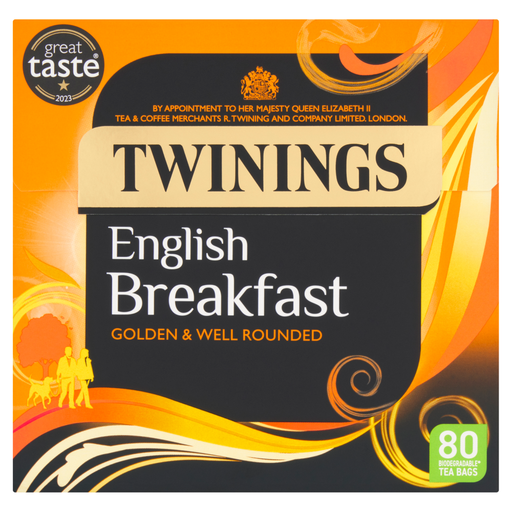
Twinings English Breakfast, 80 tea bags, 200 g
A breakfast-labelled option to consider if you want tea with milk. The product description calls it full-bodied; use the directions on the pack to judge the cup for yourself.
View on Joybuy
 No image available
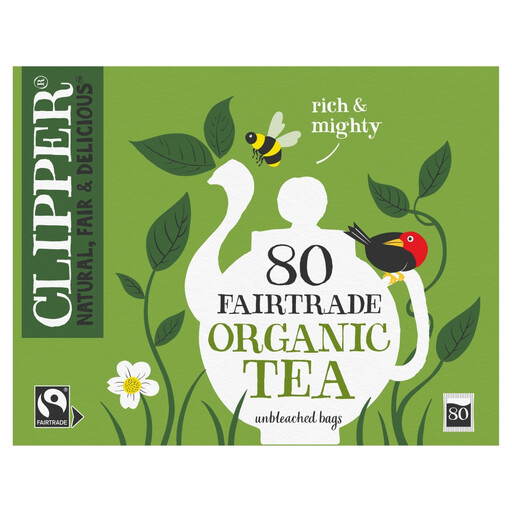
Clipper Organic Fairtrade, 80 tea bags, 232 g
Consider this tea if Organic and Fairtrade wording matters alongside your choice of a breakfast cup. Check the exact pack if you specifically want a product labelled English Breakfast, as this listing names tea bags without that blend designation.
View on Joybuy
 No image available
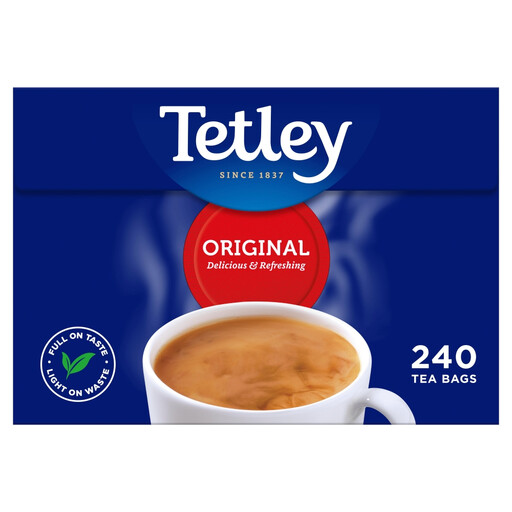
Tetley Original, 240 tea bags, 750 g
An everyday option in a 240-bag pack for a household making repeated cups. It is not labelled English Breakfast; compare its flavour and brewing directions with a breakfast blend if that distinction matters.
View on Joybuy
 No image available
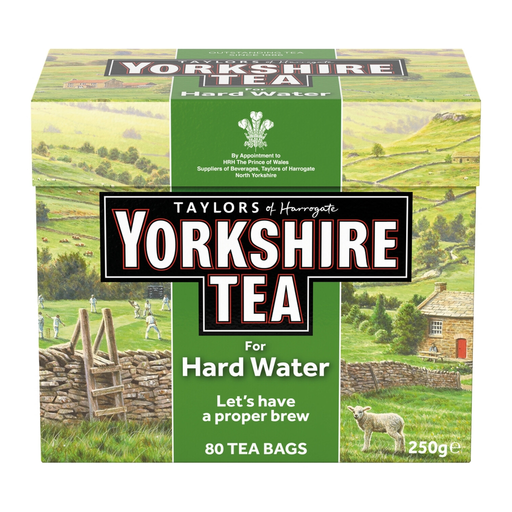
Taylors of Harrogate Yorkshire Tea for Hard Water, 80 bags, 250 g
A specialist choice if hard local tap water affects your usual tea. Check your water supplier’s hardness information before prioritising this blend over an ordinary breakfast or everyday tea.
View on Joybuy
 No image available
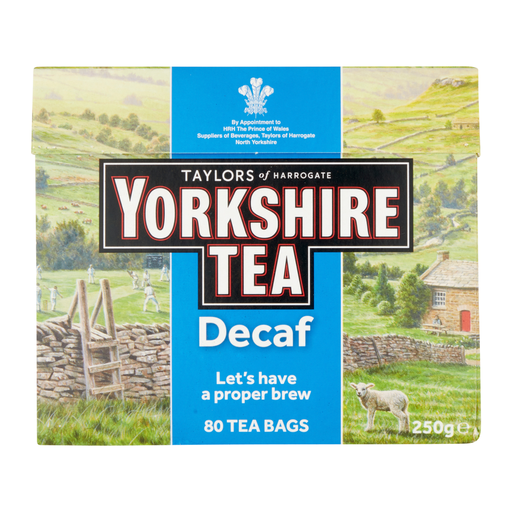
Taylors of Harrogate Yorkshire Tea Decaf, 250 g
A decaffeinated tea option when reducing caffeine is the deciding factor. Check the current pack for its bag count and residual-caffeine information if either affects your choice; the title does not identify it as an English Breakfast blend.
View on Joybuy
Frequently asked questions
Which tea bags go with a Full Scottish breakfast?
If you take tea with milk and want a cup with body, compare a black breakfast blend with your usual everyday tea. Choose a version labelled strong when you specifically prefer a bolder flavour; water hardness and caffeine requirements may point you towards specialist packs instead.
How should I brew black tea bags at breakfast?
Follow the directions on the exact pack, particularly its brew time. The UK Tea & Infusions Association advises one bag per cup and gives 90–98°C as the water-temperature range for black tea; add milk according to your preference.
When is a hard-water tea blend worth considering?
Consider one if your local water is hard and it affects the taste of your usual tea. Yorkshire Tea says hardness minerals can make tea darker and thicker and offers a blend designed for that condition; check your water supplier’s information before making water hardness the deciding factor.
Is decaffeinated breakfast tea caffeine-free?
Do not assume it is caffeine-free. Twinings provides residual-caffeine information for its English Breakfast Decaffeinated tea; read the current label of whichever decaffeinated product you choose if the amount matters.
What if I need to check ingredients or allergens?
Read the current pack’s ingredient and allergen information before using it. An ingredient statement for one plain black-tea product does not establish the ingredients of another blend or a differently labelled pack.


