Who is each format for?
The service arrangement matters as much as the amount of tea: individual bags and loose leaves call for different work at the refreshment point.
Self-service refreshment organisers
Individual tea bags provide a defined portion without asking delegates to measure leaves. For a brief specifying 240 bags, Bettys lists a Yorkshire Tea box described as approximately 240 tea bags, while Staples UK identifies a pack of 240 weighing 750g. Check that standard black tea is the intended offering.
Staffed tea-service caterers
Loose leaf is an option where staff can measure tea and manage brewing and straining. Twinings lists 500g loose-leaf catering packs; Ringtons advises one teaspoon per cup and a three-to-five-minute steep. Agree the serving method before using pack weight to plan quantities.
Relevant brand formats
These brand examples illustrate pack formats to compare with the conference brief; they do not all meet a 240-bag requirement.
Twinings
A reference for loose-leaf catering packs and separately packaged trade selections.
- Twinings lists The Earl and The Full English loose-leaf catering packs at 500g each.
- Its trade selection is described as 10 × 40 envelopes, a different format from either loose leaf by weight or a single box of 240 bags.
Yorkshire Tea
A black-tea option when the requirement is individual tea bags.
- Bettys describes its Yorkshire Tea listing as approximately 240 tea bags; Staples UK identifies a pack of 240 weighing 750g.
- This is tea in bags, not loose-leaf tea.
Fortnum & Mason
A packaged selection to consider when several blends matter more than a 240-bag count.
- Fortnum & Mason lists a selection containing 120 tea bags across named blends.
- That selection is neither a 240-bag box nor loose-leaf tea.
Bettys
A retailer listing for the Yorkshire Tea format described above.
- Bettys lists Yorkshire Tea as approximately 240 individual tea bags.
- The listed 240-bag product is Yorkshire Tea, not a Bettys-branded loose-leaf pack.
Ringtons
A reference for planning loose-leaf preparation and considering separate tea-bag varieties.
- Ringtons advises one teaspoon of loose tea per cup and a three-to-five-minute steep; its tea-bag range separately lists 200- and 400-count bundles.
- Those bundle counts do not describe a 240-bag pack, and loose-leaf servings still depend on the agreed dose.
Joybuy options for tea-bag service
This option is for a conference brief calling for individual black-tea bags at a self-service point, not for a brief that requires loose leaf.
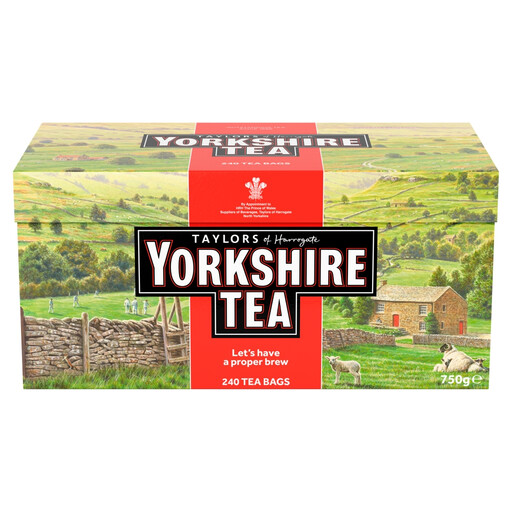 Image unavailable
Taylors of Harrogate Yorkshire Tea, 240 tea bags, 750g
Individual bags suit a self-service tea point where staff will not measure leaves for each cup. The 750g pack contains 240 tea bags, and the listed ingredient is black tea. It is not loose leaf; check the current packaging or supplier information for event ingredient and allergen records, and arrange separate options if the brief calls for other teas.
View on Joybuy
Conference tea questions
Does a “box of 240” mean loose-leaf tea?
Not for the Yorkshire Tea pack listed here: it contains approximately 240 individual tea bags, while Twinings lists loose-leaf catering tea in 500g packs. Confirm whether the brief specifies individual bags or a planned number of cups made from loose leaves.
What does a loose-leaf conference service need?
It needs an agreed way to measure, brew and strain the tea, together with time or staff to manage the service. Ringtons advises one teaspoon per cup and a three-to-five-minute steep; agree the venue’s cup size and serving method before planning pack quantities.
Will a 240-bag black-tea box cover other tea preferences?
No: the Yorkshire Tea pack described here contains black tea. If the event brief calls for decaffeinated tea, green tea or infusions, specify and order those options separately.
What ingredient information should be ready at the tea point?
Keep current information for every tea and accompaniment actually served, and make sure staff know how attendees can obtain it. GOV.UK’s allergen guidance addresses information for both prepacked and non-prepacked food and drink in retail and catering, as well as staff allergen training.


