What matters when choosing a blend?
Decide whether the cup needs to be regular black tea, decaf black tea or a herbal infusion before comparing pack sizes and brewing directions.
Decaf black tea
Choose when: You want to reduce caffeine while keeping black tea as your everyday blend.
Bear in mind: Decaf does not necessarily mean zero caffeine, and its flavour need not match your usual blend.
Regular black tea
Choose when: The drinker wants a regular brew and can account for its caffeine alongside other sources.
Bear in mind: For someone managing caffeine while breastfeeding, tea contributes to the day’s total; the NHS advises trying not to exceed 300 mg a day.
Herbal tea
Choose when: You want the flavour of a particular infusion, rather than a substitute for black tea.
Bear in mind: Imperial College Healthcare NHS Trust says no special drink is needed to make breast milk; Guy’s and St Thomas’ NHS Foundation Trust cautions that herbal products may interact with medicines.
| Priority |
What to check |
Your needs |
| Caffeine |
Read the exact pack’s regular or decaf wording. Account for caffeine from other drinks, foods and relevant medicines; do not calculate a precise intake from bag count alone. |
I want to keep track of caffeine across my day, not just in my tea. The NHS advises breastfeeding parents who consume caffeine to try not to exceed 300 mg a day. |
| Black-tea blend |
Check the tea type and the maker’s brewing instructions. Treat descriptions of strength or flavour as a starting point, not a guarantee that decaf will taste like a preferred regular tea. |
I would rather try a decaf black tea than change straight to a fruit or herbal infusion. |
| Pack and bags |
Compare bag count, pack size and bag format with cupboard space and how often the household makes tea. Yorkshire Tea lists Decaf in 40- and 80-bag packs; Tesco lists Tetley Decaffeinated in a 160-bag, 500g pack. |
Before buying a large box, I want to know whether the household likes the blend and has room to store it. |
| Herbal ingredients |
Check the ingredients of the particular infusion. If you take prescribed medicines, ask a pharmacist or your clinician about a herbal product rather than assuming it is suitable. |
I might enjoy a herbal flavour, but I do not want to buy a specialist tea on the assumption that it is needed for breastfeeding. Imperial College Healthcare NHS Trust says no special food or drink is needed to make breast milk. |
Brand ranges to compare
These are examples of regular or decaf ranges to consider, not a statement that every product in a brand’s range has the same ingredients or caffeine wording.
Yorkshire Tea
Yorkshire Tea lists Decaf tea bags in 40- and 80-bag formats.
- A smaller listed box provides a way to try the decaf blend before choosing the larger format.
- The brand’s flavour descriptions are not an independent comparison with its regular tea; check the pack for the caffeine detail you need.
Tetley
Tesco lists Tetley Decaffeinated as a 160-bag, 500g black-tea pack.
- Tesco’s listing states that this product is decaffeinated to 0.2%.
- Consider a smaller format when trying the blend for the first time.
PG Tips
Tesco lists both PG Tips Original black tea and a separate Decaf product.
- The separate products give a mixed household a regular and a decaf option from the same brand.
- Tesco describes PG Tips Decaf as containing less than 0.2% caffeine, not as having none.
Twinings
Twinings lists All Day Decaf as a 40-bag decaffeinated black-tea breakfast blend in loose pyramid bags.
- The pyramid-bag format offers a distinct option to compare with standard tea bags.
- Check whether loose pyramid bags suit how you store and prepare tea.
Clipper
Clipper lists Organic Everyday Decaf with decaffeinated organically grown black tea as its ingredient.
- Its stated tea type helps shoppers looking specifically for an organic decaf black tea.
- Check the particular pack if you need a residual-caffeine figure.
Typhoo
Typhoo offers regular and Decaf Premium tea bags; the brand describes its decaf product as a Kenyan-tea everyday brew.
- Regular and decaf versions allow a household to compare the two routes within one brand.
- Check the current Decaf Premium pack for the caffeine and ingredient details relevant to your choice.
Joybuy tea-bag options
These black-tea options include decaf packs for a lower-caffeine tea routine and one regular blend for household members who want it. Compare the exact pack labels before choosing.
 No image available
Tetley 80 Decaffeinated Tea Bags 250g
An 80-bag decaf choice for a household trying a black-tea blend while reducing caffeine. Check the current pack if you need its residual-caffeine detail.
View on Joybuy
 No image available
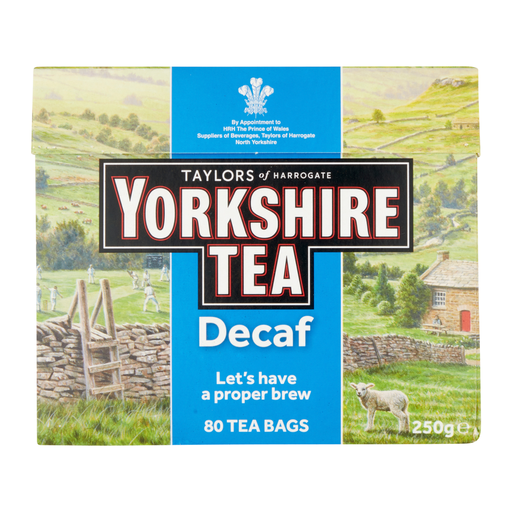
Taylors of Harrogate Yorkshire Tea Decaf 250g
A decaf black-tea option for someone who wants to keep that style of everyday brew. The title identifies a 250g pack; check its bag count, brewing directions and caffeine wording before comparing it with another pack.
View on Joybuy
 No image available
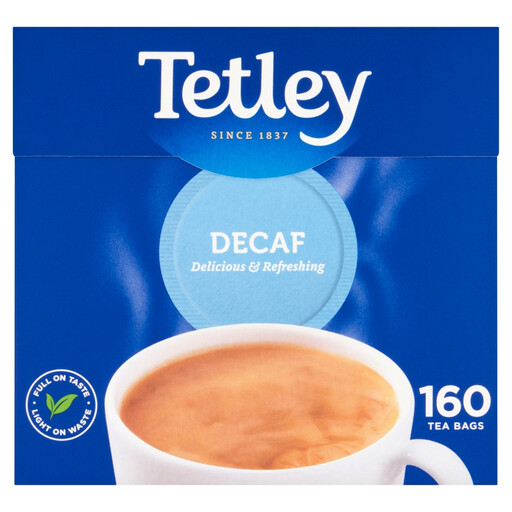
Tetley 160 Decaf Tea Bags 500g
The 160-bag, 500g format is a choice for a household already using decaf black tea regularly. If the blend is new to you, consider whether you want to try a smaller pack first; check this pack’s current caffeine wording.
View on Joybuy
 No image available
Clipper Organic Fairtrade Decaf Everyday 80 Tea Bags 277g
An 80-bag decaf option for someone comparing everyday black-tea blends. The product title identifies a 277g pack; check the current label for the caffeine detail and brewing directions that matter to you.
View on Joybuy
 No image available
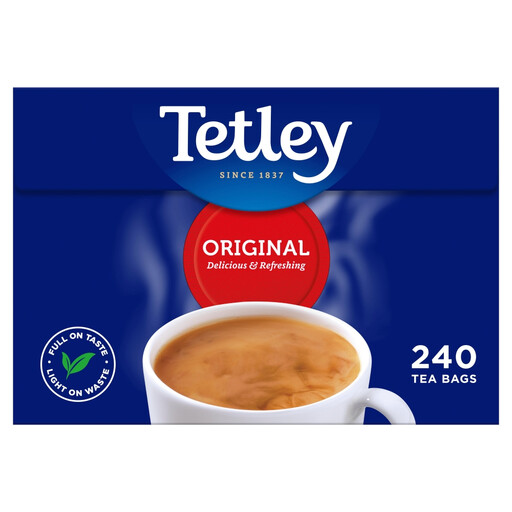
Tetley 240 Original Tea Bags 750g
This 240-bag, 750g pack is regular black tea, not decaf. It is an option for household members choosing a regular brew; anyone managing caffeine should account for tea alongside their other sources.
View on Joybuy
Common questions
Does a breastfeeding parent have to give up regular tea?
Not necessarily. The NHS advises breastfeeding parents who consume caffeine to try not to exceed 300 mg a day; regular tea needs to be considered alongside other caffeine sources. Decaf black tea is an option if you want to reduce caffeine in your usual tea routine.
Is a special ‘lactation’ tea needed to make breast milk?
No special food or drink is needed to make breast milk, according to Imperial College Healthcare NHS Trust. Choose tea for its flavour and ingredients rather than expecting a specialist blend to increase milk production.
Do decaf black tea bags contain no caffeine?
Do not assume that they do. Tesco describes PG Tips Decaf as containing less than 0.2% caffeine and Tetley Decaffeinated as decaffeinated to 0.2%. Read the wording on the specific pack you intend to buy.
What if I take prescribed medicine and want herbal tea?
Check the particular herbal product before using it. Guy’s and St Thomas’ NHS Foundation Trust warns that herbal products may interact with conventional medicines; ask your prescriber or a pharmacist for advice about your circumstances.
How can I try a decaf blend without committing to a large box?
Choose a smaller pack of the blend you want to try and follow its brewing directions before deciding on a larger format. Yorkshire Tea lists its Decaf bags in 40- and 80-bag packs, while Tesco lists Tetley Decaffeinated in a 160-bag, 500g pack.


