Choose tea bags the older person enjoys drinking; if caffeine appears to aggravate bladder urgency, consider decaf, while checking the pack if a strict caffeine limit applies. NHS guidance counts tea towards fluid intake, but tea alone is not a nutrition plan: British Nutrition Foundation guidance notes that adding milk can provide calories and protein when appetite is poor. Prescribed fluid restrictions or drink-thickness instructions take priority over the choice of tea bag.
Who is choosing the tea?
Older tea drinkers considering less caffeine
Someone who enjoys a familiar brew but wants to consider decaf because caffeine may aggravate bladder urgency or frequent toileting. Nottingham and Nottinghamshire Integrated Care Board identifies caffeine as a possible bladder irritant.
Carers helping with regular drinks
A family carer or care worker may need a tea the person will accept as part of their usual drink routine. NHS guidance counts tea towards fluid intake, although an individual fluid restriction must still be followed.
People with poor appetite or swallowing instructions
For someone with poor appetite, tea can be one drink within a wider nutrition plan, not a substitute for food or professional advice. If a speech and language therapist has prescribed thickened fluids, prepare drinks to the assessed consistency.
What should you check?
Start with the drink the person likes, then check whether caffeine or individual instructions change how it should be chosen and prepared. Tea bags and machine-dependent pods are different formats; a tea pod needs a confirmed compatible machine and product.
| Priority |
What to check |
Your needs |
| Enjoyable drinks |
Choose a flavour and tea-bag format the person accepts. NHS guidance says tea and coffee count towards daily fluid intake. |
I want a drink I will enjoy regularly, rather than a tea chosen only for its label. |
| Caffeine |
Check whether the pack says decaffeinated, and confirm its caffeine information if a strict limit applies. Nottingham and Nottinghamshire Integrated Care Board identifies caffeine as a possible bladder irritant. |
If caffeine seems to aggravate bladder urgency or frequent toileting, I would like to keep my tea routine while considering decaf. |
| Poor appetite |
Consider how the tea is served as well as which bag is used. British Nutrition Foundation guidance for older adults with poor appetites notes that milk in tea can add calories and protein; tea is not a complete nutrition plan. |
I enjoy tea, but ongoing poor appetite or unintended weight loss calls for advice about food and drinks more broadly. |
| Swallowing |
Follow the assessed thickness and preparation instructions if thickened fluids have been prescribed. NHS hospital guidance places this decision with a speech and language therapist’s individual assessment. |
I need the prepared drink to meet my swallowing instructions; changing the tea brand does not replace them. |
| Individual advice |
Check for a prescribed fluid restriction or medicine-related dietary instructions before changing a drink routine. NHS Sussex notes that general hydration plans do not suit everyone with a fluid restriction. |
If I have individual instructions from my care team, those instructions come before general advice about tea. |
| Format and pack |
Check the bag count and whether a tea-bag format suits the usual preparation routine. For pods, confirm the exact machine system and a compatible tea product before choosing that format. |
I want a manageable pack of a tea I like, without assuming a pod will work in a machine I already own. |
Common mistakes to avoid
-
Expecting tea bags to address poor nutrition
Tea can be part of a preferred drink routine, but plain tea does not replace a broader approach to persistent poor appetite or unintended weight loss.
Where additional calories and protein are appropriate, ask a GP, practice nurse or dietitian about suitable food and drinks. British Nutrition Foundation guidance notes that milk can add both to tea.
-
Overlooking caffeine when bladder symptoms matter
Nottingham and Nottinghamshire Integrated Care Board advises that caffeine can irritate the bladder in people with urgency or frequent toileting.
Consider whether decaf fits the person’s preference, keep their wider fluid needs in mind and seek clinical advice for persistent urinary symptoms.
-
Preparing ordinary tea despite thickened-fluid instructions
For someone assessed as needing thickened drinks, the consistency of the prepared tea matters; a different bag or flavour does not meet that requirement by itself.
Follow the thickness and preparation method advised by the person’s speech and language therapist, as described in NHS hospital guidance.
Decaf tea brands to consider
These brand references describe particular decaf lines, not every tea each brand makes. Check the individual pack for its blend, bag count and caffeine wording.
Yorkshire Tea
Its Decaf blend is an option for someone who prefers Yorkshire Tea and wants a decaffeinated tea bag.
- Yorkshire Tea describes the blend as made to retain its character after decaffeination.
- That brand description does not establish that the prepared tea is caffeine-free.
Tetley
Tetley Decaf is an everyday tea-bag option listed in more than one pack size by UK grocers.
- Morrisons lists Tetley Decaf packs of 80 and 160 bags.
- Check the particular pack rather than assuming every Tetley tea has the same caffeine wording or bag count.
PG Tips
PG Tips has a decaf black-tea option for shoppers who want that brand in tea-bag form.
- Tesco lists PG Tips Decaf, while Morrisons lists a 70-bag pack.
- Choose by the individual product label; a brand name alone does not identify a decaf tea.
Twinings
Twinings offers decaffeinated tea choices for someone selecting by preferred blend as well as caffeine wording.
- Its decaf range includes Earl Grey Decaffeinated; Twinings lists a 40-bag pack.
- Check the blend and ingredients on the chosen pack rather than treating all Twinings decaf teas as interchangeable.
Clipper
Clipper has an Organic Everyday Decaf black tea for shoppers interested in that specific blend.
- Clipper lists decaffeinated organically grown black tea as its ingredient and describes a carbon-dioxide decaffeination process.
- Check the selected pack’s bag count and caffeine wording if either affects the choice.
Decaf tea bags on Joybuy
These tea bags offer decaffeinated choices for someone who wants to keep a tea routine while reducing caffeine. Four are presented as everyday or black-tea options; the Tetley Green Tea is a different type of tea. None replaces individual nutrition, fluid or swallowing advice.
 No image available
Tetley Decaffeinated Tea Bags, 80 bags, 250 g
A decaffeinated tea-bag option for someone who wants to continue a familiar hot-drink routine.
The pack contains 80 bags and weighs 250 g. If a strict caffeine limit applies, confirm the brewed tea’s caffeine information on the pack.
View on Joybuy
 No image available
Tetley Decaf Tea Bags, 160 bags, 500 g
This larger decaf tea-bag pack may suit a household that already knows it likes the tea.
It contains 160 bags and weighs 500 g. Check caffeine information on the pack if the drinker has been given a strict limit.
View on Joybuy
 No image available
Taylors of Harrogate Yorkshire Tea Decaf, 250 g
A decaf choice for someone who prefers Yorkshire Tea’s familiar blend.
The stated pack weight is 250 g. Yorkshire Tea describes its Decaf blend as retaining its character after decaffeination; check the individual pack for bag count and caffeine information relevant to a strict limit.
View on Joybuy
 No image available
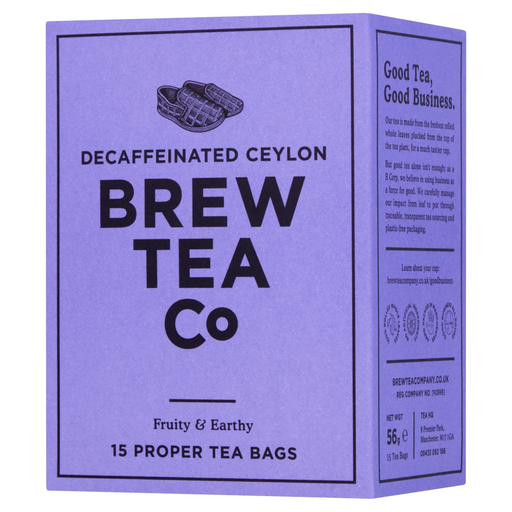
Brew Tea Co CO2 Decaffeinated Tea, 15 bags, 56 g
The 15-bag pack offers a smaller quantity for someone trying a different decaf tea.
The stated weight is 56 g. Do not assume that decaffeinated means caffeine-free; check the pack if a strict caffeine limit applies.
View on Joybuy
 No image available
Tetley Green Tea Decaffeinated, 50 bags, 100 g
This decaffeinated green tea is an alternative for someone who prefers green tea rather than an everyday black-tea blend.
The pack contains 50 bags and weighs 100 g. If a strict caffeine limit or medicine-related dietary instructions apply, check the drink with the relevant care team before changing the usual routine.
View on Joybuy
Questions about tea bags for older adults
Does tea count towards an older person’s fluid intake?
Yes. NHS guidance counts tea and coffee alongside other drinks towards daily fluid intake and gives a general guide of 6 to 8 cups or glasses of fluid a day. Follow individual advice instead if a clinician has prescribed a fluid restriction.
Should an older person always choose decaf tea?
No. Choose a tea the person enjoys, while considering decaf if caffeine appears to aggravate bladder urgency or frequent toileting, or if their clinician has advised caffeine reduction. Nottingham and Nottinghamshire Integrated Care Board identifies caffeine as a possible bladder irritant; decaf should not be assumed to contain no caffeine.
Can tea bags address poor appetite?
Tea bags alone cannot address poor appetite or unintended weight loss. British Nutrition Foundation guidance notes that milk in tea can add calories and protein when these are wanted; ask a GP, practice nurse or dietitian for advice if poor appetite persists or weight loss is unintended.
Can a tea pod replace a tea bag?
Only if the tea pod is made for the exact machine being used and the person wants that preparation format. Tea bags are brewed in a cup or pot, so do not assume a coffee-pod machine accepts tea pods without checking the machine system and the tea product.


