Customers choosing a familiar daily cuppa
An everyday black tea gives people who usually take milk in their tea a recognisable starting point. Keep other blends available as choices, rather than expecting one blend to suit every preference.


For a retirement-focused shop, start with a familiar everyday black tea and offer decaf as a clearly marked alternative for customers who want to reduce caffeine. Consider a hard-water blend where local water makes the usual brew noticeably darker or thicker; keep a more distinctive breakfast blend as an additional choice rather than assuming everyone wants a stronger-tasting tea.
An everyday black tea gives people who usually take milk in their tea a recognisable starting point. Keep other blends available as choices, rather than expecting one blend to suit every preference.
A clearly marked decaf black tea lets customers choose a conventional tea format without selecting the standard caffeinated blend. Check the exact pack wording: decaffeinated does not necessarily mean caffeine-free.
Yorkshire Tea says minerals in hard water can make a brew look darker and thicker. Its hard-water blend is relevant when that reflects the shop’s local water and customers’ preferences, not simply because it is a specialist product.
Choose the everyday tea first, then decide which distinct alternatives answer a customer preference or a local brewing condition.
| Priority | What to check | Your needs |
|---|---|---|
| Everyday black tea | Check the exact blend, bag count and pack instructions. Brew the candidate with the milk and cup size used in the shop before settling on a preparation method. | I want a straightforward black tea for routine cups, without making a more distinctive blend the only option. |
| Decaf choice | Check that the pack identifies a decaffeinated black tea and read its precise caffeine wording. Keep its shelf or service label distinct from regular tea. | Some customers may want to reduce caffeine while still choosing a black-tea drink. I would rather make that option easy to identify than rely on customers asking for it. |
| Local water | Compare the regular brew made with the shop’s water against a hard-water blend if the ordinary tea looks or tastes unusually dark or thick. Yorkshire Tea describes its hard-water blend as adjusted for this effect. | If our tap water changes the usual cup noticeably, I want a blend that can be assessed under those same brewing conditions. |
| Additional flavour choice | Check what distinguishes a breakfast-style blend from the everyday line and whether customers ask for that style. Twinings describes its English Breakfast tea as a stronger-tasting black-tea blend often taken with milk and sugar. | I would like to offer a different black-tea flavour without replacing the familiar daily option for everyone. |
Standard black tea contains caffeine, so it does not meet a request for a decaffeinated drink. NHS Tayside notes that caffeine in tea can aggravate bladder symptoms for some people; that is a reason to preserve customer choice, not to make a health promise about a tea product.
Place a clearly labelled decaf black tea alongside the regular blend and let customers choose according to their preferences.
Decaf is not a universal zero-caffeine specification. Twinings states that its 40-bag English Breakfast Decaffeinated tea contains tea decaffeinated to 0.02% caffeine, while Tesco lists PG Tips Decaf as containing less than 0.2% caffeine; those statements concern different products.
Use the wording on the exact pack for shelf tickets and staff information. Do not transfer one product’s caffeine figure to another.
A blend intended for hard water addresses a particular brewing condition. Yorkshire Tea says mineral-rich water can make tea darker and thicker, but that does not establish a preference for its specialist blend in every shop.
Try the regular tea with the shop’s tap water before deciding whether a hard-water blend deserves space in the range.
Brewing instructions can differ between products, changing the cup customers receive even when staff use the same bag count.
Keep each selected pack’s instructions available where drinks are prepared. Yorkshire Tea recommends four to five minutes for its standard brew; check other products individually rather than applying that timing to all of them.
These brand ranges illustrate different blend choices; a brand name alone does not establish how a particular pack will taste in the shop’s water.
Its range includes regular, decaf and hard-water tea, giving a shop distinct black-tea options to assess.
English Breakfast offers a different black-tea style, with a separate decaffeinated English Breakfast product.
Organic Everyday Decaf is a named option for customers seeking an organic decaf black tea.
Typhoo describes its decaf tea as an everyday brew made with Kenyan tea.
Original and Decaf are distinct black-tea products; check which one a particular pack contains.
Original and Decaf packs offer two clearly different choices within a familiar tea-bag range.
These packs cover everyday black tea and decaf black tea for the shop range. Compare the pack sizes and exact labels when deciding which variants to stock.
 No image available
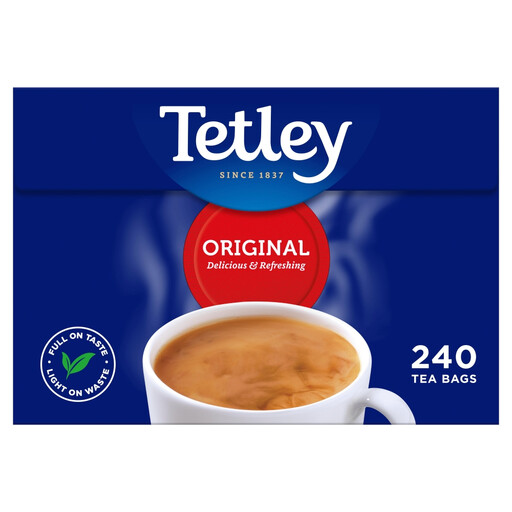
An Original tea-bag option for the shop’s everyday black-tea line. The pack contains 240 bags and weighs 750g; check its brewing instructions before setting a staff preparation method.
 No image available
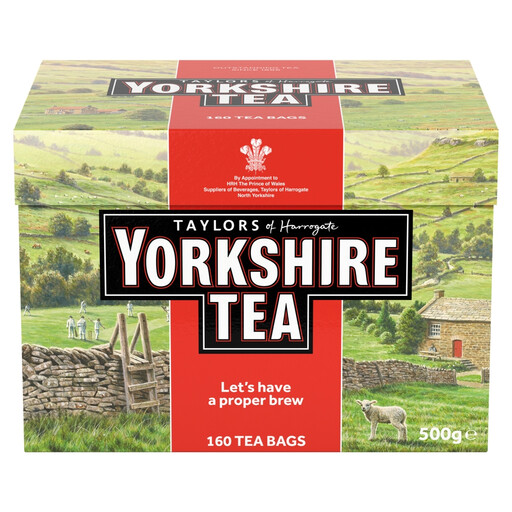
A regular Yorkshire Tea pack to consider for the everyday line, rather than the brand’s separate hard-water or decaf blends. It contains 160 bags and weighs 500g; follow the instructions on this pack when preparing it.
 No image available
A separately identifiable decaf choice alongside an everyday Original tea. This pack contains 160 bags and weighs 500g; check its exact caffeine statement before making a more specific claim on a shelf ticket.
 No image available
A decaf Everyday variant for customers looking for a pack labelled Organic and Fairtrade. It contains 80 bags and weighs 277g; use the exact pack wording for caffeine and brewing information.
 No image available
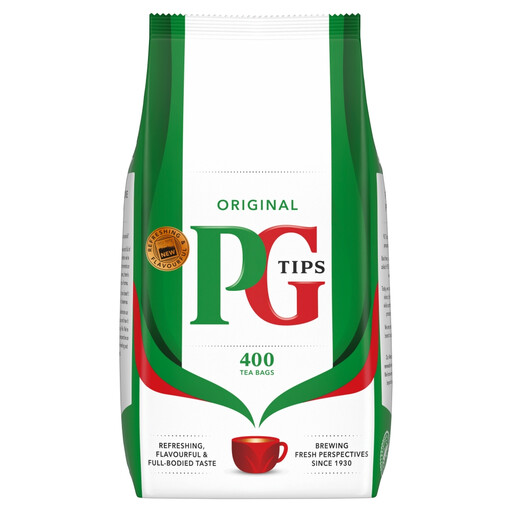
An Original black-tea pack to consider where the shop uses a larger everyday supply. It contains 400 bags and weighs 1.16kg; use a separate decaf product for customers requesting decaf and check this pack’s hot-brewing directions for service.
Decaf is worth offering as a visible alternative to regular black tea when customers may want to reduce caffeine; it need not replace the everyday blend. Keep the products clearly labelled and avoid suggesting that decaf tea treats symptoms or guarantees a particular effect.
No. Read the exact product label before describing its caffeine content. Twinings states that its 40-bag English Breakfast Decaffeinated tea contains tea decaffeinated to 0.02% caffeine, while Tesco lists a specified PG Tips Decaf product as containing less than 0.2% caffeine; neither figure applies to every decaf tea.
Consider them when the shop’s local water makes its ordinary brew noticeably darker or thicker. Yorkshire Tea says minerals in hard water can have that effect and describes its hard-water blend as adjusted for it; compare cups made with the shop’s own water before changing the range.
No. Use the directions for the exact tea being served rather than applying one timing across different blends. Yorkshire Tea recommends four to five minutes for its standard brew; keep the chosen packs’ instructions accessible to staff.