What to check before choosing
Choose the type of brew you want, then read nutrition figures alongside their preparation instructions. A value for tea brewed with water does not describe a mug after other ingredients have been added.
Standard black tea
Choose it when: You want a conventional black-tea brew and are not looking to avoid caffeine.
Bear in mind: Twinings reports 0g sugars per 100ml for its Everyday black tea brewed without milk, not for a finished mug with additions.
Decaffeinated black tea
Choose it when: You prefer black tea but want a product described as decaffeinated.
Bear in mind: Decaffeinated and caffeine-free are different descriptions; check the exact pack if avoiding caffeine completely matters.
Caffeine-free herbal infusion
Choose it when: You want a hot infusion explicitly described as caffeine-free rather than a black-tea brew.
Bear in mind: Peppermint and lemon-and-ginger have different ingredients and flavours; check the particular blend rather than generalising from the category.
| Priority |
What to check |
Your needs |
| Finished drink |
Read whether nutrition values apply to a brew made with water or without milk. Account separately for anything added after brewing. |
I want to know what is in my whole mug, not just the brewed tea. If I usually add sugar, honey or syrup, I need to consider that too. |
| Caffeine description |
Look for the exact wording on the pack: standard tea, decaffeinated or caffeine-free. Do not treat decaffeinated as a guarantee of no caffeine. |
For a caffeine-free drink, I would choose a pack that explicitly says caffeine-free. If I still want black tea, a decaffeinated version is a separate option. |
| Ingredients and flavour |
Read the ingredient list for the particular black tea or herbal blend. For flavoured products, check the prepared-drink nutrition rather than inferring it from the flavour name. |
Peppermint or lemon-and-ginger may suit my taste, but I want to know which ingredients are actually in the bag. |
| Brewing format |
Confirm that the product is a tea bag for brewing in hot water. If you use a pod machine, check for a product explicitly made for that machine. |
I make tea in a mug or teapot, so I need tea bags rather than machine-specific pods. |
| Health-related wording |
Use the exact ingredients, preparation basis and nutrition panel to assess the drink. Do not interpret a diabetes-related product name as evidence of treatment. |
I want checkable information about a beverage, not a promise about blood-glucose control. |
Brand references
Brand ranges can help narrow down a tea type, but nutrition and caffeine descriptions should be checked for the exact product and preparation method.
Twinings
Twinings publishes prepared-drink information for the reviewed Everyday black tea, Pure Peppermint and Lemon & Ginger products.
- Twinings reports 0g sugars per 100ml for Everyday black tea brewed without milk and for its reviewed peppermint and lemon-and-ginger infusions.
- Those figures describe the specified brews, not drinks with sugar, honey, milk or other additions.
Clipper
Clipper describes its reviewed Everyday black tea and Pure Green Tea as organic teas traded to Fairtrade standards.
- The ingredient descriptions distinguish black tea from pure green tea.
- Choose the exact pack and preparation you want; organic and Fairtrade descriptions do not state the nutrition of your finished cup.
Yorkshire Tea
Yorkshire Tea lists standard tea, decaf and Bedtime Brew in its range.
- The brand describes Bedtime Brew as a decaffeinated blend with lemon balm, lemongrass, nutmeg and vanilla.
- Check the description of the particular tea rather than assuming every product in the range has the same ingredients or caffeine wording.
Tetley
Tetley describes a packaging change to its decaf string-and-tag tea bag.
- According to Tetley, the tag on that product no longer has a staple.
- Packaging details do not establish the ingredients, nutrition or caffeine status of another Tetley tea; check the exact pack.
Tea bags to consider on Joybuy
These tea-bag options include herbal infusions and decaffeinated black or green tea. Compare the flavour and caffeine wording of each pack, then consider how you prepare the finished drink.
 No image available
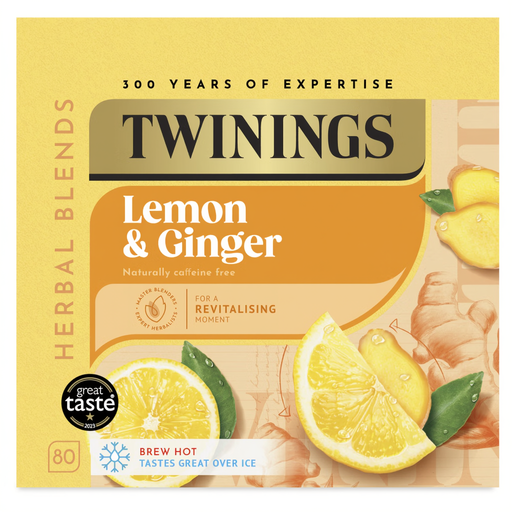
Twinings Lemon & Ginger 80-pack tea bags
For a lemon-and-ginger infusion rather than black tea, this is an 80-pack. The Joybuy listing describes it as caffeine-free and reports 0g sugars and 0.5g carbohydrate per 100ml brewed infusion; additions change the finished drink.
View on Joybuy
 No image available
Tetley Decaf 160 Tea Bags, 500g
This black-tea format is for someone who wants a decaffeinated brew rather than a herbal infusion. The pack contains 160 tea bags and is marked 500g. Check its caffeine wording if complete avoidance matters, and consider anything added to the cup.
View on Joybuy
 No image available
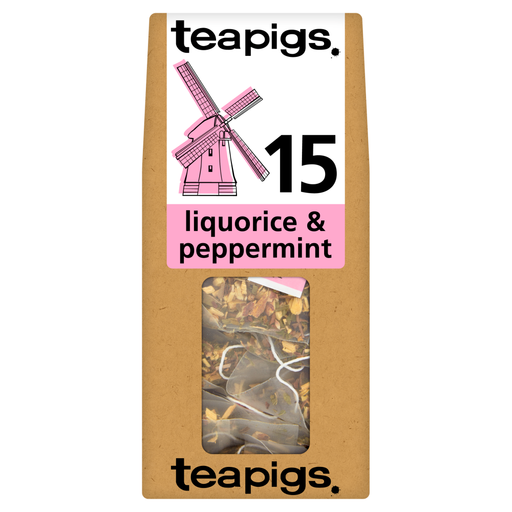
Teapigs Liquorice & Mint 15 Tea Bags
Choose this 15-bag herbal option if liquorice-and-mint flavour appeals more than black tea. Check the exact ingredients and prepared-drink nutrition, particularly if you add anything to the infusion.
View on Joybuy
 No image available
Twinings Pure Peppermint 80-pack tea bags
This 80-pack offers a peppermint infusion instead of a black-tea brew. Check the exact pack’s caffeine and prepared-drink nutrition descriptions, and assess the finished cup if you add other ingredients.
View on Joybuy
 No image available
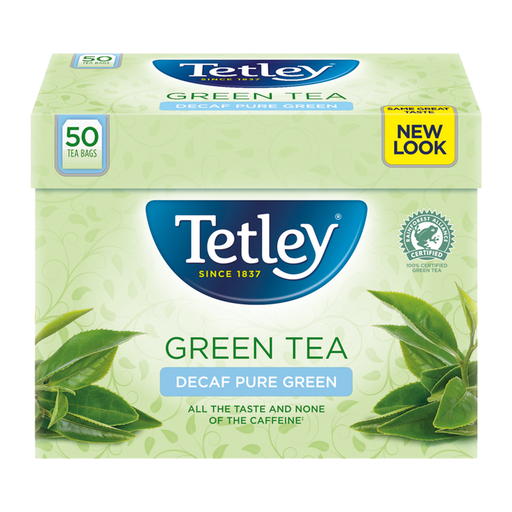
Tetley Decaffeinated Green Tea 50 Tea Bags, 100g
This 50-bag, 100g pack offers decaffeinated green tea rather than black tea or a herbal infusion. Its product wording varies between ‘without the caffeine’ and ‘decaffeinated’, so check the exact pack if complete caffeine avoidance matters.
View on Joybuy
Questions about tea bags and preparation
Does a tea-bag label tell me what is in my finished drink?
No. Check what the nutrition panel says about preparation, then account for anything you add to the mug. Diabetes UK lists unsweetened tea among drinks for people living with diabetes, while the NHS advises cutting back on sugar added to tea or coffee.
Should I choose black tea, decaf or a herbal infusion?
Choose by the drink and caffeine description you want: standard black tea for a conventional brew, decaffeinated black tea for that format in decaf form, or an infusion explicitly labelled caffeine-free if avoiding caffeine matters. Check the exact pack because decaffeinated and caffeine-free are not interchangeable descriptions.
Can a tea marketed for blood-glucose control replace treatment?
A tea bag is a beverage, not a diabetes treatment. Use the exact ingredients and nutrition information to assess the drink, and discuss treatment decisions with your diabetes-care team rather than relying on a product name.
Does milk affect a tea’s stated nutrition values?
Values stated for tea brewed without milk do not describe tea after milk is added. Twinings specifies that its Everyday black-tea figure of 0g sugars per 100ml applies to the brew without milk; check the amount and type you use when assessing your finished cup.


