What should you check before choosing?
Start with the practical question of whether you can make a cup, then choose the blend and brewing instructions that suit the journey.
| Priority |
What to check |
Your needs |
| Hot water and handling |
Check catering on your specific service and whether you can obtain suitable hot water. Follow the pack’s preparation instructions and take care with a hot drink on board; National Rail cautions passengers about hot drinks. |
I’m packing tea bags with food, but I only want to rely on making a cup if I have confirmed how I’ll get hot water. |
| Blend and brew time |
Read the stated flavour profile and timing for the exact tea. Twinings suggests two to three minutes for a strong cup of its English Breakfast; the ASDA listing for PG Tips Original gives one to three minutes. |
With a meal, I might prefer a fuller black tea. If preparation time is limited, I’ll check the instructions rather than assume every bag brews alike. |
| Caffeine preference |
Look for explicit decaf labelling if caffeine matters to you. Tetley says the caffeine in regular tea varies with the blend, bag weight and preparation, so a brief infusion is not a substitute for choosing decaf. |
For a later journey, I’d rather choose a labelled decaf than guess from the colour or strength of a regular tea. |
| Water hardness |
Establish which water will be used for the cup before choosing a specialist blend. Yorkshire Tea says mineral-rich water can make tea darker and thicker and describes its hard-water blend as adjusted for that condition. |
If I know the water is hard, a hard-water blend is worth considering. Otherwise, I can choose by flavour and caffeine preference. |
| Organic sourcing |
Check the exact product label if organically grown tea is important. Clipper describes its Organic Everyday Tea as a blend of organically grown black teas; organic sourcing alone says nothing about decaf status or brew time. |
I may choose an organic black tea, while still checking separately whether its brewing instructions and caffeine designation suit my journey. |
Which brand ranges are relevant?
These brand descriptions help distinguish tea styles and stated instructions; they do not establish that every product in a range has the same ingredients, timing or availability.
Yorkshire Tea
Its black-tea range includes regular, hard-water and decaf choices.
- Yorkshire Tea says its hard-water blend is adjusted for the effect mineral-rich water can have on a cup.
- That distinction matters only when the water used for your tea is known to be hard; the train route alone does not establish it.
Twinings
English Breakfast offers a stated full-bodied profile, while Decaf is a separately labelled black-tea option.
- Twinings describes its English Breakfast as having body and a light finish and suggests two to three minutes for a strong cup.
- Do not apply the English Breakfast brewing guidance or regular-tea designation to a different Twinings variant without checking its pack.
PG Tips
Original is an everyday black-tea choice with a short stated infusion window.
- The ASDA product listing describes PG Tips Original pyramid bags and gives an infusion time of one to three minutes.
- Original is regular black tea, not a decaf substitute; follow the instructions for the pack you buy.
Clipper
Organic Everyday Tea is relevant when organically grown black tea is a buying criterion.
- Clipper describes that product as an organically grown black-tea blend with a rich, full-bodied flavour.
- Organic sourcing does not establish its caffeine amount, brewing speed or suitability with a particular food.
Tetley
Tetley provides brewing guidance for regular tea bags and distinguishes its decaffeinated tea.
- Tetley advises infusing a tea bag for at least two minutes and notes that caffeine varies with the tea, bag weight and preparation.
- Its general guidance is not a brewing instruction or caffeine figure for every Tetley product or another brand’s tea.
Typhoo
Typhoo lists everyday, Premium, Gold and decaf tea-bag formats in its range.
- Those separately named formats give shoppers a way to distinguish regular and decaf options when checking a pack.
- Typhoo’s description of a fuller-flavoured updated blend is the brand’s own characterisation, not a comparison of how its teas taste with train food.
Tea bags to consider on Joybuy
These tea bags cover English Breakfast, decaf, everyday, organic and hard-water choices for packing with train food. Whichever blend you choose, check your service if making a cup depends on onboard hot water.
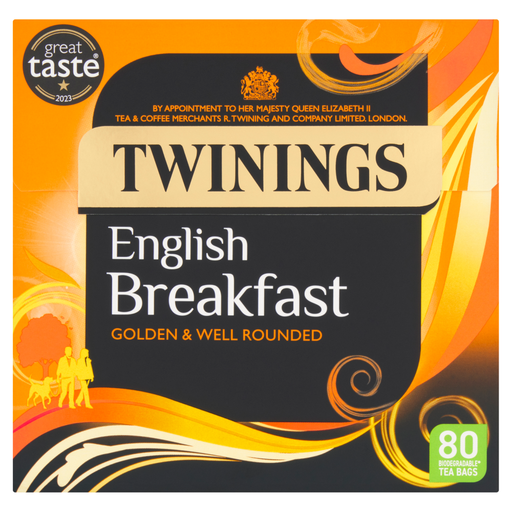 Image unavailable
Twinings English Breakfast 80 Tea Bags, 200g
Consider this for a regular English Breakfast cup with food; Joybuy describes the flavour of this listing as full-bodied and lasting. The pack contains 80 tea bags and weighs 200g. If brewing time matters on your journey, check the instructions on this pack.
View on Joybuy
 Image unavailable
Tetley 80 Decaffeinated Tea Bags, 250g
The decaffeinated designation makes this a choice when you prefer decaf rather than regular tea with your journey food. The pack contains 80 tea bags and weighs 250g. Check the pack if you need its precise caffeine information or preparation instructions.
View on Joybuy
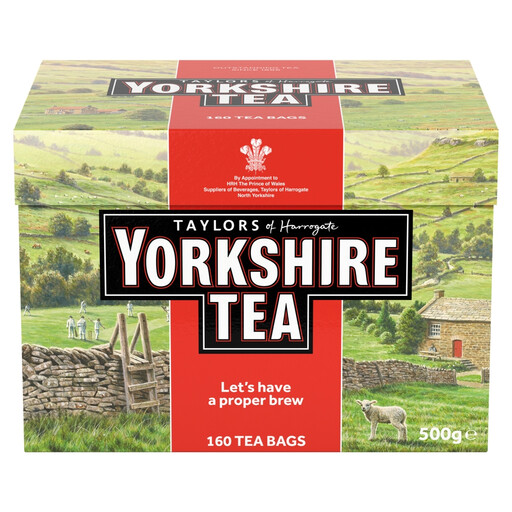 Image unavailable
Yorkshire Tea 160 Tea Bags, 500g
This is a regular black-tea option to pack alongside food, rather than a labelled decaf or hard-water blend. Joybuy lists black tea as its ingredient; the pack contains 160 tea bags and weighs 500g. Check the pack for its brewing instructions.
View on Joybuy
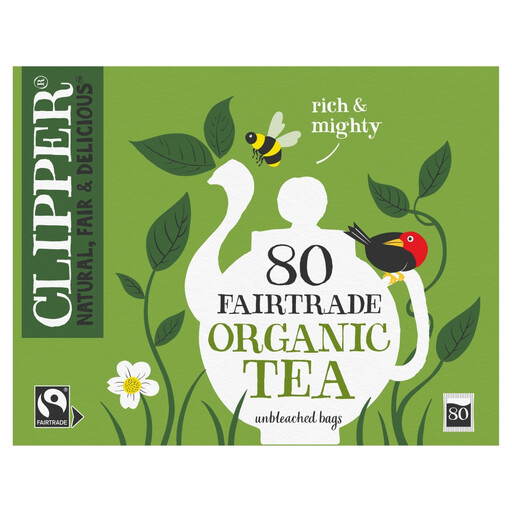 Image unavailable
Clipper Organic Fairtrade 80 Tea Bags
Consider this labelled organic option if sourcing is part of your choice of tea to pack with food. The product name identifies an 80-bag pack. Check the exact pack for its tea type, caffeine designation and brewing instructions rather than assuming that organic means decaf.
View on Joybuy
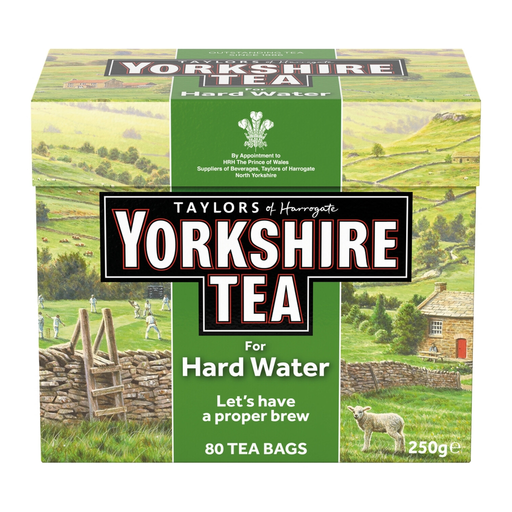 Image unavailable
Taylors of Harrogate Yorkshire Tea for Hard Water 80 Tea Bags, 250g
Choose this specialist blend when you know the water for your cup is hard, not simply because you are travelling by train. Yorkshire Tea describes its hard-water blend as adjusted for mineral-rich water. This pack contains 80 tea bags and weighs 250g; check its own brewing instructions before use.
View on Joybuy
Questions about tea on the train
Can I bring tea bags and my own food on a National Rail train?
Yes. National Rail says passengers are welcome to bring their own food and drink. If you intend to make tea on board, check your specific service for catering or another way to obtain hot water.
Will my train provide hot water for tea?
Do not assume it will. National Rail identifies services without onboard catering, so check the operator and your journey before relying on a tea bag for a drink.
Which blend should I choose to have with train food?
Choose by your preferred cup and the conditions for making it: English Breakfast or everyday black tea for a regular brew, a labelled decaf if caffeine matters, or a hard-water blend when you know the water is hard. Brand flavour descriptions can guide your choice, but they do not establish a pairing that will suit every meal.
How long should I brew a tea bag while travelling?
Follow the instructions for the product you packed and remove the bag when the cup reaches your preferred strength. The ASDA listing gives one to three minutes for PG Tips Original, while Twinings suggests two to three minutes for a strong cup of its English Breakfast; those timings are not universal rules for tea bags.
Is a short brew the same as choosing decaf?
No. Choose a product explicitly labelled decaffeinated if you want decaf. Tetley says caffeine in regular tea varies with the blend, bag weight and preparation, so brewing time alone does not establish a tea’s caffeine amount.


