Regular train travellers who drink black tea
An 80-bag box provides tea bags for repeated trips without measuring loose leaves. You will still need a cup and hot water, or a prepared drink for the journey.


Choose an 80-bag box for repeated journeys if you want to make tea one cup at a time and have a dependable way to get hot water. Choose loose-leaf tea only if you want that format and can carry brewing equipment; an 80-bag box contains tea bags, not loose leaves. National Rail advises checking catering for your specific service rather than assuming refreshments will be available.
An 80-bag box provides tea bags for repeated trips without measuring loose leaves. You will still need a cup and hot water, or a prepared drink for the journey.
An 80-bag decaffeinated black-tea box keeps the tea-bag format. Decaffeinated does not necessarily mean caffeine-free: Twinings states that its Everyday Decaffeinated tea is decaffeinated to 0.02% caffeine.
Loose tea is a separate format, commonly listed by weight rather than bag count in Whittard’s catalogue. Plan how you will brew it and deal with used leaves while travelling.
Start with the format you actually want, then check how you will prepare a drink on your particular journey.
| Priority | What to check | Your needs |
|---|---|---|
| Tea format | Check whether the pack contains individual tea bags or loose tea sold by weight. For loose tea, plan for an infuser or strainer and a suitable vessel. | I want to make a cup without measuring leaves or carrying an infuser, so an 80-bag box suits my routine. If I want loose tea, I will take the equipment it needs. |
| Hot water | Check catering information for your train company and specific service. National Rail notes that some services have no onboard catering. | I need a dependable drink plan, not just tea bags in my luggage. If I cannot rely on hot water, I can bring a prepared drink or flask. |
| Pack size | Confirm the stated bag count and whether it is exact: Bettys describes its Yorkshire Tea box as containing approximately 80 bags. | For repeated journeys, I want a box I can draw from over time rather than treating the whole pack as a single-trip portion. |
| Caffeine | Distinguish standard black tea from decaffeinated tea. Check the exact label if residual caffeine matters; Twinings states 0.02% caffeine for Everyday Decaffeinated. | For a later journey, I may prefer a decaffeinated option, but I will not assume that decaf means no caffeine. |
| Preparation time | Read the instructions for the particular blend. Twinings suggests one minute when in a hurry for Everyday tea and a two-to-three-minute infusion for Everyday Decaffeinated. | If I plan to make tea during a stop or before boarding, I want preparation instructions that fit the time and facilities available. |
Tea bags and loose tea need different preparation. Whittard lists loose tea by weight separately from its counted tea-bag packs.
Choose an 80-bag box if you want individual bags. For loose tea, arrange an infuser or strainer and somewhere to put used leaves.
Loose tea adds equipment to carry and leaves to clear away.
A tea bag alone cannot make a drink. National Rail advises checking your train company or journey details because onboard catering varies by service.
Check the specific journey before setting off; if hot water is uncertain, bring a prepared drink or flask.
Twinings states that Everyday Decaffeinated is decaffeinated to 0.02% caffeine, so the two descriptions are not interchangeable.
If a particular caffeine amount matters to your choice, check the label of the exact product you intend to use.
These brand references distinguish the tea formats and blends discussed here; they do not describe the Joybuy selection below.
Ringtons Boxed Tea Bags is an 80-bag, 250 g black-tea product described by Ringtons as an Assam and Kenyan blend.
Bettys lists separate regular and decaffeinated Yorkshire Tea boxes.
Twinings lists Everyday and Everyday Decaffeinated as distinct 80-bag teas.
Bettys Tea Room Blend is sold as a 250 g box of 80 tea bags; Bettys describes it as the blend served in its Café Tea Rooms.
Whittard’s catalogue separates loose tea, listed by weight, from counted tea-bag packs.
Fortnum & Mason’s catalogue includes both loose-leaf tea and counted tea-bag packs.
These Joybuy options are standard and decaffeinated tea bags for repeated journeys, not loose-leaf teas. Whichever blend you choose, plan for a cup and hot water or bring a prepared drink.
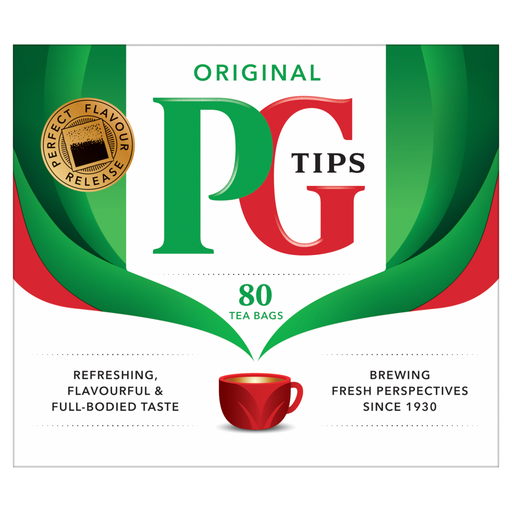 No image available
An 80-bag black-tea option for making individual cups across repeated journeys. The product description specifies pyramid-shaped bags and a two-to-three-minute infusion; preparation still needs hot water and a cup.
 No image available
An 80-bag decaffeinated black-tea option for travellers choosing that format. If the residual caffeine amount matters, check the exact product label; you will also need hot water and a cup.
 No image available
An 80-bag decaffeinated black tea for making individual cups. Its listing recommends a two-to-three-minute infusion; check the exact label if residual caffeine matters, and arrange hot water and a cup for travel.
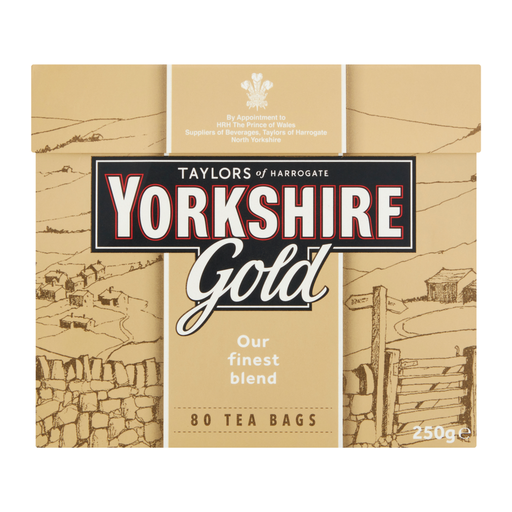 No image available
An 80-bag black-tea box for repeated journeys. The listing recommends a three-to-five-minute infusion; have hot water and a cup available if you plan to brew it during the trip.
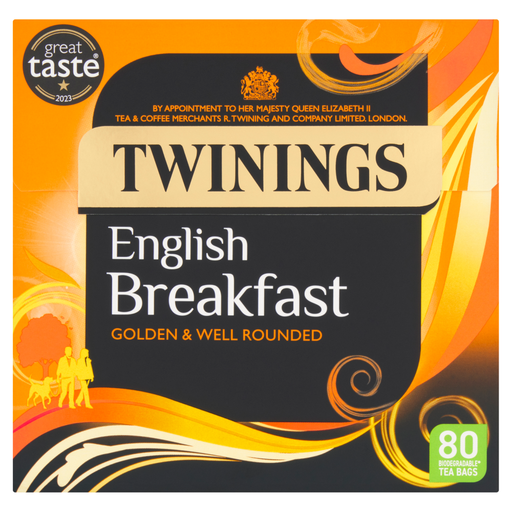 No image available
An 80-bag black-tea option for individual cups over multiple journeys. Its product description identifies Assam tea; brewing on the train still requires hot water and a cup.
Yes. National Rail says passengers are welcome to bring their own food and drink. If you intend to make tea during the journey, check what facilities your specific service offers.
No. National Rail says catering varies by train company and service, so check your operator or journey details. A prepared drink or flask is an alternative if you cannot depend on onboard preparation.
No. An 80-bag box contains tea bags. Whittard’s catalogue lists loose tea separately by weight; choose that format only if you have a way to brew and clear away the leaves.
Look for a specifically labelled decaffeinated tea-bag box rather than a standard black-tea box. Twinings lists Everyday Decaffeinated in an 80-bag, 250 g format and states that the tea is decaffeinated to 0.02% caffeine; do not assume decaffeinated means caffeine-free.