Volunteer-run refreshment stalls
Tea bags let volunteers prepare individual mugs without measuring leaves or washing a strainer between orders. Allow for safe hot-water handling and a way to keep the service area clean.


For a car boot sale serving one mug at a time, an individually portioned tea-bag box avoids measuring and straining leaves; a box labelled 240 tea bags is not loose leaf. Choose loose-leaf catering tea if you can provide brewing and straining equipment and allow time to portion it, but plan servings from the amount used rather than assuming a pack makes 240 cups. Check the organiser’s rules and the relevant local authority’s requirements before serving drinks.
The main distinction is whether the stall can prepare tea in batches or needs to make individual mugs as customers arrive.
Tea bags let volunteers prepare individual mugs without measuring leaves or washing a strainer between orders. Allow for safe hot-water handling and a way to keep the service area clean.
If you have a teapot or suitable urn, a strainer and time to portion tea, a loose-leaf pack may fit the service you want. Its weight alone does not give a fixed cup count.
A larger tea-bag bundle may suit a higher planned volume. If you also offer decaf or another type of tea, make room to store and identify each option during service.
Choose when: Volunteers will make mugs as customers arrive at a busy stall.
Trade-off: A 240-bag black-tea box does not fulfil a loose-leaf requirement or provide a second tea choice.
Choose when: Loose-leaf service matters and you have the equipment and time to prepare it.
Trade-off: Measuring, steeping and straining add steps, and pack weight is not a fixed serving count.
| Priority | What to check | Your needs |
|---|---|---|
| Format and quantity | Check whether the label counts individual bags or gives loose-leaf weight. Bettys describes its Yorkshire Tea box as approximately 240 bags; Twinings lists a 500g loose-leaf catering pack. A weight does not establish a serving count. | I need to know whether I am buying portioned mugs of tea or loose leaves for brewing. |
| Preparation | Check the selected tea’s brewing instructions and whether you need a teapot or urn, a strainer and a way to measure leaves. Bettys gives a 4–5 minute infusion instruction for its Yorkshire Tea 240-bag listing. | During a busy spell, I want volunteers to follow a preparation routine they can manage. |
| Range and stock | Check the count for each tea type separately. Ringtons lists 200- and 400-bag bundles, including a decaf bundle; neither count is a 240-bag box. | If I offer decaf as well as standard tea, I need to plan and identify both supplies. |
| Outdoor service | Check how you will protect stock from contamination and handle any perishable additions. Food Standards Scotland advises safe food handling at community events; Shared Regulatory Services Wales says food at outdoor catering stalls must be protected from contamination. | I need a clean serving area and suitable storage for anything I add to the tea. |
| Permission to serve | Ask the organiser whether refreshments are allowed and check requirements with the relevant local authority. Food Standards Scotland says food businesses in Scotland must register with their local authority at least 28 days before opening. | Before setting up the stall, I want to know which rules apply to this event and my activity. |
A count of 240 individual bags describes a different format from loose-leaf tea sold by weight. The two need different preparation arrangements.
Specify either individual tea bags or loose leaves on the shopping list, then check the pack label before buying.
Changing to loose leaf may also mean obtaining a strainer or infuser and allowing time to portion and clean up.
The Food Standards Agency says food supplied at community events must be safe. Venue conditions and local requirements can also affect a refreshment stall.
Ask the organiser what the event permits and contact the relevant local authority about requirements for your activity before trading.
Milk or accompanying food changes what must be stored, handled and explained to customers. Outdoor stock also needs protection from contamination.
Keep the products’ ingredient packaging available, plan suitable storage for perishable additions and maintain a clean serving area.
A variety box does not necessarily contain enough of the particular tea you intend to serve most often. Fortnum & Mason’s listed mixed selection contains 120 bags across several blends, rather than 240 bags of one tea.
Check the count of each blend against your serving plan before choosing a mixed box as the stall’s main supply.
These brand ranges illustrate different pack formats; a brand’s inclusion here does not mean every product in its range suits a temporary stall.
Bettys lists a Yorkshire Tea box described as approximately 240 individual black-tea bags.
Twinings lists 500g loose-leaf catering packs for foodservice.
Ringtons lists tea-bag bundles in 200- and 400-bag counts, as well as decaf options.
Whittard lists loose tea, a 50-teabag English Breakfast product and tea equipment.
Fortnum & Mason lists a 120-bag selection containing several black-tea blends.
Bettys provides a listing for the Yorkshire Tea approximately 240-bag product.
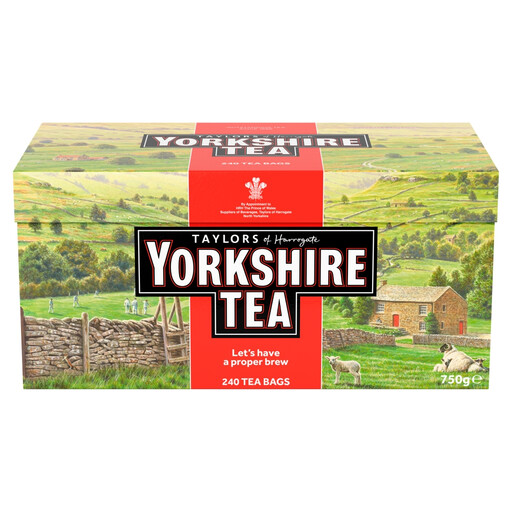
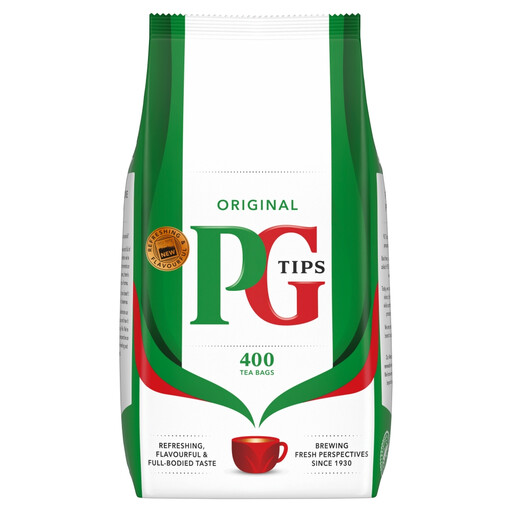
These are individually portioned black-tea options for a car boot sale: one 240-bag pack and one larger 400-bag pack. Neither is loose leaf.
 No image available
The individual bags suit a stall making one mug at a time without measuring loose leaves. The listed ingredient is black tea; this is not a loose-leaf pack. Use the bag count for approximate supply planning, not as a guarantee of 240 served cups.
 No image available
The individual bags offer a larger supply if the planned service calls for more than 240 bags. The stated pack contains black tea; it is neither loose leaf nor a 240-count box. Check the pack instructions before serving.
No. Bettys describes its Yorkshire Tea product as approximately 240 individual tea bags. Twinings instead lists loose-leaf catering tea by weight, including a 500g pack; how many cups that makes depends on the amount used per serving.
One bag per cup gives a planning figure of around 240 cups, not a guaranteed number of drinks served. Bettys labels its Yorkshire Tea box as approximately 240 bags; allow for how your stall prepares larger or stronger drinks and for any bags used by volunteers.
Do not assume that an occasional event answers the registration question. Ask the relevant local authority about your activity and check the organiser’s conditions before serving. Food Standards Scotland says food businesses in Scotland must register with their local authority at least 28 days before opening; that statement does not determine whether a particular stall is a food business.
Check the ingredients of the actual products you serve and keep their packaging available to help answer customers’ questions. Plan suitable storage for perishable additions and protect food and drink from contamination at the outdoor stall.
Follow the selected tea’s storage instructions and protect stock during service. Food Standards Scotland advises safe food handling at community events, while Shared Regulatory Services Wales says food at outdoor catering stalls must be protected from contamination.