Households planning everyday mugs
An 80-bag box gives a clear pack count for individual cups, guests or a shared kitchen, without measuring leaves.


For a counted supply that needs little preparation, choose a pack explicitly labelled as 80 tea bags. Choose loose tea by weight if you would rather measure the leaves and use an infuser or teapot; if lower caffeine matters, look for an explicitly decaffeinated pack rather than assuming an ordinary black tea is equivalent.
The format matters most when deciding between ready-counted cups and preparing loose tea.
An 80-bag box gives a clear pack count for individual cups, guests or a shared kitchen, without measuring leaves.
If you prefer a particular black-tea style, compare the named blend and the pack’s brewing directions. A description such as strong or malty expresses a flavour profile, not a guarantee that every cup will taste the same.
An explicitly decaffeinated pack offers a different choice from standard black tea when you want to reduce caffeine. Check the packaging if the amount of residual caffeine matters to you.
Decide whether the count of 80 or loose-leaf preparation matters more, then compare the tea style and any decaffeination requirement.
| Priority | What to check | Your needs |
|---|---|---|
| Counted cups | Look for an explicit count of 80 tea bags. Check that the listing describes bags rather than loose tea sold by weight. | I want a box I can count out for everyday mugs or guests, without measuring leaves. |
| Black-tea flavour | Read the named blend and flavour description, then follow the product’s brewing directions. Do not assume all black teas have the same strength. | I prefer a traditional black-tea cup, with or without milk. In its May 2025 Tea Census article, the UK Tea & Infusions Association reported that 71% of surveyed Britons named traditional black tea as their main infusion. |
| Loose-leaf preparation | Compare the blend and pack weight in grams. Plan to measure the leaves and use an infuser or teapot rather than relying on an 80-bag count. | Choosing and preparing loose tea matters more to me than having ready-counted bags. |
| Decaffeination | Check for an explicit decaffeinated label. If you need to know the residual caffeine amount, check the product packaging. | For a later cup, I would rather choose a labelled decaffeinated tea than assume a lightly brewed standard tea meets the same need. |
The counted products discussed here are tea bags; loose tea is sold by weight and calls for measuring and brewing equipment.
If 80 ready portions are the deciding factor, check the tea-bag count. If preparing loose leaves is the point, choose by blend and pack weight instead.
Blend descriptions vary: Ringtons, for example, describes its 80-bag tea as an Assam and Kenyan blend. The blend name alone does not establish how another product will taste in your mug.
Read the flavour description and brewing directions on the pack, particularly if you want a tea to drink with milk.
A standard black-tea pack and an explicitly decaffeinated pack are different choices, even when both contain 80 bags.
Check the decaffeinated label rather than relying on a shorter brew. If a precise caffeine amount matters, consult the packaging.
These ranges illustrate the choice between counted tea bags and loose tea; a brand’s wider range does not make every product an 80-bag option.
Twinings lists black-tea bags and loose tea, including 80-bag products.
An 80-bag decaffeinated Yorkshire Tea product is listed by Bettys.
Whittard has a loose-tea range for shoppers who want to prepare measured leaves.
Its tea range includes loose leaf, tea bags and caddies.
Bettys lists its Tea Room Blend as a box of 80 tea bags weighing 250g.
Ringtons lists both an 80-bag boxed tea and a separate loose breakfast tea.
These are counted tea-bag options for the winter-drink decision, including standard and decaffeinated choices. If loose-leaf preparation matters more, compare loose teas by blend and pack weight instead.
 No image available
A counted option when you want tea labelled decaffeinated rather than standard black tea. The pack contains 80 bags and weighs 250g; check the packaging if a precise residual caffeine amount matters.
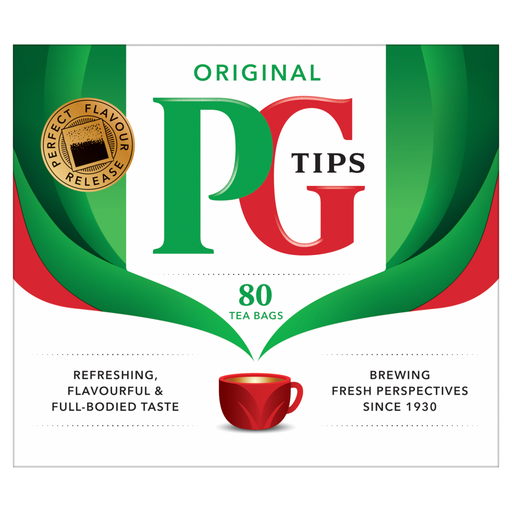 No image available
For everyday mugs when ready-counted bags matter more than loose-leaf preparation. This Original pack contains 80 tea bags and weighs 232g.
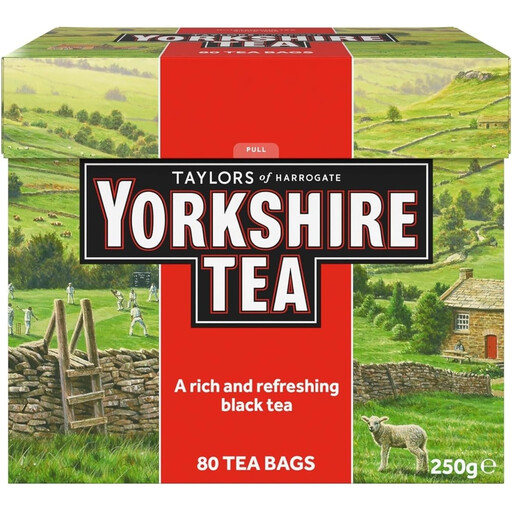 No image available
A standard counted tea-bag choice for household cups. The pack contains 80 bags and weighs 250g; choose a product explicitly labelled decaffeinated if that is your priority.
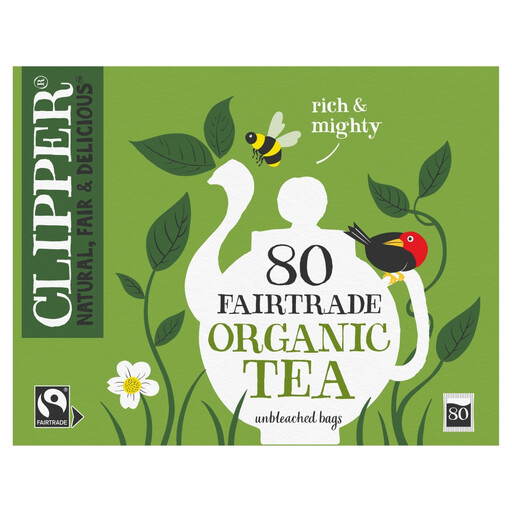 No image available
A ready-counted option if you are considering this Clipper range rather than measuring loose leaves. The pack contains 80 tea bags and weighs 232g; follow its packaging for preparation directions.
 No image available
This labelled decaf option keeps the convenience of a counted pack: 80 tea bags weighing 277g. Check the packaging if you need a precise residual caffeine amount.
No: an 80-bag count describes ready-portioned tea bags, whereas the loose teas considered here are sold by weight. Check the stated format before buying, especially if you need either an exact bag count or leaves to use in an infuser.
If you prefer a traditional black tea with milk, compare the named blends and their flavour descriptions. Ringtons describes its 80-bag product as an Assam and Kenyan blend, but the description of one tea does not predict the taste of another.
Use the directions on the particular pack you buy. Brewing guidance can differ between blends, so the count of 80 bags does not determine an infusion time.
Do not treat a decaffeinated label alone as a statement that the tea contains none. If a specific residual caffeine amount matters to your choice, check the product packaging.