Households that drink black tea regularly
If several people use the same blend, compare pack counts with the number of cups you expect to make. A larger box is useful only if the household will use it.


Start with how many cups your household makes, then choose the tea type before deciding on pack size. A large everyday black-tea box suits a household that regularly drinks the same blend; decaf or other variants make more sense when those preferences matter. A storage jar is optional—follow the directions on the exact pack.
If several people use the same blend, compare pack counts with the number of cups you expect to make. A larger box is useful only if the household will use it.
Choose the type or variant before the box size if someone wants decaf, a blend intended for hard-water areas, or tea other than everyday black tea.
Decanting tea bags changes how you store them, not which tea type you need. Check the pack directions and keep its ingredient, best-before and disposal information accessible.
Settle the tea type first, estimate how quickly you will use a pack, then check how you will store and dispose of it.
| Priority | What to check | Your needs |
|---|---|---|
| Pack size | Count likely weekly cups and compare the stated number of bags. The cited product listings include 240-, 400- and 440-bag formats. | We drink the same black tea often enough to use a larger box, rather than keeping a blend we may switch away from. |
| Tea type | Read the exact variant name. Yorkshire Tea lists separate Decaf and Hard Water lines; Twinings offers black, green, fruit and herbal teas. | For a lower-caffeine routine, I want a clearly labelled decaf option. If tastes differ at home, one large black-tea box may not cover everyone’s preferences. |
| Storage | Follow the directions on the chosen pack. Clipper specifies a cool, dry place for its 440-bag tea; check that a jar and its location meet the applicable directions. | I want to use a jar without losing the pack information or exposing the tea bags to moisture. |
| Bag disposal | Check the exact bag material and your local collection instructions. Tata Consumer Products says industrial composting through food-waste schemes applies to a significant portion of Tetley’s plant-based tea-bag portfolio where schemes are available—not every pack or collection service. | If disposal matters to me, I need instructions for the tea bags I actually buy, not a general claim about a brand. |
A higher bag count means fewer boxes to buy when everyone drinks the same tea regularly, but it does not tell you whether the household will finish that blend.
Estimate your weekly use before choosing between formats such as 240, 400 and 440 bags.
A standard black-tea pack does not replace a decaf option or a blend selected for hard-water conditions. Yorkshire Tea sells Decaf and Hard Water as distinct lines.
Pick the variant that fits the drinking routine, then choose its pack size.
Bag materials and accepted disposal routes depend on the product and local collection service. Tetley’s stated industrial-composting route applies through food-waste schemes where available.
Check the exact pack and local collection guidance rather than assuming a bag can go in a home compost bin.
A jar’s appearance does not establish that it provides the conditions stated on the tea pack.
Follow the pack’s storage directions and retain its ingredient, best-before and disposal details when decanting.
These ranges illustrate different tea types and pack formats; check the exact product rather than applying a brand-wide description to every box.
An everyday-tea range with Original and Decaf options represented among the products below.
PG Tips Original is listed on Joybuy in a 400-bag, 1.16 kg format.
Its range includes standard tea alongside Gold, Decaf and Hard Water lines.
Twinings offers black, green, fruit and herbal teas for a cupboard with varied preferences.
Clipper’s cited range includes Fairtrade Everyday tea in a 440-bag format and a smaller Organic Fairtrade Decaf product below.
Typhoo lists a 240-bag Premium tea among its UK products.
These options cover larger everyday black-tea packs and two decaf packs in different quantities. Choose by tea type and expected use; the jar remains a separate storage decision.
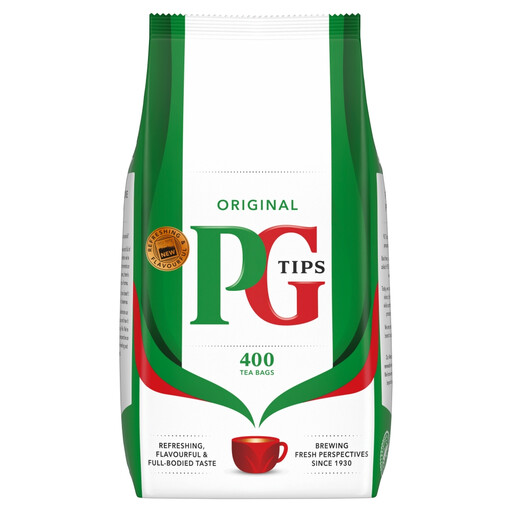 No image available
A 400-bag Original black-tea pack to consider when the household regularly uses the same blend. Store it in a cool, dry place as directed for this product; check the physical pack if preparation guidance matters.
 No image available
A decaffeinated black-tea option for a household choosing decaf before pack size. The pack states 160 bags and 500 g; store it in a cool, dry place and check the exact pack if a particular caffeine limit matters.
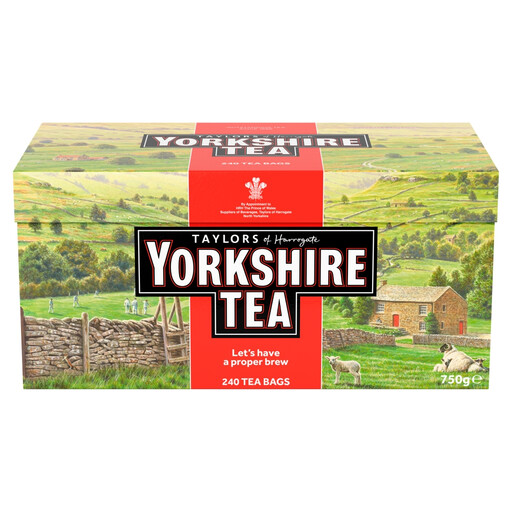 No image available
A 240-bag black-tea pack for regular use of this standard blend. The stated weight is 750 g and storage is cool and dry; choose a separately labelled Yorkshire Tea variant if you need Decaf or Hard Water tea.
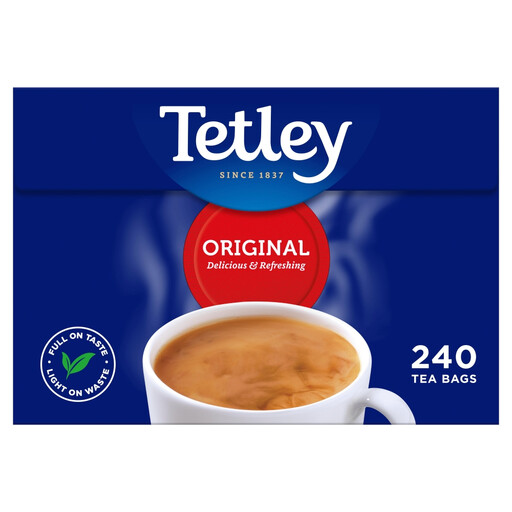 No image available
A 240-bag Original black-tea pack for a household that regularly uses this blend. It states 750 g and cool, dry storage; select the separately labelled Decaf product if that is the variant you need.
 No image available
An 80-bag decaffeinated black-tea option in a smaller format than the everyday black-tea packs above. The product carries Organic and Fairtrade wording and states 277 g and cool, dry storage. Check this pack and local guidance before deciding how to dispose of its bags.
Estimate how many cups the household makes in a week, then pick a pack count that fits how regularly everyone drinks the same tea. The cited ranges include 80-bag and larger 240- to 440-bag formats; choose the tea type before stocking up.
No particular jar is required. Follow the chosen pack’s storage directions instead; Clipper, for example, specifies a cool, dry place for its 440-bag tea. If you decant the bags, retain the pack information and check that the jar and its location meet those directions.
Choose a product clearly labelled decaf rather than relying on the size or appearance of the box. Yorkshire Tea positions its Decaf line for lower-caffeine drinking, while the Joybuy selection above includes separately labelled Tetley and Clipper decaf packs; check the exact product if a particular caffeine limit matters.
No. Clipper describes its tea-bag sealing material as plant-based PLA, while Tata Consumer Products limits its industrial-composting statement to a significant portion of Tetley’s portfolio and food-waste schemes where available. Follow the exact pack instructions and your local collection guidance.