What should you check before choosing?
Start with the finished cup and its ingredients, then decide whether caffeine, brewing method or convenience changes your choice.
| Priority | What to check | Your needs |
|---|
| Sugar and additions |
Check the exact product’s ingredients and any nutrition information for the brewed drink, including its per 100 ml basis. Consider sugar, honey or syrup added after brewing. |
I want a cup without added sugar. Diabetes UK includes unsweetened tea among drinks that count towards daily fluid intake; the tea’s label alone does not describe everything added to my cup. |
| Sweet-tasting ingredients |
Read the full ingredient list as well as any sugar-free statement. Whittard of Chelsea lists stevia leaves in its sugar-free Cherry & Mandarin cold-brew infusion. |
A sugar-free drink might still taste sweet. If I prefer to avoid stevia leaves, I need to check ingredients rather than the front of the pack alone. |
| Caffeine |
Look for caffeine-free wording on the exact product. Twinings labels Refresh Double Mint naturally caffeine free; do not assume the same of a green or black tea. |
For an evening cup, I would choose an infusion explicitly labelled caffeine free if avoiding caffeine is important to me. |
| Brewing and format |
Check whether the bag is intended for hot or cold water and follow its directions. Whittard of Chelsea specifies 5–10 minutes in cold water and consumption within 8 hours of brewing for Cherry & Mandarin Cold Brew. Loose leaf requires measuring and straining. |
I may prefer a portioned bag for a quick cup, loose leaf when I have an infuser, or a cold-brew bag when I can follow its preparation instructions. |
Pyramid tea bags on Joybuy
These Joybuy options are portioned green-tea pyramid bags. Check the prepared drink’s nutrition information and caffeine status if either is important to your choice; neither product should be assumed to match the sugar-free or caffeine-free claims of the named brand examples above.
 No image available
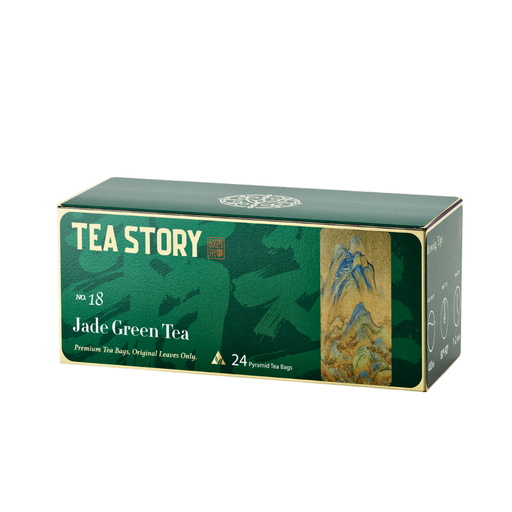
TEA STORY Jade Green Tea Spring First Flush pyramid bags, 24 × 2 g
A portioned hot green-tea option if you prefer a bag to measuring loose tea. The listed ingredient is green tea, and the directions specify one 2 g bag per cup. If brewed-drink sugars, carbohydrate or caffeine status affect your choice, check the product information for those details; the supplied nutrition values are per 100 g, not per cup of brewed tea.
View on Joybuy
 No image available
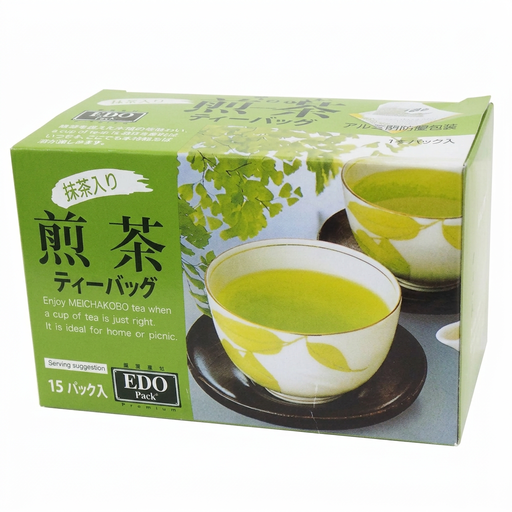
Cooling Hydration EDO Matcha Injected Sencha pyramid tea bags, 30 g
This is another portioned green-tea format. Its description specifies 98% green tea and 2% green tea powder. Check the brewed-drink nutrition, caffeine status and brewing directions if those details matter to your routine.
View on Joybuy
Common questions
Can pyramid tea bags fit a drinking routine when you have diabetes?
Yes, the bag shape does not determine what is in the finished drink. Diabetes UK includes unsweetened tea among drinks that count towards daily fluid intake. Check the particular tea’s ingredients and any brewed-drink nutrition information, alongside sugar, honey or syrup you add.
Does sugar free mean a tea has no sweeteners?
No. Whittard of Chelsea labels its Cherry & Mandarin cold-brew infusion sugar free, but its ingredient list includes stevia leaves. Read the full list if avoiding sweet-tasting ingredients matters to you.
Is loose leaf preferable to pyramid bags?
Choose loose leaf if you want to measure tea and use an infuser or strainer; choose pyramid bags if a portioned format better fits your routine. Whittard of Chelsea says many loose-leaf teas can be reinfused, but that does not establish a nutritional advantage over bags.
Can I use tea bags or loose leaf for iced tea?
Yes. Diabetes UK’s iced-tea recipe uses either tea bags or loose leaf. For a commercial cold-brew product, follow its own directions: Whittard of Chelsea specifies 5–10 minutes in cold water and consumption within 8 hours of brewing for its Cherry & Mandarin infusion.
Can a herbal tea replace diabetes treatment?
No. Diabetes UK warns that herbal remedies should not replace a diabetes treatment plan. Choose an infusion for its ingredients, flavour and preparation method, not as a treatment.


