Who is each format for?
The useful distinction is whether the shop needs a prepared assortment, a wider mix of tea types or control over what goes into the jar.
Buyers seeking a caffeine-free gift jar
A filled jar avoids selecting and arranging the initial envelopes yourself. Twinings describes its Caffeine Free Infusions Selection Filled Jar as a glass jar containing 30 caffeine-free infusion envelopes; check the current selection if particular ingredients matter.
Shops serving varied tea preferences
A mixed jar makes sense when customers may choose conventional tea as well as infusions. Twinings says its mixed jar contains black, green, fruit and herbal envelopes, so it should not be presented as an entirely herbal or caffeine-free assortment.
Managers providing drinks as part of care
Where refreshments form part of care, choose drinks around the people being served rather than treating one jar as a complete drinks offer. Care Quality Commission Regulation 14 guidance says providers must ensure people have enough to eat and drink to meet their nutrition and hydration needs.
What should you check before buying?
Decide what the jar needs to contain before comparing its appearance or refill arrangements.
Filled caffeine-free infusion jar
Choose when: You want a prepared caffeine-free assortment for a gift or counter display.
Allow for: Twinings says the contents of its selection may vary, so check the current envelopes and ingredients.
Filled mixed tea jar
Choose when: The display should include black and green tea alongside fruit and herbal infusions.
Allow for: Twinings’ mixed assortment does not meet an all-herbal or fully caffeine-free requirement.
Empty jar with separately chosen tea
Choose when: You want to select the ingredients and refill range yourself.
Allow for: Sourcing tea, managing stock and providing the appropriate food information become part of the shop’s work.
| Priority | What to check | Your needs |
|---|
| Caffeine and ingredients |
Read the current contents and each envelope’s ingredient information. Do not assume a mixed tea jar is caffeine-free. |
I want customers to be able to identify a caffeine-free choice and see what is in the tea they select. |
| Ready-to-display format |
Check whether the jar is filled and how its contents are packed. Twinings lists 30 envelopes in each of its filled caffeine-free and mixed selections. |
For a gift or counter display, I would rather start with a prepared assortment than fill the jar myself. |
| Refilling and storage |
Confirm which tea you will stock next, how it will be identified and whether the container suits the intended storage use. |
I want to choose the refill range and keep track of what is in the jar after the initial selection runs out. |
| Food information |
If the shop packs food for direct sale, check the rules for that sales format. Food Standards Agency guidance says businesses producing prepacked-for-direct-sale food must label it with the food name and a full ingredients list. |
If we fill jars for resale, I need a workable way to provide the required information for what we pack. |
| Care-linked service |
Where drinks are provided as part of care, consider individual needs and preferences as well as the available drink choices. Care Quality Commission Regulation 14 addresses providers’ nutrition and hydration duties. |
If the shop serves people as part of care, the drinks offer needs to work for those individuals, not just look appealing on display. |
Brands and retail references
These references cover filled jars, separately stocked tea and a retail listing; a brand’s presence here does not mean it supplies every jar format.
Twinings
Twinings lists filled glass tea jars as well as empty storage jars, making its formats relevant to the filled-versus-empty decision.
- Its Caffeine Free Infusions Selection Filled Jar contains 30 envelopes; its mixed jar includes black, green, fruit and herbal tea.
- Check the caffeine-free jar’s current contents, and do not use the mixed jar for an entirely herbal or caffeine-free offer.
Clipper
Clipper’s chamomile and peppermint infusions are options to consider when choosing tea separately for a jar.
- Clipper labels its Organic Chamomile and Organic Peppermint infusions naturally caffeine-free and lists the respective herb as the ingredient.
- Choose the storage container and check the pack information separately if these teas will form a jar display.
Pukka
Pukka offers caffeine-free herbal tea bags for a shop selecting packaged tea separately from its display container.
- Pukka describes its Three Chamomile tea as naturally caffeine-free.
- A boxed tea selection is a different purchase from a ready-filled display jar.
teapigs
The teapigs herbal range offers flavours to compare when assembling a separately stocked selection.
- Its herbal category lists peppermint, chamomile and lemon and ginger choices.
- Check the pack format and ingredients of each chosen tea before planning a jar display.
Tesco
Tesco is a retail reference for packaged herbal tea, rather than a jar format in this comparison.
- Its Pukka Peace listing provides an example of boxed herbal tea sold through a grocery retailer.
- A boxed-tea listing does not establish the contents or suitability of a filled jar.
Joybuy tea-storage option
This option is a tea canister for a shop considering a separately chosen herbal-tea range. Confirm its contents, capacity and suitability for your intended storage use before ordering.
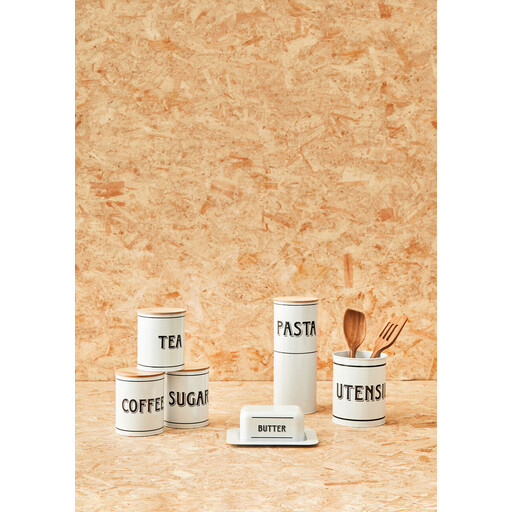 Image unavailable
Maison by Premier Grocer White Metal Tea Canister
A tea-storage option for a shop choosing its herbal tea separately. Check whether tea is included, along with the canister’s food-contact suitability, capacity and refill arrangements for your intended use.
View on Joybuy
Frequently asked questions
Should a retirement-focused shop choose a mixed jar or a caffeine-free infusion jar?
Choose a dedicated caffeine-free infusion jar when caffeine-free choice defines the intended assortment, and check its current contents and ingredients. Choose a mixed jar when black and green tea are also wanted: Twinings lists both in its mixed selection alongside fruit and herbal envelopes.
Is a caffeine-free jar suitable for every customer?
No single jar establishes suitability for everyone. Caffeine status is only one consideration; check the ingredients of the particular envelopes being offered, and do not make medical claims about the tea.
Can a shop fill an empty jar with its own herbal-tea selection for sale?
That depends on how the tea is packed and sold. Food Standards Agency guidance says a business producing prepacked-for-direct-sale food must label it with the food name and a full ingredients list; establish the applicable sales format and its food-information requirements before filling jars for resale.
Does care-provider hydration guidance apply to an ordinary retail shop?
Do not assume that selling packaged tea makes a shop a care provider. Where a business provides drinks as part of care, Care Quality Commission Regulation 14 guidance requires providers to ensure people have enough to eat and drink to meet their nutrition and hydration needs.
Can shelf copy say a herbal tea treats sleep or digestion problems?
Do not claim or imply that a food treats, prevents or cures a disease or medical condition: GOV.UK guidance prohibits those claims. Describe supported product facts, such as flavour, ingredients, caffeine status and preparation, instead.


