For a household that usually takes tea with milk, start with an everyday black tea or English Breakfast blend. Add Earl Grey if someone wants its citrus flavour, or a separately labelled decaf for lower-caffeine cups; a hard-water blend is relevant when mineral-heavy tap water affects your usual tea. Check the exact pack for bag count, ingredients and brewing instructions before stocking up.
Who is choosing the tea?
Households making regular milky tea
If most cups are conventional black tea with milk or sugar, compare everyday blends with English Breakfast before adding flavoured varieties. Twinings describes its English Breakfast blend as one commonly enjoyed with milk or sugar.
Households wanting a decaf option
A separately labelled decaf box helps distinguish it from regular black tea for evening or lower-caffeine preferences. Twinings notes that decaffeinated tea can still contain traces of caffeine.
Tea drinkers using hard tap water
If ordinary tea regularly seems darker or thicker when made with your tap water, a hard-water-specific blend is worth considering. Yorkshire Tea attributes that effect to minerals in hard water and describes its Hard Water blend as adjusted for it.
What should you check?
Choose the blend your household will use most often, then decide whether a second box serves a distinct flavour, caffeine preference or water condition.
| Priority | What to check | Your needs |
|---|
| Everyday blend |
Check whether the pack is an everyday black tea or English Breakfast blend, and follow its brewing directions before judging the cup. Twinings describes its English Breakfast as an Assam, Ceylon and Kenyan tea blend. |
I mainly make black tea with milk or sugar, so I want the routine-use box to match that preference. |
| Caffeine status |
Look for an explicit decaf label; do not assume decaf means caffeine-free. Twinings says minor traces can remain after decaffeination. |
Some cups are for people choosing less caffeine, so I want regular and decaf bags kept easy to tell apart. |
| Flavourings |
Read the ingredients if choosing Earl Grey. Twinings lists bergamot and lemon flavourings for its Earl Grey, making it a different flavour choice from its English Breakfast blend. |
We want a citrus-flavoured second tea, not an unexpected change to every everyday cup. |
| Tap water |
Establish whether hard water affects tea made at home before choosing a specialist blend. Yorkshire Tea describes its Hard Water blend as adjusted for mineral-heavy water. |
Our usual tea becomes darker or thicker with our tap water, so a water-specific blend may be relevant. |
| Sourcing |
Check the exact product’s ingredient and sourcing statements. Clipper describes Organic Everyday Tea as organically grown black tea and says its Fairtrade Classic Everyday Tea uses tea traded in compliance with Fairtrade standards. |
I want the sourcing statement on the tea I actually buy, alongside a blend my household wants to drink. |
| Pack and storage |
Compare bag count with how often each variety is used, then check the pack’s storage and brewing directions. Clipper’s Organic Everyday Tea and Typhoo’s Decaf product pages specify cool, dry storage. |
A large everyday box makes sense for frequent cups; I may need fewer bags of a flavour only one person drinks. |
Pantry-stocking mistakes to avoid
-
Assuming Earl Grey tastes like everyday black tea
Twinings describes Earl Grey with bergamot and lemon flavourings, while its English Breakfast is a robust blend of black teas. That distinction matters if most cups are expected to be conventional milky tea.
Choose Earl Grey deliberately for its citrus character; if it will be a second variety, consider how often it will be used before selecting a pack size.
-
Treating decaf as caffeine-free
Twinings says decaffeinated tea can retain minor traces of caffeine. A shorter brew of ordinary black tea is not the same as choosing a product labelled decaf.
Check the exact pack’s caffeine statement. If you need to manage caffeine for a medical reason, follow appropriate clinical advice rather than relying on the word “decaf” alone.
-
Choosing a hard-water blend for every household
Yorkshire Tea describes its Hard Water blend as adjusted for the effect of mineral-heavy water; that does not establish an advantage where water is soft or the usual tea already suits the household.
Check your local water condition and whether it affects the tea you make before giving a specialist blend pantry space.
-
Choosing a large pack by its blend name alone
Bag counts, ingredients and brewing directions belong to the specific product. Typhoo also says its Decaf pack may arrive in old or new packaging depending on stock.
Check the exact pack count, current label, storage instructions and best-before information when the tea arrives.
Brand ranges to consider
These brand descriptions help distinguish blend types; they do not indicate which products are in the Joybuy selection below.
Yorkshire Tea
Its range includes standard black tea, Gold, decaf and a Hard Water blend.
- Yorkshire Tea describes its Hard Water blend as adjusted for mineral-heavy water and its decaf as an option for lower-caffeine routines.
- The hard-water positioning is relevant when that water condition affects the household’s tea; it is not a general taste-test result.
Twinings
Offers distinct English Breakfast, Earl Grey and decaffeinated tea options.
- Twinings describes English Breakfast as an Assam, Ceylon and Kenyan blend and lists bergamot and lemon flavourings in its Earl Grey.
- The citrus-flavoured Earl Grey is a different choice from a conventional breakfast blend; check the exact variant when choosing decaf.
Clipper
Its everyday black-tea range includes products with stated organic or Fairtrade credentials, as well as decaf options.
- Clipper lists organically grown black tea for Organic Everyday Tea and states that tea in its Fairtrade Classic Everyday Tea is traded in compliance with Fairtrade standards.
- Check the credentials and caffeine status of the particular product; one range description does not apply to every Clipper box.
Typhoo
Its Decaf product provides an everyday-tea option in an 80-bag pack.
- Typhoo describes the Decaf product as made with Kenyan tea and gives a brewing range of 1–5 minutes.
- Typhoo says old or new packaging may be supplied, so check the label and instructions on the delivered pack.
Tetley
Tetley lists Decaf Original Tea in its range.
- A named decaf option makes it a brand to consider when selecting a separate lower-caffeine box.
- Check the particular UK pack for its ingredients, bag count and brewing directions rather than applying details from another product or market.
Joybuy tea-bag options
These options cover a separately labelled decaf, English Breakfast, a hard-water blend, Earl Grey and a large pack of everyday tea. Choose by the blend your household will use, then check the exact pack details.
 No image available
Clipper Organic Fairtrade Decaf Everyday, 80 bags, 277g
A separately labelled decaf choice for a household keeping regular and lower-caffeine tea apart. The pack name specifies 80 tea bags and 277g; decaf does not necessarily mean caffeine-free, so check the pack if residual caffeine matters.
View on Joybuy
 No image available
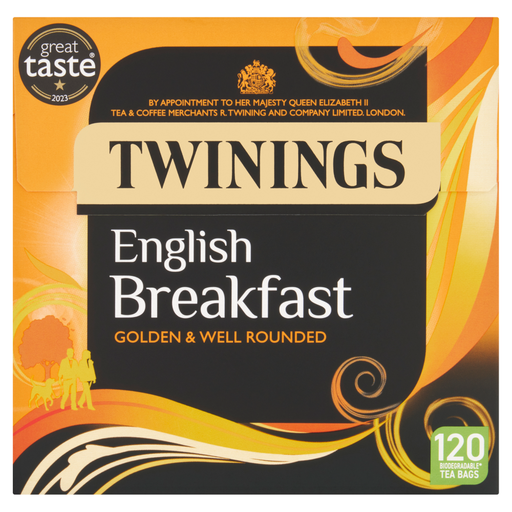
Twinings English Breakfast Tea, 120 bags, 300g
An English Breakfast option for households whose routine cup is black tea, including cups taken with milk. This pack contains 120 tea bags and 300g; it is not a decaf choice.
View on Joybuy
 No image available
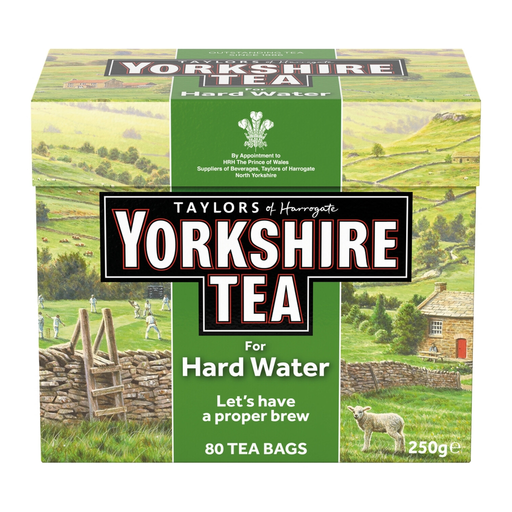
Taylors of Harrogate Yorkshire Tea for Hard Water, 80 bags, 250g
A condition-specific option when hard tap water affects the household’s usual tea. Yorkshire Tea describes its Hard Water blend as adjusted for mineral-heavy water; this pack contains 80 tea bags and 250g.
View on Joybuy
 No image available
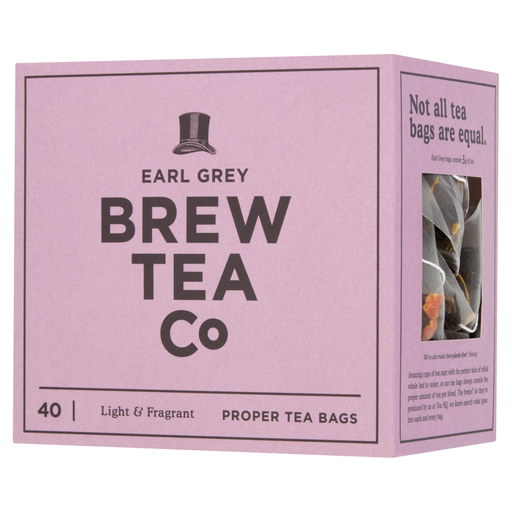
Brew Tea Co Earl Grey Tea, 40 Proper Tea Bags, 120g
An Earl Grey option for someone who wants a flavoured second variety rather than another everyday blend. The pack name specifies 40 bags and 120g; check its ingredients for the precise flavourings.
View on Joybuy
 No image available
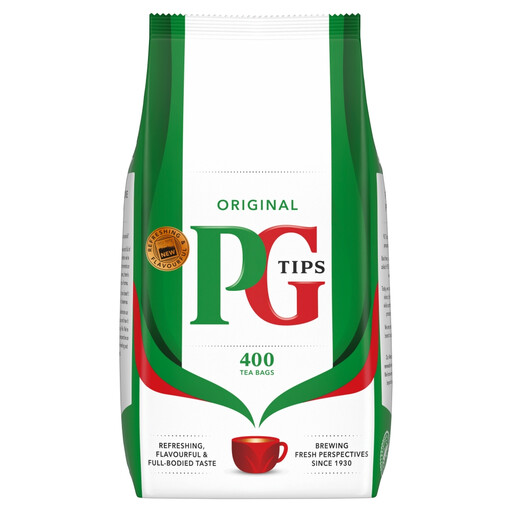
PG Tips Original, 400 tea bags, 1.16kg
A large pack to consider when the household uses its everyday tea frequently. The name specifies 400 bags and 1.16kg; check the pack’s hot-brewing directions if cup strength is important to your choice.
View on Joybuy
Tea-bag questions
Does one tea-bag blend need to serve the whole household?
Not if drinkers have distinct preferences. Choose the everyday blend around the cups made most often, then consider a separate Earl Grey for citrus flavour or a clearly labelled decaf for lower-caffeine cups.
Is decaf tea caffeine-free?
No: Twinings says decaffeinated tea can retain minor traces of caffeine. Check the exact product’s statement if caffeine intake is important rather than assuming all decaf packs have the same residual amount.
When is tea labelled for hard water worth considering?
Consider it when your tap water is hard and regularly affects the tea you make. Yorkshire Tea says minerals in hard water can make tea darker and thicker and describes its Hard Water blend as adjusted for that condition.
Should I change blends if a cup tastes too weak?
Check the exact tea’s brewing directions before deciding. Yorkshire Tea recommends 4–5 minutes for its brew method, while Typhoo gives a 1–5 minute range for its Decaf product; those instructions should not be applied automatically to another pack.
How should I store tea bags for pantry use?
Follow the particular pack’s instructions. Clipper’s Organic Everyday Tea and Typhoo’s Decaf product pages both specify a cool, dry place; check the delivered pack’s best-before information when stocking up.


