
24/7 Customer Support

Free returns

Same-day & Next-day Delivery

Quality Guaranteed

Unlock Your Welcome Offers: FREE Delivery | Up to 80% OFF | Free 30-day JoyPlus trial
Download the APP
A suitable teapot should make brewing easier, not create extra washing-up, weak pours or difficult storage. Whether you enjoy loose-leaf tea, herbal infusions or a traditional afternoon tea service, comparing the practical details behind the design can help you avoid an unsuitable purchase.
Many teapots look similar in product photographs, yet differ considerably in capacity, filter design, heat resistance and cleaning requirements. Before choosing, watch for these common buying pitfalls.
A stated capacity such as 1 litre or 1.5 litres usually refers to the maximum fill level. In practice, you need space for tea leaves, movement during pouring and safe handling. Filling a vessel to the rim can increase the risk of spills and make the lid or infuser harder to remove.
For one or two people, a 0.5-litre to 0.75-litre teapot may be easier to handle. A 1-litre teapot suits several cups, while a large teapot or electric model may be more practical for family use or entertaining.
Heat-resistant glass is designed to tolerate hot water, but that does not automatically mean it is suitable for a hob, open flame or direct heat. Borosilicate glass can still crack if exposed to thermal shock, such as placing a hot pot on a cold worktop.
Always check the care instructions. Several glass teapots and tea presses are intended for brewing only and should be placed on a stable, heatproof, non-slip surface.
A narrow, fixed filter can restrict the expansion of loose leaves and make residue difficult to remove. Marketing descriptions may highlight appearance while giving little information about how the filter comes out or whether parts are dishwasher-safe.
For loose-leaf tea, look for a removable or generously sized infuser. For herbal mixtures containing fruit pieces or dried flowers, a wide-mouth design can make cleaning considerably simpler.
A teapot with infuser should give tea leaves enough room to open. Stainless steel filters are durable and generally straightforward to rinse. A tea press uses a plunger to separate the leaves from the brewed tea without removing the filter.
Check whether the infuser is:
Capacity is only one part of usability. Compare the pot’s dimensions with your kitchen shelves, tea tray and sink. A 1.5-litre model may serve more people, but it will also be heavier when full.
Handles matter too. Bamboo, plastic and silicone components may improve grip, but they can have different care requirements from the pot body. Gold detailing and decorative finishes may also require gentle cleaning and may not be suitable for microwave use.
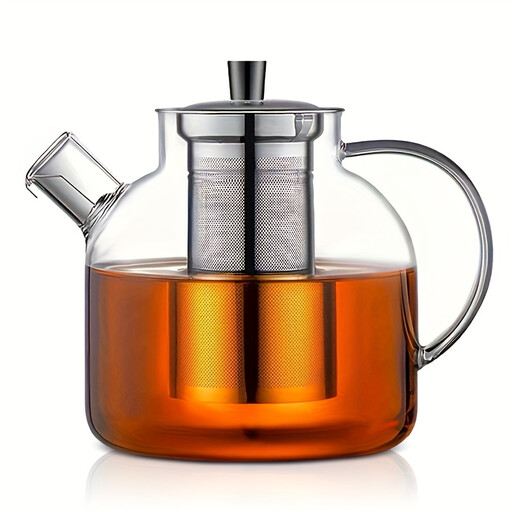
Why This Fits Their Persona: A straightforward option for anyone starting to brew loose-leaf tea and wanting to see the infusion while keeping the filter removable.
The removable infuser addresses the common problem of fixed filters that are awkward to empty and clean.
Glass construction supports visual brewing, while the removable filter suits loose-leaf tea and herbal infusions.
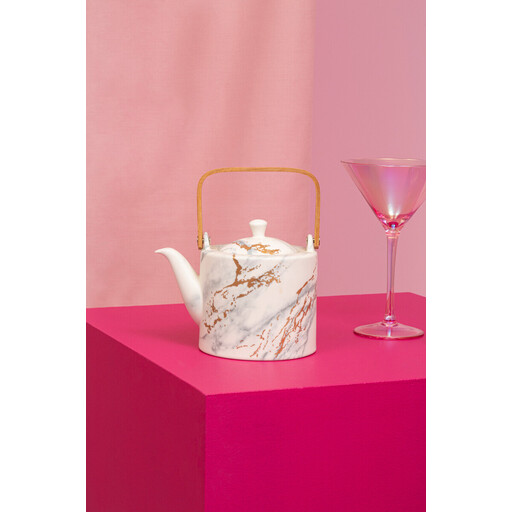
Why This Fits Their Persona: A presentation-focused porcelain teapot for contemporary kitchens, afternoon tea and serving guests.
The listed care guidance makes its limits clear: avoid abrasive cleaners and do not use it in a microwave because of the bamboo handle and gold detailing.
Smooth porcelain, a muted marble-effect finish, natural bamboo handle and gold-tone details create a coordinated serving piece.
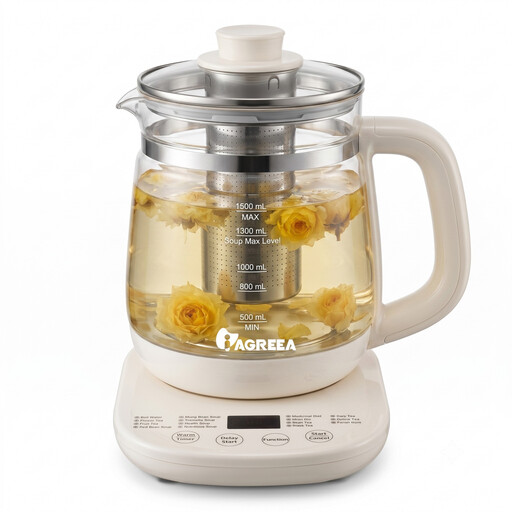
Why This Fits Their Persona: Designed for households that want programmable brewing, keep-warm functionality and more than a conventional teapot can provide.
Its wide opening and detachable pot, lid and infuser make cleaning more accessible than a narrow-neck appliance.
The 1.5-litre borosilicate glass pot has an 800W heater, 14 preset modes, six temperature settings from 40°C to 90°C, delay start and automatic keep-warm.
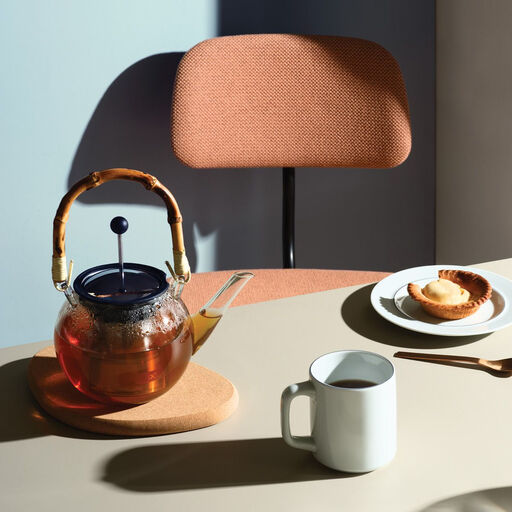
Why This Fits Their Persona: A practical 1-litre tea press for people who want to control infusion strength without removing the filter.
The plunger stops the brewing process at the chosen strength, while the stainless steel strainer avoids the need to handle wet leaves separately.
Heat-resistant borosilicate glass, a stainless steel filter, bamboo handle and dishwasher-safe glass and filter components are specified.
Follow the manufacturer’s instructions rather than assuming a teapot is suitable for every heat source. For glass models:
If you want broader choice across traditional and electric designs, browse the tisane pot range, including options for herbal drinks and loose-leaf brewing.
We have compiled a complete, real-time list of products that fully satisfy these strict selection criteria and UK safety regulations.
A glass teapot made from heat-resistant borosilicate glass is designed for hot-water brewing, but it can still break through thermal shock or impact. Do not place it directly on a hob or cold surface unless the instructions specifically permit this.
A 0.5-litre pot generally suits one or two servings. A 1-litre teapot is useful for several cups, while 1.5 litres or more may suit family households and entertaining. Leave space below the maximum fill line for safer pouring.
Running cost depends on the appliance’s wattage, heating time, quantity of water and keep-warm duration. An 800W electric model may use less power during a particular heating cycle than a higher-wattage appliance, but prolonged keep-warm settings increase consumption. Compare the rated power and switch off keep-warm when it is not needed.