
24/7 Customer Support

Free returns

Same-day & Next-day Delivery

Quality Guaranteed

Unlock Your Welcome Offers: FREE Delivery | Up to 80% OFF | Free 30-day JoyPlus trial
Download the APP
Buying a teapot with an infuser should make loose-leaf brewing easier, not create another washing-up problem. Yet attractive product photos can hide practical flaws: an infuser that is too small for leaves to expand, a spout that drips across the table, or a capacity that sounds generous but only serves two small cups.
This guide explains the specifications worth checking before you buy, with practical options for UK homes, shared breakfasts, afternoon tea and everyday brewing.
A 1 litre teapot does not necessarily provide four large mugs. Teapot capacities are usually measured to the maximum fill line, leaving less usable volume once tea leaves and safe pouring space are considered. As a general guide:
Check the dimensions as well as the volume. A tall, narrow pot may fit neatly in a cupboard but could be less stable when full.
A removable infuser is convenient, but its design affects the brew. Small baskets can compress loose leaves, reducing water circulation. Fine tea dust may also pass through wide perforations, while an infuser that sits too high may not immerse properly in a small quantity of water.
For most loose-leaf tea drinkers, look for a stainless steel infuser or filter with enough room for the leaves to open. A removable basket is useful when you want to stop brewing without transferring the tea into another vessel.
A heat-resistant teapot is designed to handle hot water within its care instructions. It does not automatically mean that the pot can be placed on a hob, under a grill or directly over a flame. Glass can break through thermal shock, especially if a cold pot is filled with boiling water or a hot pot is placed on a cold surface.
Always check whether the product is intended only for brewing and serving. Unless the listing specifically states otherwise, use a glass teapot on a stable, heatproof surface rather than a hob.
A glass teapot lets you observe colour and strength while the tea brews. Borosilicate glass is commonly used for hot-water vessels because it is designed for greater temperature resistance than ordinary glass. It still requires careful handling and should be protected from sudden temperature changes.
A porcelain teapot offers an opaque, traditional appearance and can suit formal serving. Decorative finishes may require gentler cleaning; for example, metallic detailing and bamboo components should not be treated as microwave-safe unless the instructions confirm it.
A cast iron teapot retains heat well and has a substantial feel, but it is heavier than glass or porcelain. A 520ml cast iron tea kettle may suit individual brewing, while a larger model is more suitable for serving several people. Drying thoroughly after washing is important to help prevent surface deterioration.
Enamelled carbon steel, used in some coffee pots, is lightweight and practical for serving. It may be a useful alternative if you need a durable coffee or tea serving pot rather than a dedicated infuser system.
There are three common arrangements:
A tea press can be useful if your household prefers different strengths. The brewing process can be stopped without handling a hot infuser, although the plunger should be operated carefully and below the maximum fill line.
Look for a handle that leaves enough clearance from the body, a lid that remains secure during pouring and a spout shaped for controlled flow. Product dimensions matter if you have limited cupboard space.
Dishwasher-safe parts can reduce cleaning time, but check whether this applies to every component. Bamboo handles, gold details and some plastic parts may need hand washing. After cleaning a stainless steel filter, dry it fully before storage.
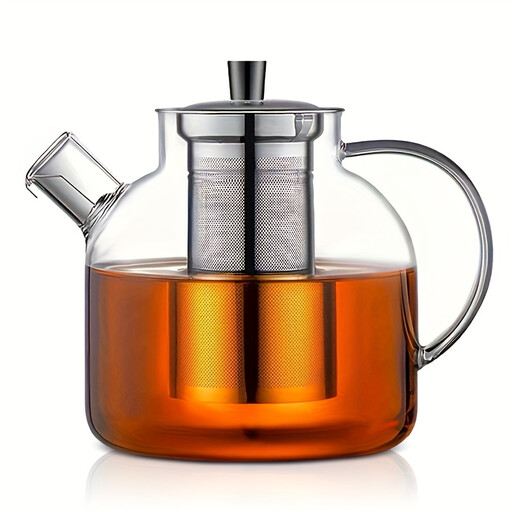
Why This Fits Their Persona: A straightforward option for shoppers moving from teabags to loose-leaf tea and looking for a removable filter rather than a more involved tea press.
The removable infuser gives you direct control over when the leaves are taken out, helping avoid prolonged brewing. Check the listing for capacity and care instructions before ordering.
Glass construction makes the infusion visible, while the removable infuser is practical for routine cleaning.
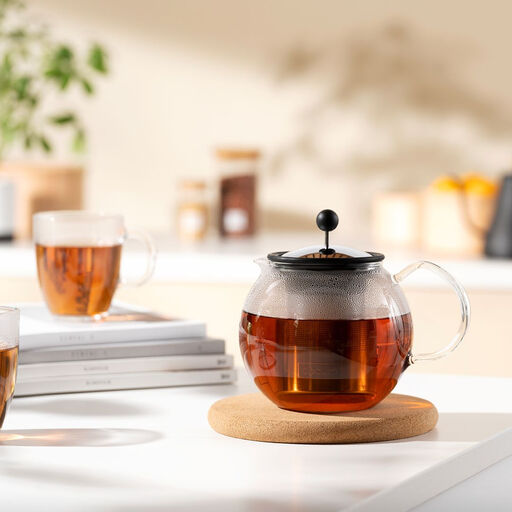
Why This Fits Their Persona: A suitable choice for tea enthusiasts who want a visual brewing experience and a controlled method for serving one-litre batches.
The plunger system is designed to stop brewing without removing the filter, addressing the common problem of tea becoming stronger while it sits.
It combines heat-resistant borosilicate glass with a stainless steel and plastic brewing system; the parts are listed as dishwasher safe.
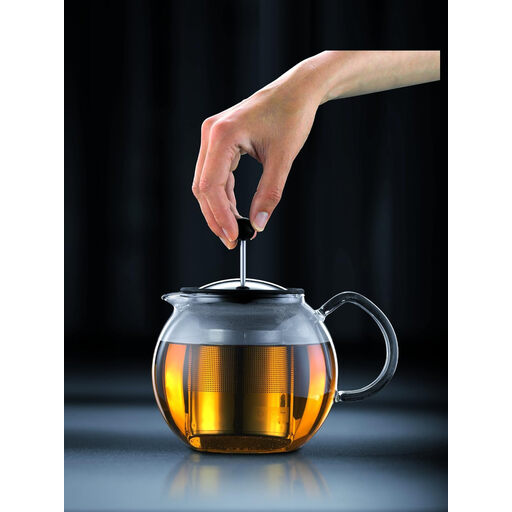
Why This Fits Their Persona: The larger format is suited to households, entertaining and anyone who prefers to prepare several servings at once.
The press mechanism helps separate the leaves from the water after brewing, while the 1.5-litre capacity reduces the need for repeated batches when guests visit.
The glass body allows strength to be monitored, and the stainless steel filter is intended for loose-leaf tea or teabags.
We have compiled a complete, real-time list of products that fully satisfy these strict selection criteria and UK safety regulations.
Before first use, wash the pot, lid and infuser according to the product instructions. Pre-warming a glass or porcelain pot with a small amount of warm water can help reduce sudden temperature changes before adding boiling water. Do not use a damaged glass vessel, and keep hot pots away from children and unstable table edges.
For daily use, empty leaves promptly, rinse the filter thoroughly and dry metal components before storage. Avoid abrasive cleaners on decorative porcelain or enamel finishes. These simple steps help preserve the appearance and function of your tea brewing pot.
Yes. Choose an infuser with enough space for the leaves to expand and holes suited to the type of tea you use. A fine filter is more useful for small particles, while a larger basket may provide better circulation for whole leaves.
A tea press can simplify strength control because the plunger stops the leaves brewing inside the pot. A removable infuser is generally more straightforward to rinse and lift out. The practical choice depends on whether brewing control or simple cleaning matters more to you.
The teapot itself does not use electricity unless it is part of an electric tea maker. Running costs mainly come from heating water in your kettle. Boiling only the amount required for your chosen capacity can reduce wasted energy, while a well-sized pot helps avoid preparing multiple batches.