
24/7 Customer Support

Free returns

Same-day & Next-day Delivery

Quality Guaranteed

Unlock Your Welcome Offers: FREE Delivery | Up to 80% OFF | Free 30-day JoyPlus trial
Download the APP
Buying a teapot with an infuser should make loose-leaf brewing simpler, not leave you with blocked filters, weak servings or a difficult cleaning routine. Product photography can make almost any vessel look suitable, but several details determine whether it works well in a busy UK kitchen.
The most common buying traps are:
A teapot with strainer may use a removable basket, a fixed filter near the spout or a plunger-style tea press. For loose-leaf tea, a wide removable basket is generally easier to fill and rinse. It should sit securely without obstructing the lid or spout.
A tea press offers another approach. Instead of removing the infuser, the plunger separates the leaves from the water once the desired strength is reached. This can be useful when different people prefer different brewing strengths, although the mechanism adds more parts to clean.
For gongfu-style brewing, look for a smaller vessel with a fine filter and controlled pouring. A gongfu teapot is intended for shorter, repeated infusions rather than preparing a large pot for a whole household.
A heat-resistant teapot should still be used according to its care instructions. Borosilicate glass is valued for its resistance to heat and its transparency, allowing you to monitor colour and infusion strength. However, avoid sudden temperature changes, such as pouring boiling water into a chilled pot or placing a hot pot on a cold surface.
A ceramic teapot retains heat reasonably well and often suits traditional or decorative table settings. Porcelain is smooth and easy to wipe, but gold detailing, bamboo handles and similar finishes may restrict microwave or dishwasher use. For example, the Maison by Premier Marble Luxe Teapot uses porcelain, bamboo and gold finish detail, so it should be handled carefully and cleaned without abrasive products.
A cast iron teapot can feel substantial and retain warmth, but it is heavier and may require more careful drying. It should not be assumed to be suitable for direct heat unless the product instructions specifically say so. The 520 ml Huacan Handcrafted Cast Iron Tea Kettle is a compact option for individual brewing, but its smaller capacity is less suited to serving several guests.
Choose capacity according to how you normally serve tea:
A 1-litre teapot is a useful middle ground, but check the dimensions as well as the volume. A wide pot may fit a large infuser more comfortably, while a taller design could be awkward under kitchen cupboards.
Cleaning is equally important. Check whether the infuser is removable, whether the mesh can be rinsed without trapping fine leaves and whether the parts are dishwasher safe. Always dry metal components thoroughly to reduce water spots and maintain their appearance.
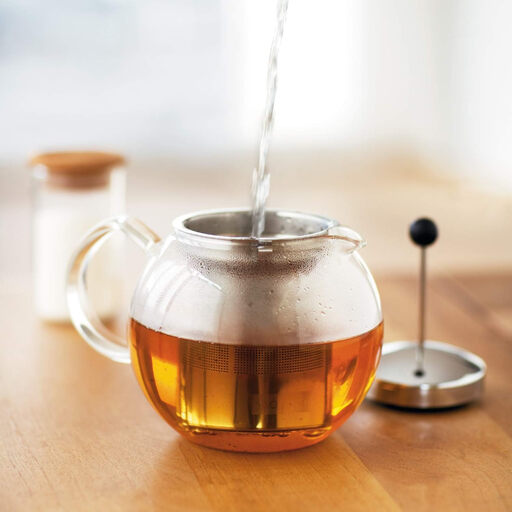
Why This Fits Their Persona: Its 0.5-litre format avoids buying an oversized pot when you usually brew one or two servings. The tea press design also suits people moving from teabags to loose-leaf tea.
The integrated stainless steel filter and plunger avoid the need for a separate strainer. The maximum fill line also helps prevent overfilling during pressing.
0.5-litre capacity; heat-resistant borosilicate glass; stainless steel filter; dishwasher-safe parts.
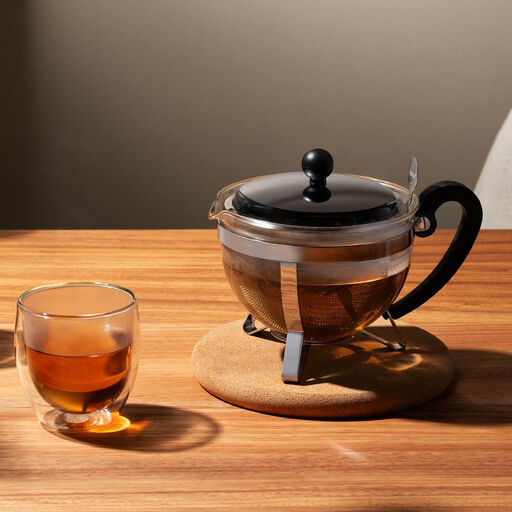
Why This Fits Their Persona: This 1-litre design combines a clear glass body with a stainless steel frame, making it suitable for a considered everyday tea service or hosting a small group.
Its large stainless steel infuser gives loose leaves more room than a small spout filter. The separate frame also provides standing legs and a stable serving format.
1-litre capacity; heat-resistant borosilicate glass; stainless steel infuser and frame; dishwasher-safe teapot and infuser.
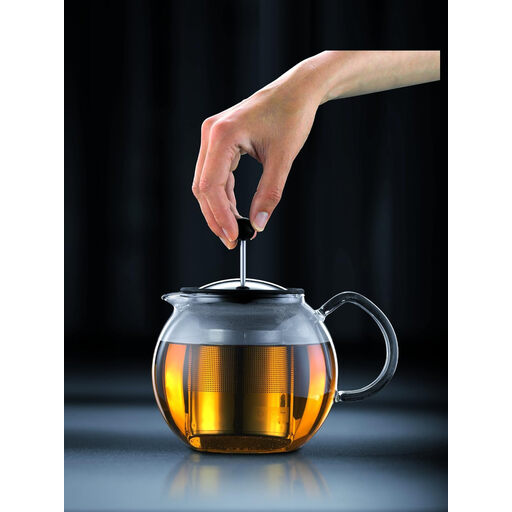
Why This Fits Their Persona: The 1.5-litre capacity is suited to larger households, regular entertainers and drinkers who prefer to prepare several cups in one brewing cycle.
The plunger stops the infusion without requiring the filter to be removed, helping prevent leaves from continuing to steep while the pot is being served.
1.5-litre capacity; borosilicate glass body; stainless steel infuser; silicone and plastic components; dishwasher-safe parts.
For a decorative tea service without a confirmed integrated infuser, the Maison by Premier Marble Luxe Teapot offers porcelain with a marble-effect finish, bamboo handle and gold detailing. Treat it as a serving-led purchase and check the listing carefully if loose-leaf brewing is essential.
We have compiled a complete, real-time list of products that fully satisfy these strict selection criteria and UK safety regulations.
Most are suitable for common black, green, white, herbal and fruit teas, provided the filter has enough room for the leaves to open. Very fine tea particles may pass through a coarse mesh, so check the filter design if you regularly drink finely broken leaves.
Lifespan depends on material, handling and cleaning. Glass can break through impact or thermal shock, while metal filters may develop staining or corrosion if stored wet. Gentle cleaning, careful pouring and thorough drying can help preserve the pot and its infuser.
The main running cost is heating the water, not the teapot itself. A large pot can be practical when several people are drinking tea, but filling it fully for one cup may waste water and energy. Select the smallest capacity that matches your usual serving pattern.