
24/7 Customer Support

Free returns

Same-day & Next-day Delivery

Quality Guaranteed

Unlock Your Welcome Offers: FREE Delivery | Up to 80% OFF | Free 30-day JoyPlus trial
Download the APP
A teapot with infuser can make loose-leaf tea simpler, but the wrong design may create more cleaning and pouring problems than it solves. UK shoppers often compare appearance and capacity first, while overlooking the infuser’s size, heat handling and whether the vessel is suitable for direct heat.
The following guide highlights common buying traps, explains the specifications that matter and matches different households with practical options available through Joybuy.
A borosilicate glass teapot is designed to handle hot water, but that does not automatically mean it can be placed on a hob, gas flame or electric hotplate. Some glass products are intended only for brewing and serving.
Always check the care instructions. For example, the Bodum ASSAM Tea Press 1L is suitable for hot-water brewing but should not be used on a stovetop, microwave or direct flame. Sudden temperature changes can also damage glass, so avoid pouring boiling water into a chilled vessel or placing a hot pot on a cold surface.
A narrow stainless steel filter may look neat but can restrict the expansion of loose tea leaves and larger herbal ingredients. This may result in difficult stirring, uneven infusion or leaves escaping into the cup.
For loose-leaf tea, look for a wide, removable infuser with enough room for the leaves to open. If you regularly brew dried fruit, flower tea or herbal blends, a large stainless steel infuser is generally more practical than a small basket.
A programmable electric herbal tea maker can offer temperature controls, delay start and keep-warm functions. However, these features may add cost, storage requirements and cleaning steps compared with a traditional glass teapot.
Consider your routine first. If you make one or two cups at a time, a 0.5L or 1L tea press may be sufficient. If you prepare drinks for several people or want automatic brewing, a larger electric tea maker could be more suitable.
Capacity descriptions can be confusing because manufacturers may use different cup-size assumptions. As a practical guide:
Do not fill beyond the marked maximum line, particularly when using a tea press. Leave room for the plunger and for hot liquid to move safely during pouring.
A heat-resistant teapot should be used according to its instructions rather than its appearance. Borosilicate glass offers a clear view of the brewing process and is used in several tea presses and tea makers. Porcelain provides an opaque, decorative finish, while stainless steel filters are commonly chosen for durability and easy rinsing.
A bamboo handle can provide a comfortable grip, but it usually needs hand-wiping rather than soaking. Gold detailing may also make a porcelain teapot unsuitable for microwave use. Check whether the body, lid, infuser and handle have different cleaning requirements.
For electric models, look for clear operating instructions, a stable base, insulated handling areas and detachable parts. Electrical appliances should be supplied with appropriate UK information and markings where applicable. Never immerse the powered base, plug or cord in water.
A conventional loose-leaf tea pot requires you to judge the brewing time yourself. A tea press gives more direct control: after the tea reaches the preferred strength, pressing the plunger separates the leaves from the water without removing the filter.
Dishwasher compatibility can save time, but check which components are included. The Bodum ASSAM and CHAMBORD models list the glass body and infuser as dishwasher safe, while the bamboo-handled ASSAM version requires the bamboo section to be wiped separately. A wide opening is also useful for removing limescale and tea residue by hand.
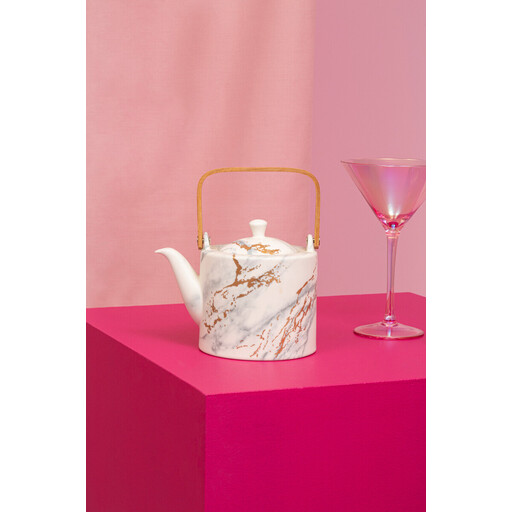
Why This Fits Their Persona: A compact porcelain option for someone starting a tea collection and wanting a decorative piece for everyday or occasional serving. Its listed dimensions are H13 x W12 x L17cm.
The porcelain body avoids relying on thin-looking glass for presentation, while the care guidance makes clear that abrasive cleaners and microwave use should be avoided.
Smooth porcelain, marble-effect finish, bamboo handle and gold-finish details provide a clearly defined serving style.
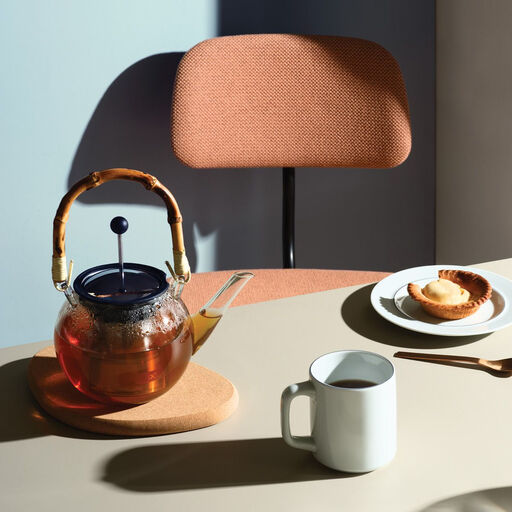
Why This Fits Their Persona: Suitable for loose-leaf drinkers who want to watch the infusion and stop brewing without lifting out the filter.
The plunger system provides a defined way to stop the infusion, and the product instructions clearly rule out direct heat use.
1L borosilicate glass body, stainless steel filter, silicone rim and bamboo handle; the glass and filter are listed as dishwasher safe.
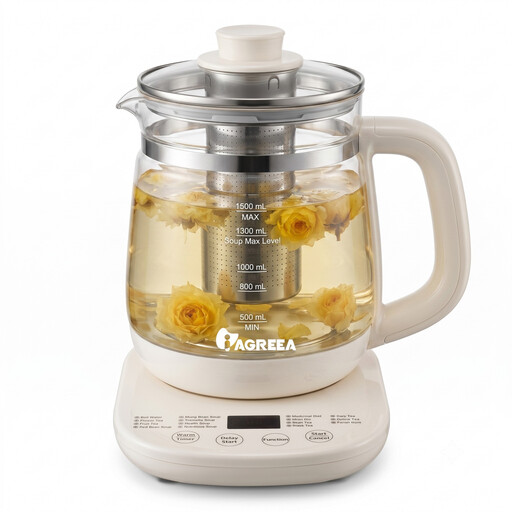
Why This Fits Their Persona: A countertop option for households preparing larger quantities of tea, fruit infusions or other hot drinks and wanting preset controls.
Its removable infuser and wide opening address the small-filter and difficult-cleaning problems; the main electrical base must still be kept dry.
1.5L capacity, 800W heating, 14 preset modes, six temperature settings from 40°C to 90°C, delay start and automatic keep-warm function.
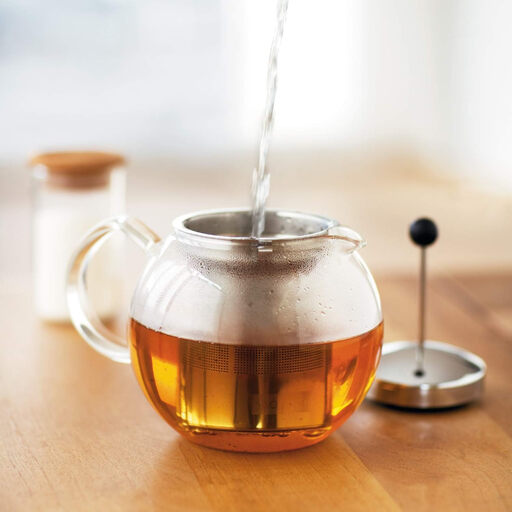
Why This Fits Their Persona: A compact choice with a small footprint, flat kitchen or one-person tea routine where a 1L teapot would leave unused tea.
The smaller capacity reduces overbuying for single servings, while the removable stainless steel filter supports both loose-leaf tea and teabags.
0.5L capacity, borosilicate glass, stainless steel filter and silicone rim; the product information lists all parts as dishwasher safe.
We have compiled a complete, real-time list of products that fully satisfy these strict selection criteria and UK safety regulations.
Yes, provided the filter has enough space for larger leaves, flowers or dried fruit. A large stainless steel infuser is generally easier to load and rinse than a narrow basket. For repeated batch preparation, an electric herbal tea maker may offer more convenient temperature and timing controls.
A glass teapot labelled as heat-resistant may be suitable for hot-water brewing, but follow the manufacturer’s instructions. Avoid thermal shock, overfilling and direct heat unless the product specifically permits it. Heat-resistant does not mean unbreakable.
Running cost depends on the appliance’s wattage, heating time, electricity tariff and how often it is used. An 800W model consumes 0.8 kilowatt-hours if it operates continuously for one hour, although actual boiling cycles are normally shorter. Features such as keep-warm and delay start may affect total consumption, so switch the appliance off when these functions are not needed.