
24/7 Customer Support

Free returns

Same-day & Next-day Delivery

Quality Guaranteed

Unlock Your Welcome Offers: FREE Delivery | Up to 80% OFF | Free 30-day JoyPlus trial
Download the APP
A brighter smile does not always require an expensive at-home teeth whitening kit. For many UK households, a suitable teeth whitening toothpaste can help remove surface stains caused by tea, coffee, red wine and smoking while supporting everyday oral hygiene.
However, shopping by the largest whitening claim on the packaging can lead to disappointment. Whitening toothpaste mainly works on surface stains; it does not usually change the natural colour of teeth or whiten crowns, veneers and fillings. The right choice should balance stain removal with fluoride, enamel care, sensitivity management and ease of daily use.
Terms such as “brighter”, “advanced whitening” and “professional results” can describe very different products. A whitening toothpaste generally uses polishing ingredients or cleaning systems to lift external discolouration. It may not address intrinsic staining within the tooth.
If you want gradual daily maintenance, a whitening toothpaste may be practical. For more noticeable at-home teeth whitening, a separate serum or LED kit may be more suitable, but these products require closer attention to warnings and usage instructions.
Some stain removal toothpaste products contain polishing agents that may feel uncomfortable if your teeth are already sensitive. Sensitivity can also be linked to exposed dentine, gum recession, enamel wear or an underlying dental issue.
People experiencing sharp pain from hot or cold foods should consider sensitive teeth whitening toothpaste rather than choosing a strong whitening formula based only on speed. Persistent sensitivity, bleeding or swelling should be discussed with a dentist.
Whitening performance does not replace cavity care. Check the label for fluoride and the stated concentration. Many adult toothpastes available in the UK contain around 1,450 parts per million (ppm) fluoride, although formulations vary. Children’s usage instructions and age limits can also differ, so always follow the packaging.
For regular brushing, look for a fluoride toothpaste that clearly states its fluoride source and concentration. The products below include formulations containing sodium fluoride, stannous fluoride or both. Fluoride supports cavity protection when used as directed, but toothpaste should be spat out rather than swallowed.
A product described as cavity protection toothpaste may also help remove plaque and food particles, but brushing technique and frequency remain important. The usual routine is a pea-sized amount and two minutes of brushing twice daily, unless a dental professional advises otherwise.
Common polishing ingredients include hydrated silica, perlite, calcium pyrophosphate and baking soda. These can help lift external stains, but more whitening is not automatically more suitable. Consider how frequently you intend to use the product and whether the label describes it as suitable for daily brushing.
An enamel-safe whitening toothpaste should still be used gently. Avoid pressing hard, use a soft-bristled toothbrush and do not brush immediately after acidic drinks or foods. Products making quantified whitening claims should be assessed against the stated conditions, such as twice-daily use over a specific period, rather than treated as an instant guarantee.
A 75ml tube is convenient for individual use, while a 100ml tube or two-pack may suit a busy household. Pump packaging can reduce mess and may be useful for shared bathrooms. Also check flavour, age guidance, storage instructions and whether the formula contains ingredients you already know you cannot tolerate.
For gum concerns, a gum care toothpaste may be a more suitable priority than a highly focused whitening product. For sensitivity, look for ingredients such as potassium nitrate, stannous fluoride or calcium sodium phosphosilicate, while following the manufacturer’s warnings.
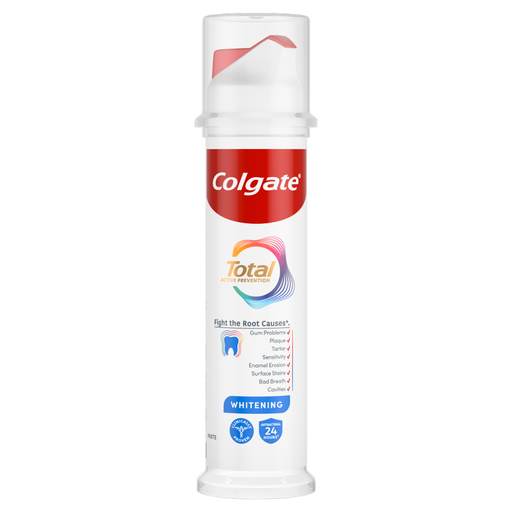
Why This Fits Their Persona: A straightforward everyday option for households wanting a 100ml format, mint flavour and a pump dispenser for cleaner application.
It is positioned as daily cavity and plaque care with whitening support, rather than a substitute for professional treatment.
100ml content; pump dispenser; mint flavour; contains fluoride ingredients listed on the packaging.
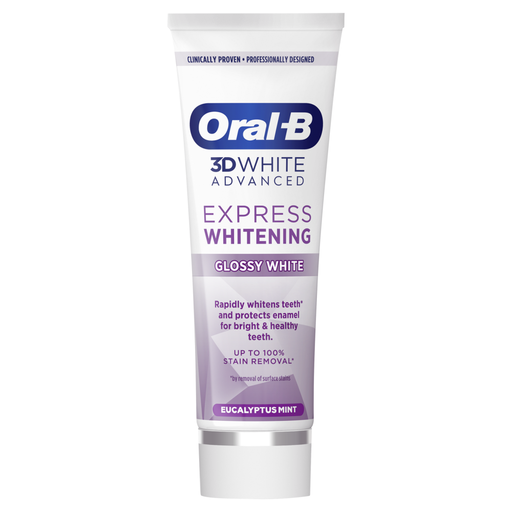
Why This Fits Their Persona: Suits shoppers prioritising a dedicated whitening format with eucalyptus mint flavour and daily enamel-care positioning.
Its stain-lifting purpose is clearer than a general toothpaste with a small whitening reference; the listing also specifies 1450ppm fluoride.
75ml tube; hydrated silica and sodium hexametaphosphate listed; 1450ppm sodium fluoride.
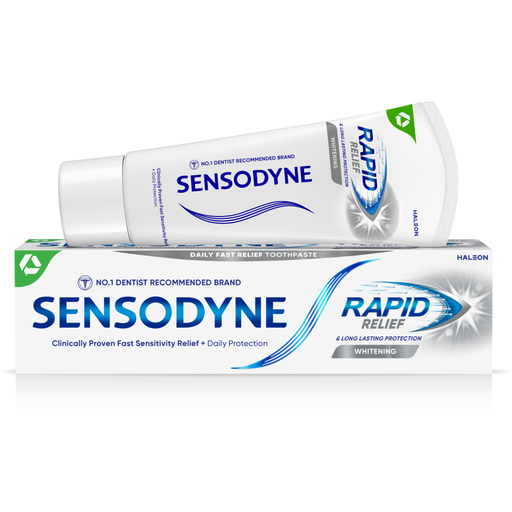
Why This Fits Their Persona: Designed for shoppers who want stain removal while making sensitivity relief a central part of their routine.
It does not make whitening the only focus: the formula lists stannous fluoride, sodium fluoride and 1450ppm total fluoride.
Whitening for surface stains; sensitivity-focused formula; 75ml tube; 1450ppm fluoride.
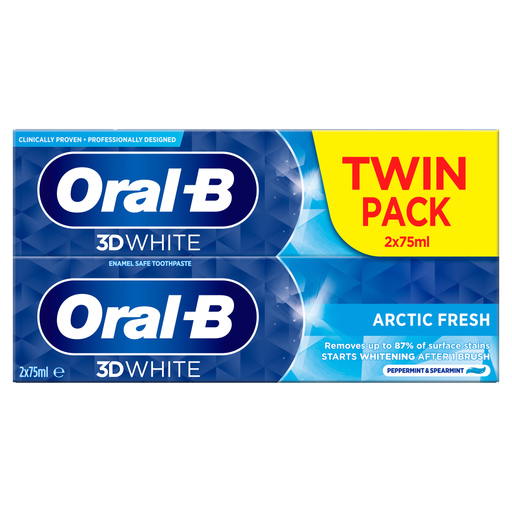
Why This Fits Their Persona: The two-tube pack is convenient for regular users, couples or households that prefer to keep a spare in the bathroom.
The pack size addresses convenience and continuity, while the label states fluoride content and supervised use guidance for younger children.
Two 75ml tubes; peppermint and spearmint flavour profile; 1450ppm sodium fluoride.
We have compiled a complete, real-time list of products that fully satisfy these strict selection criteria and UK safety regulations.
If you are considering a peroxide-based at-home whitening product, check whether you have sensitive teeth, gum disease, restorations, braces, veneers or crowns. Whitening products generally affect natural tooth surfaces differently from dental restorations, so professional advice may be appropriate.
Usually, whitening toothpaste is intended to remove external stains from natural tooth surfaces. It does not normally change the underlying colour of crowns, veneers, fillings or implants. Ask your dentist about mismatched shades or restoration concerns.
The timescale depends on the type and depth of staining, brushing habits and the formulation. Surface stains may gradually look less noticeable with consistent twice-daily brushing, but packaging claims should be read alongside their stated conditions. It is not a guaranteed replacement for dental whitening.
Choose a formula specifically labelled for sensitivity and use it gently. Products such as Sensodyne Rapid Relief Whitening are formulated for both sensitivity care and surface-stain removal. If discomfort continues or becomes stronger, stop using the product and contact a dentist.