
24/7 Customer Support

Free returns

Same-day & Next-day Delivery

Quality Guaranteed

Unlock Your Welcome Offers: FREE Delivery | Up to 80% OFF | Free 30-day JoyPlus trial
Download the APP
Tea, coffee, red wine and smoking can gradually leave visible marks on teeth, making teeth whitening toothpaste a convenient option for maintaining a brighter smile at home. However, not every whitening toothpaste suits every routine, and bold packaging claims can make comparison difficult.
The practical approach is to separate surface stain removal from deeper tooth colour changes, then check the formula, fluoride content, usage guidance and pack size before buying.
Most whitening toothpaste works by helping remove stains on the outer tooth surface through polishing agents or cleaning ingredients. This can reveal more of your natural tooth colour, but it does not necessarily change the underlying shade of the tooth.
Claims such as “instant whitening” or “brighter after one brush” may refer to the removal of loose surface deposits or the clean appearance left after brushing. If discolouration is intrinsic, caused by dental work or linked to an underlying issue, a whitening toothpaste may not provide the result you expect.
A gritty texture or intense foaming action does not automatically mean more effective whitening. Overly abrasive brushing, excessive pressure or brushing more often than directed can be uncomfortable and may not be suitable for everyone.
Look for clear information about polishing ingredients such as hydrated silica, perlite or similar cleaning agents. If your teeth or gums feel irritated, discontinue use and seek advice from a dental professional.
Some shoppers focus only on whitening claims and overlook everyday cavity protection. A fluoride whitening toothpaste containing around 1,450 parts per million (ppm) fluoride is included in several products in this selection.
People with sensitive teeth should also check the product warnings carefully. Whitening formulas containing polishing agents may not feel comfortable for everyone, while sensitivity-focused options are designed around a different daily-care priority.
For adults, fluoride is an important part of routine brushing. Check the packaging for the fluoride concentration and active ingredient. The products featured here list sodium fluoride at 1,450 ppm, although always verify the tube or carton because formulations can change.
Follow the directions supplied with the product. Many whitening toothpaste options are intended for brushing twice daily, with a pea-sized amount recommended for some products. Children’s guidance can differ, including supervision requirements and age restrictions.
Whitening toothpaste commonly uses polishing ingredients to help lift stains from tea, coffee and food. This is different from peroxide-based at-home teeth whitening products, which may use a separate application method and have additional warnings.
Compare claims carefully. “Up to” figures are performance claims under stated conditions, not a guarantee of the same result for every user. A toothpaste that focuses on daily surface stain removal may be more appropriate for maintenance than a short-term whitening treatment.
A 100ml tube may suit regular daily brushing, while a 75ml tube can be useful for travel or trying a formula before committing to repeated purchases. Multipacks, such as two 75ml tubes, may reduce the need to reorder frequently, but check the per-100ml price rather than judging value by the pack headline.
Also consider taste, foam level and whether the formula is suitable for your sensitivity level. A product that feels comfortable is more likely to fit consistently into your routine.
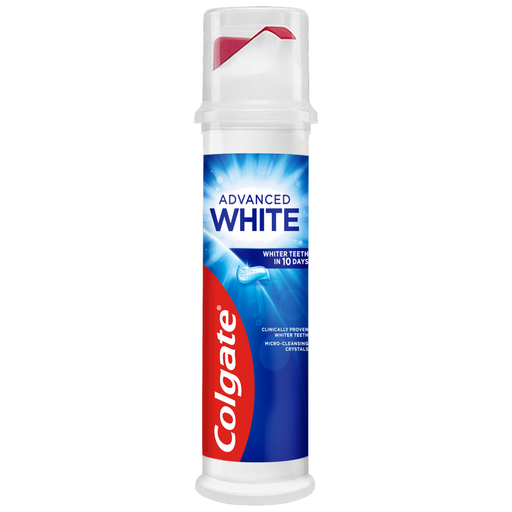
Why This Fits Their Persona: A straightforward 100ml option for UK shoppers wanting everyday fluoride care alongside a toothpaste aimed at removing tea, coffee and food stains.
Its listed 1,450 ppm sodium fluoride content makes everyday fluoride protection visible in the specification, rather than leaving buyers to judge the product only by its whitening wording.
100ml tube; contains hydrated silica and micro-cleansing crystals; designed for twice-daily brushing.
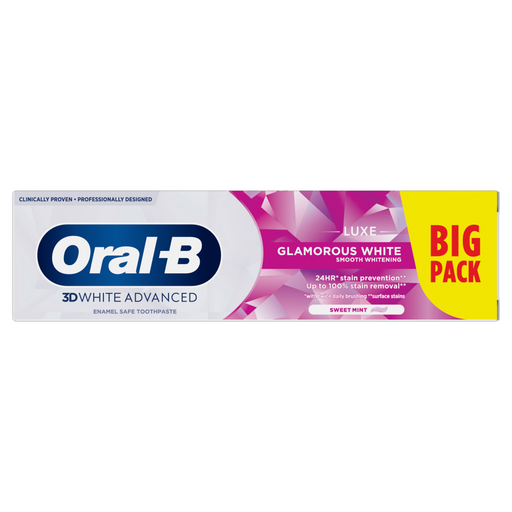
Why This Fits Their Persona: Suits shoppers who want a larger tube, a mint flavour and a formula positioned around stain removal while keeping fluoride in the daily routine.
The product information identifies surface stain removal separately from enamel support, helping set a more realistic expectation than treating whitening as a change to every type of discolouration.
100ml size; includes hydrated silica and sodium hexametaphosphate; lists 1,450 ppm sodium fluoride.
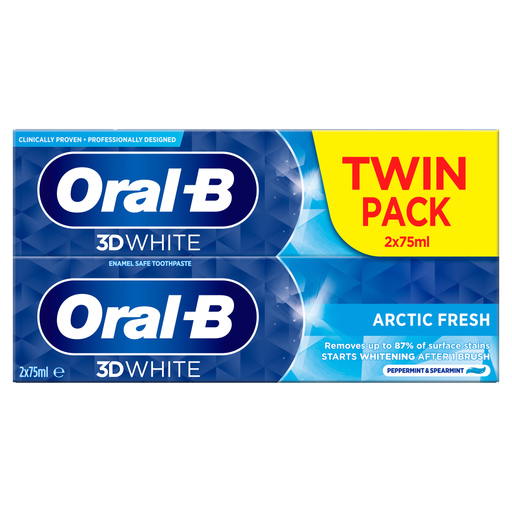
Why This Fits Their Persona: The twin-pack format is practical for households, regular users or anyone wanting one tube at home and another for work, travel or a shared bathroom.
The two-tube format makes the quantity clear, reducing the risk of paying a multipack price without knowing the total net content.
2 x 75ml; peppermint and spearmint flavour; lists 1,450 ppm sodium fluoride.
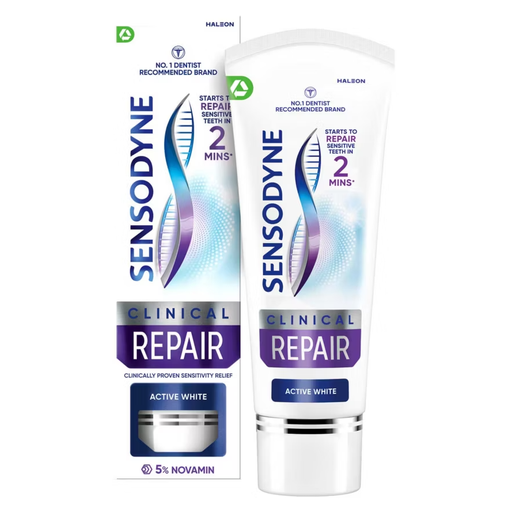
Why This Fits Their Persona: Designed for adults who want sensitivity-focused oral care with surface stain removal, rather than choosing a whitening formula without considering comfort.
The product is specifically labelled for sensitive teeth and includes warnings to seek dental advice if symptoms persist or worsen, rather than presenting whitening as suitable for everyone.
75ml tube; contains NovaMin, perlite and silica; lists 1,450 ppm sodium fluoride.
For more intensive at-home teeth whitening, read the product instructions particularly carefully. A peroxide serum, for example, has different application steps and warnings from everyday whitening toothpaste and may not be suitable for sensitive teeth or gums.
We have compiled a complete, real-time list of products that fully satisfy these strict selection criteria and UK safety regulations.
It can help lift some surface stains caused by tea, coffee, food and smoking when used as directed. Results depend on the type and severity of the staining, brushing technique and regularity. It is not designed to alter every form of intrinsic discolouration.
A 75ml or 100ml tube may last several weeks, depending on the amount used and how often you brush. A pea-sized amount is generally sufficient where the label recommends it. Multipacks can be convenient for frequent users, but compare total volume and price before buying.
Some products are specifically formulated for sensitive teeth, such as Sensodyne Clinical Repair Active White Sensitive Toothpaste. Nevertheless, sensitivity can have different causes. Follow the packaging guidance, stop if irritation develops and consult a dentist if discomfort continues or becomes worse.