
24/7 Customer Support

Free returns

Same-day & Next-day Delivery

Quality Guaranteed

Unlock Your Welcome Offers: FREE Delivery | Up to 80% OFF | Free 30-day JoyPlus trial
Download the APP
A teeth whitening toothpaste can help lift surface marks from coffee, tea, red wine and strongly coloured foods while supporting everyday brushing. However, not every whitening product suits every mouth. Choosing by the largest whitening claim or brightest packaging can leave you with increased sensitivity, an unsuitable fluoride level or a product that does little for deeper discolouration.
This guide from the Joybuy Product Recommendation Officer focuses on practical features, product limitations and suitable user profiles, so you can compare options with less marketing noise.
Most whitening toothpaste works by cleaning or polishing stains on the outer tooth surface. It cannot reliably change the colour of fillings, veneers, crowns or other non-natural teeth, and it may have limited impact on intrinsic discolouration within the tooth.
Look for clear information about surface stain removal, rather than assuming a dramatic shade change. If a product contains peroxide or comes with a whitening serum, check its warnings carefully and do not use it as a substitute for professional advice.
Whitening formulas commonly use polishing ingredients such as hydrated silica, perlite or other cleaning particles. These can help remove food and drink stains, but a formula that feels harsh may be uncomfortable for people with exposed dentine, worn enamel or existing sensitivity.
For regular use, consider an enamel-safe whitening toothpaste with a recognised fluoride ingredient and follow the stated brushing instructions. Avoid pressing hard or brushing for longer to chase faster results.
A whitening toothpaste is not automatically suitable for children, sensitive mouths or people with gum problems. Several products in this category advise against use by children below a specified age. An at-home teeth whitening kit or teeth whitening serum may have additional restrictions, particularly where hydrogen peroxide is present.
If sensitivity persists, gums bleed regularly or you have swelling, open lesions, worn enamel, implants, braces, veneers or crowns, seek advice from a dentist before using a whitening treatment.
For adults, a daily fluoride toothpaste is an important part of cavity protection. The featured whitening toothpastes from Colgate, Sensodyne and Oral-B list 1,450 ppm fluoride, while the Colgate Total 100ml pump lists a combined fluoride system with 450 ppm sodium fluoride and 1,000 ppm sodium monofluorophosphate.
Check the packaging rather than relying on the word “whitening”. A product can remove stains yet still need to meet your everyday requirements for cavity protection toothpaste. Spit after brushing and follow the age guidance, particularly in family households.
People searching for whitening toothpaste for sensitive teeth should prioritise formulas specifically labelled for sensitivity. Sensodyne Rapid Relief Whitening lists stannous fluoride, sodium fluoride and potassium nitrate, while Sensodyne Clinical Repair Active White lists sodium fluoride and calcium sodium phosphosilicate, identified on the product information as NovaMin.
These ingredients do not make every cause of sensitivity harmless. Use the toothpaste as directed and stop if irritation occurs. A toothpaste for sensitive teeth may be more suitable than a stronger cosmetic whitening formula if cold drinks, hot food or brushing regularly cause sharp discomfort.
A standard 75ml or 100ml tube is convenient for twice-daily brushing. A twin pack, such as Oral-B 3D White Arctic Fresh 2 x 75ml, may reduce the need for frequent reordering. A pump dispenser can be useful for shared bathrooms and controlled dispensing.
For broader oral care, a fluoride whitening mouthwash may freshen breath and reach areas brushing misses, but it should not replace brushing or interdental cleaning. Listerine Total Care Stay White contains 220 ppm fluoride and alcohol and is labelled for users aged 12 and above.
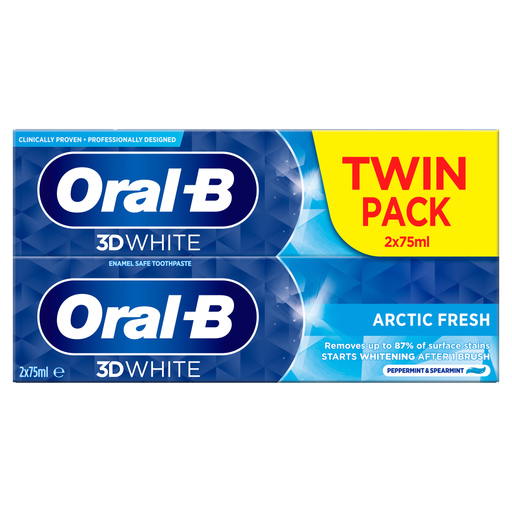
Why This Fits Their Persona: The twin 75ml pack suits households or first-time shoppers who want a straightforward daily whitening routine without adding a separate treatment step.
It presents a clear pack size and 1,450 ppm fluoride content, helping shoppers compare supply and everyday cavity care rather than focusing only on whitening language.
Two 75ml tubes; peppermint and spearmint flavour; designed for surface-stain removal and twice-daily brushing.
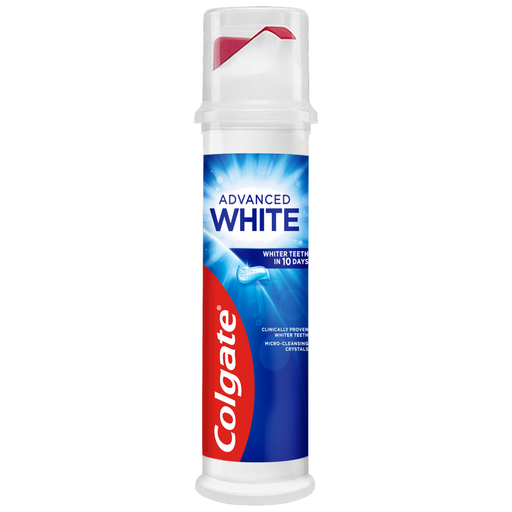
Why This Fits Their Persona: Suitable for adults wanting a dedicated stain-removing toothpaste that still fits into a normal morning and evening routine.
Its product information identifies micro-cleansing crystals, surface-stain removal and 1,450 ppm fluoride, making the intended function easier to assess.
100ml tube; sodium fluoride formula; intended for daily use and food-and-drink surface stains.
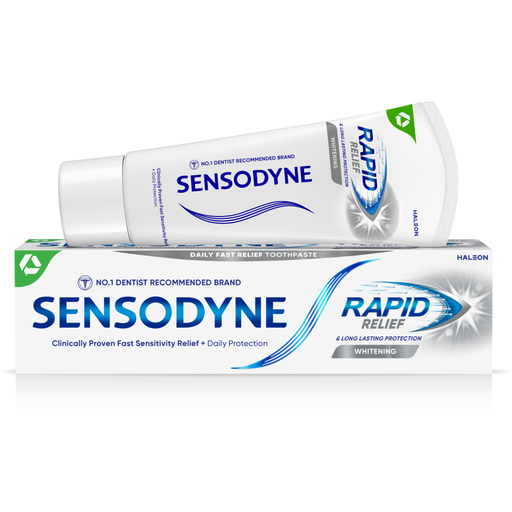
Why This Fits Their Persona: A practical match for adults who want to address sensitivity while still lifting everyday surface stains from drinks and food.
It is specifically positioned for sensitive teeth, rather than asking users to tolerate a general whitening formula that may feel uncomfortable.
Lists potassium nitrate and fluoride; 1,450 ppm fluoride; 75ml format with twice-daily directions.
We have compiled a complete, real-time list of products that fully satisfy these strict selection criteria and UK safety regulations.
Most products provide directions for brushing twice daily, usually for around two minutes. Do not brush more frequently or use extra toothpaste to accelerate results. If discomfort develops, pause use and consider a toothpaste for sensitive teeth or speak with a dentist.
A 75ml or 100ml tube can last several weeks, depending on the amount used, brushing frequency and whether it is shared. A pea-sized amount is generally sufficient for brushing. Replace the cap, store the tube as directed and check the printed expiry or batch information.
A toothpaste is usually simpler to maintain because it replaces a normal brushing product. A kit or whitening serum is a separate treatment and may contain hydrogen peroxide, with more detailed restrictions. Compare the number of applications, ingredients and suitability warnings rather than judging cost by pack price alone.