
24/7 Customer Support

Free returns

Same-day & Next-day Delivery

Quality Guaranteed

Unlock Your Welcome Offers: FREE Delivery | Up to 80% OFF | Free 30-day JoyPlus trial
Download the APP
A brighter smile does not always require an expensive whitening treatment. For many UK adults, a suitable teeth whitening toothpaste can help remove surface stains caused by tea, coffee, red wine and smoking while supporting everyday brushing. However, the shelves are crowded with claims about instant brightness, deep whitening and professional-style results.
The important distinction is that whitening toothpaste mainly targets surface discolouration. It is unlikely to change the natural colour of teeth, alter dental restorations or remove stains caused by deeper dental conditions. A sensible purchase starts with understanding what the formula can realistically do.
Some formulas use blue or violet pigments that make teeth appear brighter immediately after brushing. This can be useful for a temporary visual effect, but it is not the same as removing a stain. Look for details about polishing agents, stain-lifting technology or stain prevention rather than relying only on words such as “radiance” or “instant white”.
A highly abrasive formula may feel exceptionally clean, but aggressive brushing or unsuitable abrasives can be uncomfortable for people with sensitivity or enamel concerns. Whitening should be balanced with gentle brushing using a soft-bristled toothbrush. Products described as enamel-safe whitening toothpaste should still be used according to the label, without excessive pressure or brushing frequency.
A whitening product that does not provide suitable cavity protection may not be appropriate as your daily toothpaste. Check the active fluoride ingredient and concentration on the packaging. Many adult products listed here contain around 1,450 ppm fluoride, but formulations vary. If cold drinks, hot food or sweet items cause discomfort, a standard whitening formula may not be the right fit.
For adults, a fluoride whitening toothpaste can combine stain care with routine cavity protection. Sodium fluoride and sodium monofluorophosphate are both used in the products listed here. Check the total fluoride content rather than assuming every whitening toothpaste offers the same level.
Brush for approximately two minutes twice daily, spit rather than swallow, and follow the age guidance on the packaging. Children’s use should be supervised where stated. If you use fluoride products from several sources or have specific dental concerns, ask a dentist or pharmacist for individual advice.
Common ingredients include hydrated silica, baking soda, pyrophosphates and other polishing or stain-control agents. These can help lift or polish away external stains. A formula containing optical brighteners may make teeth look brighter temporarily, while a stain-removing toothpaste is intended to address visible deposits through regular brushing.
Avoid judging products solely by claims such as “10x” or “100%”. These figures may refer to a particular comparison, time period or laboratory method. Read the full product information and consider whether you want a daily whitening toothpaste, a gentler sensitivity-focused option or a formula designed around enamel protection.
Most options in this selection are supplied in 75ml tubes, while some are available in 100ml or 125ml sizes. A larger tube is not automatically better value if you dislike the flavour or cannot use the formula comfortably. Compare the price per 100ml where possible, and check whether the product is intended for twice-daily use.
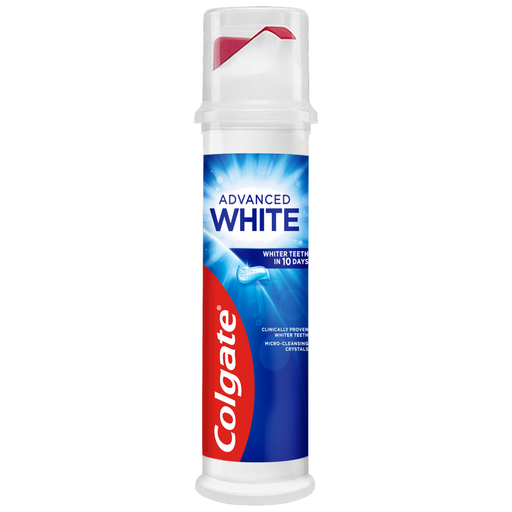
Why This Fits Their Persona: The 100ml tube offers a practical size for adults starting a regular whitening routine, particularly tea and coffee drinkers seeking everyday stain care without moving straight to specialist products.
Its product information identifies micro-cleansing crystals for surface-stain removal and states a total fluoride content of 1,450 ppm, helping shoppers check both whitening function and daily oral-care credentials.
100ml format; fluoride toothpaste; designed to help remove surface stains and freshen breath with regular brushing.
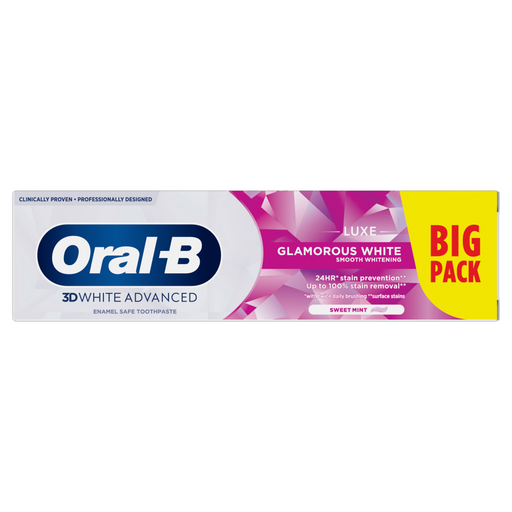
Why This Fits Their Persona: A suitable choice for shoppers who prioritise a larger everyday tube, a pronounced mint flavour and a formula focused on surface-stain care during twice-daily brushing.
The listing specifies fluoride, deep-penetrating foam and surface-stain prevention claims, giving buyers more detail than a vague “white smile” promise.
100ml tube; contains sodium fluoride at 1,450 ppm; peppermint flavour; recyclable tube information supplied by the listing.
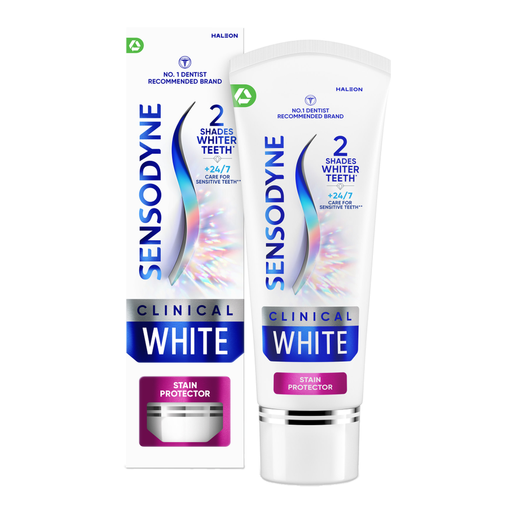
Why This Fits Their Persona: Designed for adults who want whitening support but are also concerned about sensitive teeth, especially when regular whitening formulas cause discomfort.
The listing identifies potassium nitrate, fluoride and a peroxide-free formula, allowing shoppers to consider sensitivity care rather than selecting solely by whitening speed.
Contains potassium nitrate and sodium fluoride; intended for twice-daily use; addresses stain removal and sensitivity-related shopping needs.
We have compiled a complete, real-time list of products that fully satisfy these strict selection criteria and UK safety regulations.
Usually not. Whitening toothpaste is primarily intended to remove external stains from natural tooth surfaces. Dental restorations generally do not change colour in the same way. If your natural teeth and restorations appear mismatched, ask a dentist about suitable options.
This depends on the amount used and brushing frequency. A 75ml tube used twice daily may last several weeks, but household usage varies. Avoid using more toothpaste than recommended, as extra product does not necessarily produce faster results.
Not necessarily. Formulas containing sensitivity-care ingredients such as potassium nitrate may suit some users, but ongoing pain should not be self-managed indefinitely. Follow the age restrictions and warnings on the product, and consult a dentist if symptoms continue.