
24/7 Customer Support

Free returns

Same-day & Next-day Delivery

Quality Guaranteed

Unlock Your Welcome Offers: FREE Delivery | Up to 80% OFF | Free 30-day JoyPlus trial
Download the APP
For the serious tennis player or coach in the UK, court time is precious. When a hitting partner isn't available, a tennis ball machine becomes an essential piece of solo tennis practice equipment. However, the market has evolved far beyond simple ball launchers. The arrival of the AI tennis ball machine promises a revolutionary training partner, but navigating the options is fraught with potential missteps. Many invest significant sums only to be disappointed by overhyped features and underwhelming performance.
As a Joybuy Product Recommendation Officer, my role is to help you see past the marketing jargon. Before you commit, be aware of these common purchasing pitfalls:
To ensure your investment elevates your game, focus on these non-negotiable technical specifications.
Smart Tennis Training Tool?The core value of an AI machine lies in its brain. Look beyond the sheer number of pre-set drills and examine the quality of the software. A superior tennis ball machine with drills will offer:
voice controlled tennis machine operated via a wristband or a stable and intuitive mobile app, allows for on-the-fly adjustments without breaking your flow.A high speed tennis ball launcher is only effective if it is also precise. Raw power is meaningless without control. Pay close attention to these metrics:
A machine is only useful if you can get it to the court. A genuinely portable tennis ball machine balances performance with practicality.
Based on these critical parameters, here are some recommendations matched to specific player profiles.
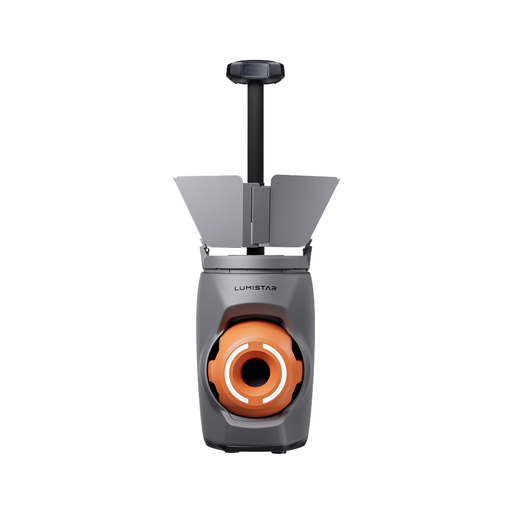
Why This Fits Their Persona: This player needs a reliable, high-performance partner for frequent and varied training. The Tero offers a strong balance of advanced drills, genuine portability and powerful performance to work on all aspects of their game.
It sidesteps the "Portable Problem" with a clever all-in-one suitcase design under 12kg (main unit + discs) that is genuinely easy to transport and set up on court.
Features true AI modes (Match, Rally, Random) and hands-free voice control via a wristband, allowing for uninterrupted, adaptive practice sessions.
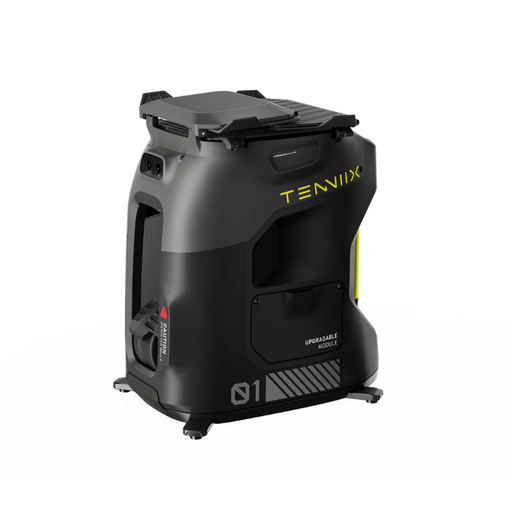
Why This Fits Their Persona: Ideal for a high-level coach or advanced player who needs to replicate and drill highly specific match situations. The sheer depth of its programming capabilities is its main draw.
This machine avoids the "Smart Illusion" by offering over 1,000 customisable training modes, providing granular control over every variable rather than just a few pre-set options.
Its dual-camera vision module (shipped separately) enables real-time analysis and reaction, while the 5000 RPM spin and 75 MPH speed capabilities meet pro-level training demands.
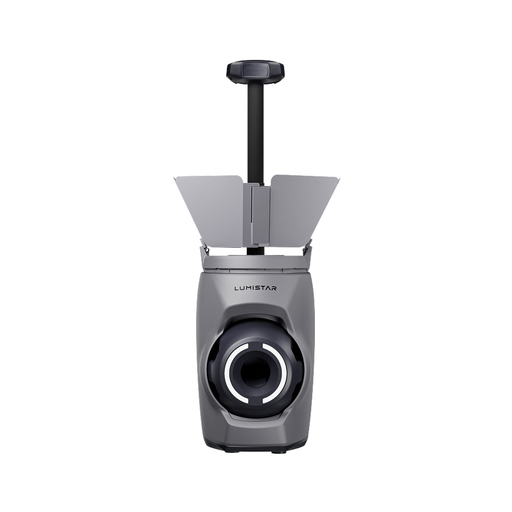
Why This Fits Their Persona: This player or coach believes that what gets measured gets improved. They need a tool that not only provides a great workout but also delivers tangible data and feedback on performance.
It counters the "Performance Gap" by not only delivering consistent shots up to 87 MPH but also by tracking your returns to generate AI reports, verifying your improvement over time.
The integrated app provides detailed sports reports, allowing you to log your sessions, record performance metrics and share your progress. This turns practice into measurable development.
We have compiled a complete, real-time list of products that fully satisfy these strict selection criteria and UK safety regulations.
Most modern AI machines feature a simplified calibration process. For a model like the Lumistar Tero, you typically place the machine on the baseline, aligning its guide marks with the court lines. Initial calibration and fine-tuning of landing spots can then be done via the companion app or the wristband controller, allowing you to adjust for precision without manually handling the machine. Always ensure the machine is on a flat, stable surface.
While manufacturers provide a maximum battery life, real-world duration depends on usage intensity. Drills that use high speeds, heavy spin and frequent firing will consume more power. For advanced machines, a 4-hour battery rating should comfortably provide 2.5 to 3 hours of intensive, continuous practice, which is more than sufficient for most training sessions.
This depends on the machine's capacity and your training style. Most high-end machines hold between 80 and 100 balls. This is a good number for running complex drills without having to stop and collect balls too frequently. Having at least 100 high-quality training balls allows you to maximise your time hitting and minimise your time gathering.