
24/7 Customer Support

Free returns

Same-day & Next-day Delivery

Quality Guaranteed

Unlock Your Welcome Offers: FREE Delivery | Up to 80% OFF | Free 30-day JoyPlus trial
Download the APP
Buying Thai jasmine rice in the UK should be straightforward, yet attractive packaging and vague descriptions can make comparison difficult. Terms such as “premium”, “AAA” and “authentic” do not always tell you enough about the rice’s origin, variety or suitable cooking method.
Whether you need a small Thai rice 1kg pack, a family-size 5kg bag or bulk jasmine rice for a restaurant, focus on the information that affects taste, texture, storage and value.
Thai Hom Mali rice is a specific aromatic variety associated with Thailand. It is known for long, slender grains, a natural floral or pandan-like aroma and a soft texture with slight stickiness when cooked.
However, not every product described as “fragrant jasmine rice” is necessarily Thai Hom Mali. Check the ingredient statement, country of origin and any relevant certification mark on the packaging. A description may use “Thai-style” language while the actual product is blended or packed elsewhere.
“AAA jasmine rice” is commonly used in retail descriptions to indicate a higher grade or selected quality. It is not, by itself, enough information to judge authenticity or cooking performance. Look for practical details such as grain type, ingredients, origin, broken-grain information where provided and preparation instructions.
A product with a clear ingredient list reading 100% Thai Hom Mali Rice gives you more useful information than a pack relying only on large promotional wording.
A 10kg or 20kg bag can suit a busy family, caterer or restaurant, but it needs suitable dry storage and regular use. If rice will sit open for months in a warm or damp cupboard, a smaller Thai rice 2kg or 5kg pack may help preserve aroma and reduce the risk of pest or moisture problems.
Also compare the price per kilogram, not only the shelf price. Larger packs may offer practical value, but only when the full quantity will be used before the quality declines.
Traditional long-grain jasmine rice is generally softer and more aromatic than many standard long-grain white rice products. It is well suited to jasmine rice for curries and stir-fries, as the cooked grains can absorb sauce while retaining a tender bite.
For everyday steamed rice, look for:
Do not assume jasmine rice will remain as dry and separate as basmati. Its characteristic texture is usually softer and gently cohesive.
Country of origin deserves careful attention. Several listings use Thai variety names but show different origins. For example, the XiangNaLan Thai Hom Mali Rice listings describe Thai Hom Mali characteristics but state Made in China in the supplied product information. That does not necessarily make the product unsuitable, but it is an important distinction for shoppers seeking authentic Thai rice from Thailand.
If Thai origin is essential, check the pack for “Country of Origin: Thailand” and review the product label before purchase. Some products, such as Golden Phoenix (Hong Thong), include a Thai Hom Mali Rice Certification Mark according to the supplied description. Treat certification and origin as separate checks rather than relying on brand wording alone.
Water ratios vary between products. Common guidance ranges from one part rice to 1.2 parts water to one part rice to 1.5 parts water. Appliance type, rinsing and personal texture preference also affect the result.
For white jasmine rice, a reliable starting routine is:
Store uncooked rice in a cool, dry place, away from sunlight, strong odours and moisture. Once opened, reseal the bag or transfer the contents to an airtight container. Brown and black jasmine rice may benefit from closer attention to storage because their retained bran layers can affect freshness.
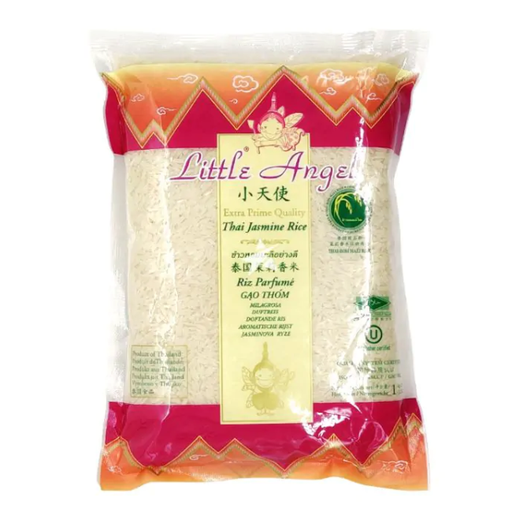
Why This Fits Their Persona: A manageable 1kg pack suits smaller UK households, occasional cooks and anyone trying Thai fragrant rice before committing to a larger bag.
The quantity is clearly stated, helping prevent overbuying. The listing also provides a 1:1.5 rice-to-water starting ratio and identifies Thailand as the country of origin.
1kg format; suitable for curries, stir-fries and everyday steamed rice; ingredient listed as jasmine rice.
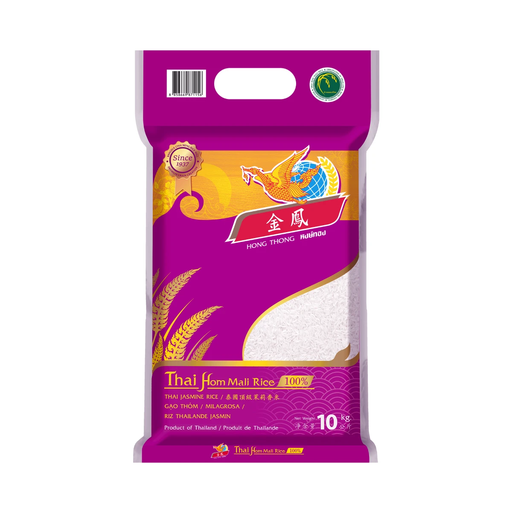
Why This Fits Their Persona: This family-size pack is aimed at regular rice eaters who prioritise a stated Thai Hom Mali variety and a naturally fragrant, fluffy result.
The supplied description specifies 100% Thai Hom Mali rice and refers to the Thai Hom Mali Rice Certification Mark shown on the pack.
10kg household format; described as gluten-free and suitable for vegan and vegetarian diets; suitable for rice bowls, curry and stir-fried rice.
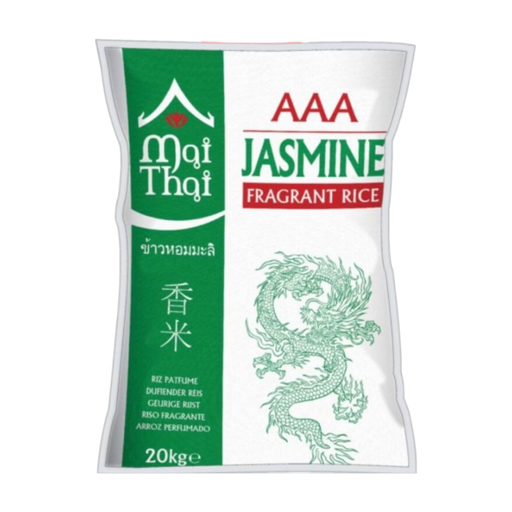
Why This Fits Their Persona: A 20kg format is intended for restaurants, caterers, commercial kitchens and large households with suitable dry storage.
The pack size is explicit, making it easier to calculate stock requirements and cost per kilogram rather than purchasing an unsuitable retail bag.
AAA jasmine rice; 20kg bulk format; described for curries, stir-fries, grilled meats and high-volume kitchens.
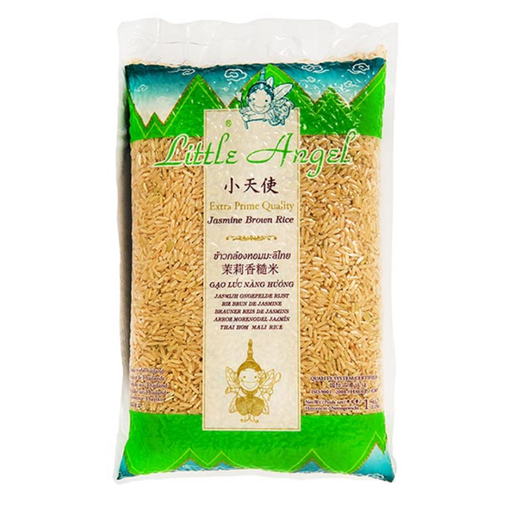
Why This Fits Their Persona: A smaller brown jasmine rice pack suits shoppers wanting a whole-grain alternative with a nuttier flavour and chewier texture.
The listing identifies it as 100% Thai Brown Jasmine Rice, so shoppers can distinguish it from polished white Thai fragrant rice.
1kg format; whole-grain brown rice; aromatic profile suited to stir-fries, Thai dishes and side salads.
We have compiled a complete, real-time list of products that fully satisfy these strict selection criteria and UK safety regulations.
White Thai jasmine rice cooks relatively quickly and is commonly chosen for curries, stir-fries and family meals. Brown jasmine rice retains its bran layer and usually needs more water and cooking time. Black jasmine rice has a darker colour, firmer texture and nutty flavour; the Kaset Thai Black Jasmine Rice 1kg listing gives a cooking time of around 30–35 minutes.
For dietary requirements, always read the current label. Rice itself is naturally free from gluten, but handling statements and added ingredients can vary. One Little Angel black jasmine listing includes coconut and natural flavours, so it should not be treated as equivalent to a plain 100% rice product.
Yes. Its fragrant aroma and tender, slightly cohesive texture work well with saucy dishes, including Thai green curry, massaman curry, vegetable stir-fries and grilled foods. For fried rice, cook it with slightly less water or chill it after cooking so the grains are easier to separate.
Start with the ratio printed on the pack. Many white varieties recommend between 1:1.2 and 1:1.5 rice to water, while brown and black jasmine rice often require more water and longer cooking. Rice cookers may need a different setting, so adjust gradually rather than adding excess water at the beginning.
Keep uncooked rice sealed in a cool, dry cupboard and follow the best-before information on the packaging. Use a clean airtight container after opening, particularly for larger bags. Cooked rice should be cooled and refrigerated promptly, then reheated thoroughly and only once, following UK food-safety guidance.