
24/7 Customer Support

Free returns

Same-day & Next-day Delivery

Quality Guaranteed

Unlock Your Welcome Offers: FREE Delivery | Up to 80% OFF | Free 30-day JoyPlus trial
Download the APP
Trying to recreate the vibrant, savoury flavours of a Thai restaurant in your own kitchen can be a rewarding experience. Yet, a common hurdle many home cooks face is choosing the right noodles. You follow a recipe for Pad Thai to the letter, but the noodles turn into a sticky clump, or your Pad See Ew lacks the satisfyingly wide, chewy texture you remember. The secret often lies in the specific type of Thai rice stick noodles you use.
As a Joybuy Product Recommendation Officer, my role is to help you navigate the options available. This guide will clarify the differences between various flat rice noodles and help you select the perfect foundation for your next authentic Thai meal, ensuring a delicious result every time.
Before we look at specific products, here are a few practical points to consider when you're browsing the aisle or shopping online.
The most important factor in selecting Thai rice stick noodles is their width. Different widths are traditionally used for specific dishes, and using the correct size dramatically affects the final texture and authenticity.
Authentic dried Thai noodles are valued for their simple composition. Typically, the ingredients list should contain little more than rice flour and water. This clean profile provides a neutral canvas that allows the flavours of your sauce, protein and vegetables to take centre stage. This simplicity also makes them a popular choice for those seeking gluten-free rice noodles. However, it is always wise to check the packaging for specific allergen information, as manufacturing facilities can vary.
Based on their suitability for popular Thai dishes and their simple ingredient profiles, here are our recommendations for building your pantry.
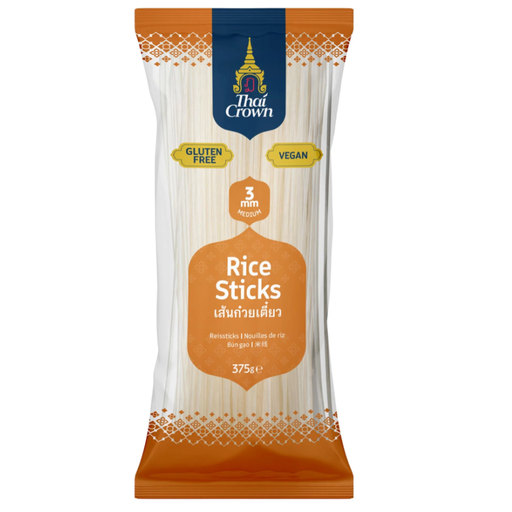
Why It Stands Out: With a width of 3mm, these noodles are structured for creating a classic Pad Thai. Their size is ideal for absorbing the signature tamarind-based sauce while maintaining a distinct, non-clumpy texture when stir-fried correctly.
Pros:
Who is it for?: Home cooks focused on perfecting their Pad Thai recipe or those who prefer a finer noodle in their Southeast Asian stir-fries.
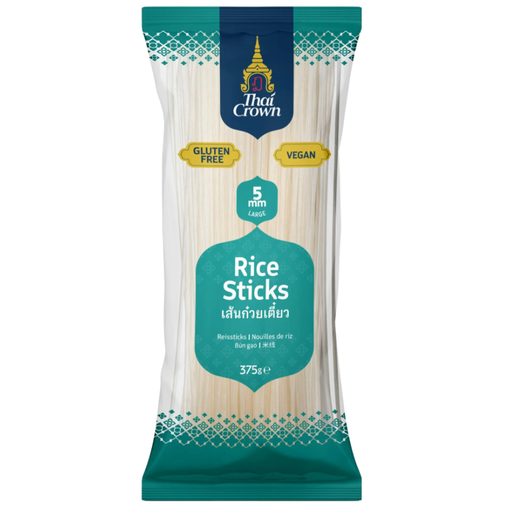
Why It Stands Out: The 5mm width makes this a highly versatile pantry staple. It's substantial enough to be used for Pad See Ew, yet not so wide that it would feel out of place in a hearty boat noodle soup. This is an excellent all-rounder if you enjoy a variety of Thai noodle dishes.
Pros:
Who is it for?: The adventurous cook who likes to experiment with different Thai recipes and wants a reliable, multi-purpose noodle on hand.
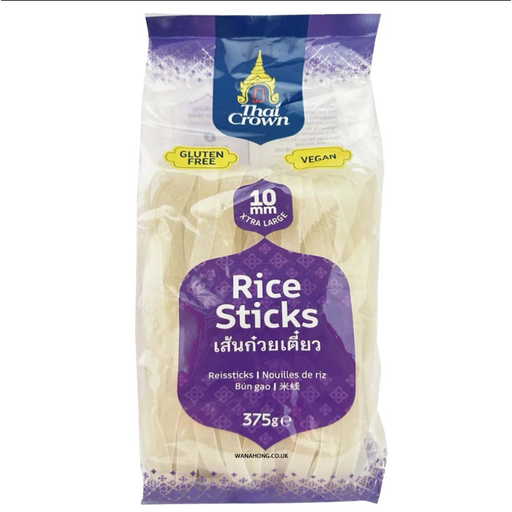
Why It Stands Out: These extra-wide 10mm noodles are the definitive choice for an authentic Pad See Ew. Their broad, flat shape provides the perfect surface for catching the smoky, caramelised soy sauce and delivering the substantial, chewy bite that characterises the dish.
Pros:
Who is it for?: Anyone specifically aiming to replicate an authentic, street-food style Pad See Ew or other dishes that call for hearty, wide flat rice noodles.
These three widths from the Thai Crown noodles range cover the most popular Thai stir-fry dishes, but the world of noodles is vast. If you're searching for different sizes, fresh noodles or other brands, there are many more to discover.
Explore our full collection of Thai rice noodles to find the perfect match for your next culinary creation.
1. What is the difference between Thai rice sticks and rice vermicelli? The primary difference is shape. Thai rice stick noodles are flat, resembling fettuccine, and come in various widths. Rice vermicelli noodles are very thin, round and thread-like. Rice sticks are used for stir-fries like Pad Thai, while vermicelli is more common in soups (like Vietnamese Pho) and fresh salads.
2. How do I prevent my rice noodles from clumping? Clumping is usually caused by over-soaking or excess starch. To avoid it, soak the dried noodles in warm (not boiling) water for the time specified on the package, usually 25-30 minutes, until they are pliable but still have a slight firmness. Drain them thoroughly and rinse with cold water to wash away excess surface starch. Tossing them with a small amount of neutral oil can also help keep the strands separate before you add them to the wok.
3. Are all Thai rice stick noodles gluten-free? Noodles made from only rice flour and water are naturally free from gluten. Most authentic dried Thai noodles fall into this category, making them an excellent choice for a gluten-free diet. However, it is always best practice to read the ingredients list and check for any allergen advisories on the packaging, as some facilities may also handle wheat or other allergens.