Small-run programme makers
You occasionally make cast-list, schedule or sponsor programmes and want colour printing, scanning and copying without giving a printer too much hobby-room space.


For repeated colour programme runs, start by considering a refillable ink-tank multifunction printer, then choose according to your paper capacity, available space and scanning needs. Before settling on a model, check whether it can print your intended cover and interior stock using the feed path and two-sided layout you have planned.
You occasionally make cast-list, schedule or sponsor programmes and want colour printing, scanning and copying without giving a printer too much hobby-room space.
You prepare programmes for several performances or groups, so paper capacity and interruptions during a print run matter.
You also digitise scripts, forms, artwork or annotated proofs. An automatic document feeder may matter if much of that work involves loose, multi-page paperwork.
Decide on the programme’s paper and two-sided layout before comparing tray capacity and scanning features: a printer that handles an interior efficiently may need a separate workflow for its cover.
| Concern | What to check | Who this matters to |
|---|---|---|
| Ink replenishment | Compare the ink system, replacement supplies and the basis of any stated page yield with your planned colour coverage. | When I print colour covers for several performances, I want to know how often I will need to replenish ink. Around 36% of consumers put this need first. |
| Paper and layout | Check the exact stock, feed path and automatic-duplex conditions; proof the fold and page order. | If my cover uses different paper from the inside pages, I need both parts of the programme to work as laid out. This is the primary concern for around 29% of consumers. |
| Hobby-room fit | Measure space with trays in use and match input capacity to a normal print run. | I share my work surface with other projects, but still need somewhere for paper to load and finished pages to land. Around 21% of consumers prioritise that fit. |
| Scanning and copying | Decide whether a flatbed is enough or whether loose, multi-page originals call for an automatic document feeder. | When programme work also involves scanning forms and copying proofs, handling those originals matters to me. For around 14% of consumers, it comes first. |
Epson says borderless printing is unavailable with automatic two-sided printing. It also warns that unsuitable duplex paper can bleed through or smear.
Proof the cover and interior as separate jobs on the stock you intend to use, then check page order before printing the full run.
An unsuccessful proof can use up special paper and ink.
A manufacturer’s A4-document yield does not predict how many image-heavy programmes a set of ink bottles will produce.
Compare the stated test basis with your covers, photographs and planned number of runs; check that the exact replacement ink is available.
A larger tray can mean fewer reloads, but the printer still needs accessible feeds and space for output. Epson specifies a 100-sheet rear tray for the ET-2950, Brother a 150-sheet tray for the DCP-T780DW, and Canon a 350-sheet plain-paper capacity for the GX3050.
Measure the intended location with the paper paths in use, then compare capacity with a typical programme batch.
A poorly placed printer can mean rearranging the work surface or interrupting a run to reload paper.
A visible listing does not establish that the exact printer can be supplied when you need it.
Check the current listing, exact model, delivery options and stock before committing to a production schedule.
Epson’s EcoTank ET-2950 is an A4 print, copy and scan model to consider for modest programme runs.
Canon’s MAXIFY GX3050 is relevant when repeated programme batches make paper loading a priority.
Brother’s tankbenefit DCP-T780DW is relevant when programme printing sits alongside scanning or copying loose paperwork.
These multifunction printers offer different starting points for hobby-room programme work, from refillable ink-tank models to an inkjet option. Check each exact model against your paper, two-sided layout and scanning needs before choosing.
 No image available
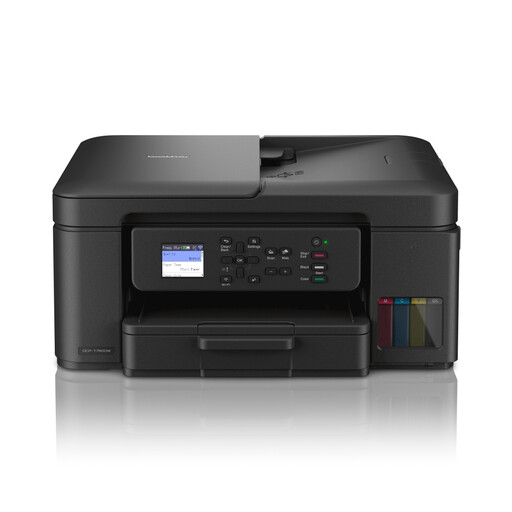
Consider this model if programme printing also involves scanning batches of loose paperwork. Brother specifies a 20-sheet automatic document feeder, a 150-sheet paper tray and automatic duplex printing for plain or recycled paper. Check the feed path and permitted stock for any separate cover.
 No image available
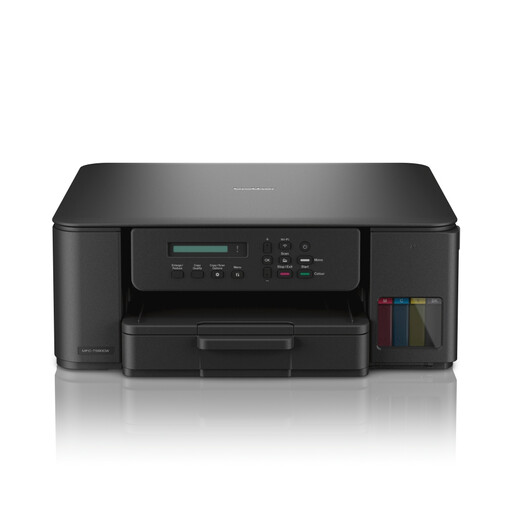
Consider this wireless ink-tank model for programme work where you also want multifunction capability. Before choosing cover paper or a two-sided interior layout, confirm the exact model’s supported stock and duplex feed path; check its document-handling arrangement if you scan multiple loose pages.
 No image available
If you print longer programme batches, compare the GX6150’s paper arrangement with your usual run size and available workspace. Confirm the exact model’s supported cover stock, feed paths and automatic-duplex conditions before designing the print job.
 No image available
Consider this A4 multifunction model if the hobby-room printer must also handle scanning and copying. Measure its operating space with trays in use, and confirm which paper types and weights the exact ET-5150 permits for automatic duplex printing.
 No image available
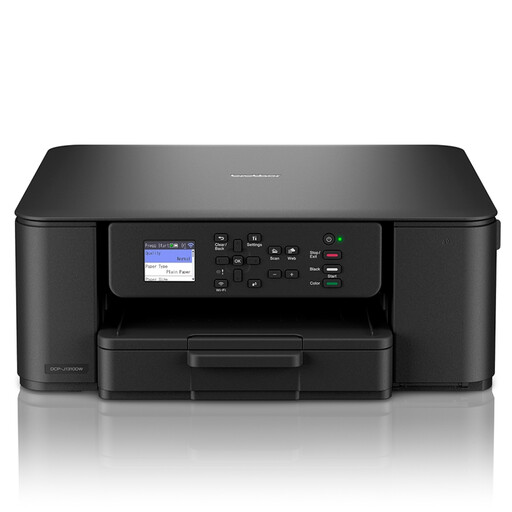
Consider this wireless inkjet model if its printing and multifunction arrangement suits your programme workflow. For repeated colour runs, check its replacement-ink requirements; also confirm duplex compatibility with your paper and whether its document handling meets your scanning needs.
Yes, if the exact printer supports automatic duplex with your interior paper and page size. Canon specifies A4 or Letter plain paper for the MAXIFY GX3050’s automatic duplex function; Epson says borderless printing cannot be combined with automatic two-sided printing. Proof the intended layout before a full run.
Choose cover stock only after checking the printer’s specified media and feed path. Canon lists a rear flat tray for 0.1 mm to 0.7 mm paperboard on the GX3050, while Brother lists 64 to 220 g/m² glossy and inkjet media for the DCP-T780DW’s standard tray. Those feed specifications do not establish automatic duplex support for the stock.
Not for printing programmes alone. An automatic document feeder is worth considering if you regularly scan or copy batches of loose paperwork; a flatbed remains useful for single sheets or delicate originals. Brother specifies both a flatbed and a 20-sheet feeder on the DCP-T780DW.
Check an electrical-equipment collection or take-back route rather than putting the printer in ordinary household waste. GOV.UK describes the UK’s waste electrical and electronic equipment measures as supporting recovery, reuse and recycling; your local authority or retailer can identify an available route.