
24/7 Customer Support

Free returns

Same-day & Next-day Delivery

Quality Guaranteed

Unlock Your Welcome Offers: FREE Delivery | Up to 80% OFF | Free 30-day JoyPlus trial
Download the APP
A Therabody massage gun can be useful for warm-ups, post-workout routines and everyday muscle tension, but the product pages often make similar devices appear interchangeable. In practice, size, amplitude, control options, noise and battery capacity can make a noticeable difference to how often you actually use one.
Before choosing a percussion massage gun, watch for these common buying pitfalls:
Amplitude describes how far the massage shaft moves into the body with each percussion cycle. Models in this selection list amplitudes from 10mm to 12mm. That figure helps indicate the character of the treatment, but it does not determine comfort on its own.
Speed is usually shown as percussions or revolutions per minute. Three speeds are straightforward for beginners, while five settings offer finer control. Start at the lowest setting and move slowly over large muscle groups. Avoid pressing directly on bones, joints, the front of the neck, broken skin or areas that are injured or inflamed.
A standard ball attachment is generally suited to larger muscle areas, while a dampener is designed for gentler contact. A thumb-shaped head may be useful for more targeted pressure, but it requires careful handling.
One-button controls are convenient when you want to start quickly. LCD screens and app connectivity can provide guided routines, breathing exercises or speed control, although these features may be unnecessary if you prefer a simple, manual session.
For commuters, runners and frequent travellers, a portable massage gun should be easy to pack and hold. Battery claims are normally stated as maximum use on a full charge, so actual time may vary with speed and pressure.
Also check the charging connection, included cable, case and cleaning instructions. A rechargeable lithium-ion battery should be kept dry and charged according to the manufacturer’s guidance. For use in the UK, check the listing for appropriate conformity information, responsible-person details, warranty terms and returns support before purchase.
The right muscle recovery massager depends less on the most impressive specification and more on where, when and how you intend to use it. These are our top recommendations by user profile.
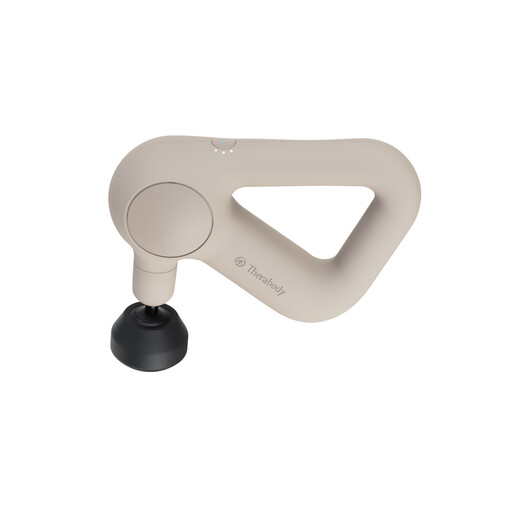
Why This Fits Their Persona: A practical entry point for people who want a simple massage gun for muscle tension at home, after a walk or following a gym session. Its ergonomic triangle grip is also designed to help with positioning.
It does not rely on a large attachment collection: the three included heads cover broad, softer and more targeted contact points. Three speed settings keep operation uncomplicated.
10mm amplitude, three attachments, one-button operation and up to 120 minutes of listed battery use.
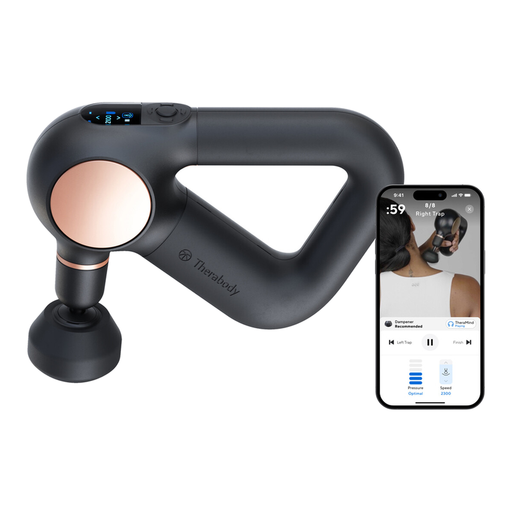
Why This Fits Their Persona: Suitable for users who value guided routines and more detailed control, whether relaxing at home or creating a structured recovery routine after running or strength training.
The integrated screen, five speeds and app connection provide more information than a basic motor-only device. The travel case also helps keep the attachments together.
Five adjustable speeds, four attachments, Bluetooth app connectivity, visual guidance and listed ultra-quiet operation.
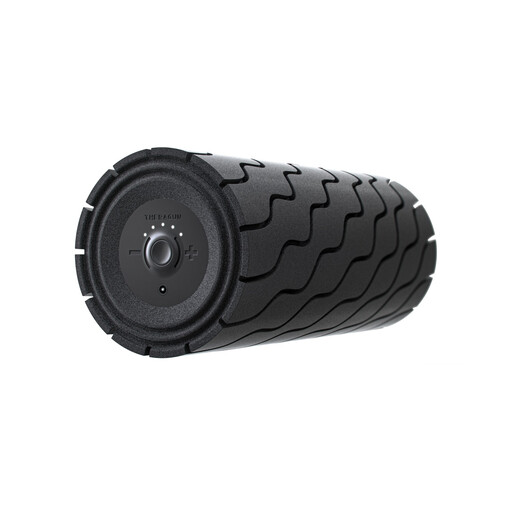
Why This Fits Their Persona: A vibrating foam roller is more appropriate than a handheld gun when you want to work across larger areas such as legs, glutes and back after sport or extended periods of sitting.
It is designed for broad rolling rather than pretending that a small percussion head can cover an entire muscle group efficiently.
Five vibration settings, app connectivity, a firm inner core, travel pouch and up to 180 minutes of listed cordless use.
For frequent flyers, commuters and gym users with limited storage, the Theragun Mini range prioritises portability. The third-generation model lists three attachments, three speeds, app connectivity and up to 180 minutes of battery use, while the second-generation model lists 12mm amplitude, three speeds, USB-C charging and up to 120 minutes.
A compact massage gun is easier to keep in a work bag, but its smaller body may offer less leverage than a full-size model. It is therefore worth considering whether you need targeted treatment on the move or longer sessions across larger muscle groups.
For focused pressure on feet, shoulders or hip flexors, a vibrating muscle roller ball such as the WaveSolo may be more suitable than a conventional gun. Its 8.6cm diameter, 140g weight and three app-controlled vibration settings make it easy to pack, although it should not be used on injured or inflamed areas.
It can form part of a personal relaxation or recovery routine when used according to the instructions. Begin with low intensity, keep the device moving over muscle tissue and avoid bones, joints, injured skin and sensitive areas. Stop if you experience unusual pain, numbness or discomfort. If you have a medical condition or are unsure whether percussion massage is appropriate, seek advice from a qualified healthcare professional.
The listed models provide up to approximately 120 to 180 minutes of use per charge, depending on the product. Actual runtime can change with speed, pressure and frequency of use. Charging before travel and carrying the supplied cable can help prevent interruptions.
Low-noise motors can reduce disturbance, but no powered massager is guaranteed to be silent. Use a lower speed, avoid pressing the device against hard surfaces and follow the manufacturer’s cleaning and operating guidance. Check the product listing for its stated noise technology rather than relying only on phrases such as “whisper quiet”.