
24/7 Customer Support

Free returns

Same-day & Next-day Delivery

Quality Guaranteed

Unlock Your Welcome Offers: FREE Delivery | Up to 80% OFF | Free 30-day JoyPlus trial
Download the APP
A thick bleach toilet cleaner can make routine bathroom cleaning easier, but not every bottle is designed for the same job. Some products focus on disinfection and odour control, while others are formulated to tackle limescale, stains or awkward bathroom surfaces.
The main mistake is choosing based only on a familiar brand, a strong fragrance or a large bottle. Before buying toilet bleach, check the formula, application method and safety information to ensure it suits your household.
A thick consistency helps a product cling to the toilet bowl and under-rim areas. However, cling time is not the same as limescale-removing strength. Chlorine-based bleach is mainly used for whitening, disinfection and odour control. Mineral deposits may require an acid-based toilet bowl cleaner, such as a product containing hydrochloric acid.
Check the ingredients and instructions rather than assuming every bleach toilet cleaner will dissolve hard-water scale.
Some labels state that a product kills a specific percentage of bacteria or viruses under defined conditions. These results depend on factors such as the surface, contact time, concentration and application method.
For example, the Morrisons product information refers to testing against a coronavirus surrogate according to the EN14476 standard, while other product listings state percentage-based germ claims. These should be understood as product-label or manufacturer claims, not a guarantee that every household surface will produce the same result.
A thick toilet bleach may be suitable for toilets, sinks or drains but unsuitable for certain metals, fabrics, painted surfaces or natural stone. Some products can be diluted for general cleaning, but the correct ratio differs between formulas.
Always read the current bottle label. Never mix bleach with toilet cleaner, limescale remover, vinegar, ammonia or any other cleaning product, as dangerous gases may be released.
For a conventional disinfectant bleach, look for sodium hypochlorite in the ingredients list. A thick formula is useful when you want the liquid to remain on the bowl rather than run immediately into the water.
If your priority is limescale, compare this with an acid-based toilet bowl cleaner. Harpic Power Plus Toilet Cleaner Gel, for example, lists hydrochloric acid in its product information. This makes it a different type of cleaner from chlorine-based bathroom bleach and means extra care is required to prevent accidental mixing.
A 750ml bleach bottle is a practical size for regular household cleaning and is available in several fragrance and brand options. Larger bottles, such as 1.25 litres or 2 litres, may suit households with several bathrooms or frequent cleaning routines, provided they can be stored safely.
Multipacks can reduce the need for repeat purchases, but compare the total volume and storage space rather than assuming a bundle offers better value.
A toilet cleaner must remain on the surface for the time stated on the label. Some thick bleach products specify around five minutes, while others advise a longer period. Applying less product or flushing immediately can reduce the intended cleaning action.
Spray products work differently. An upside-down foam bottle can reach under rims and around bathroom fixtures, but it may not offer the same coverage or volume as a thick liquid poured around the bowl.
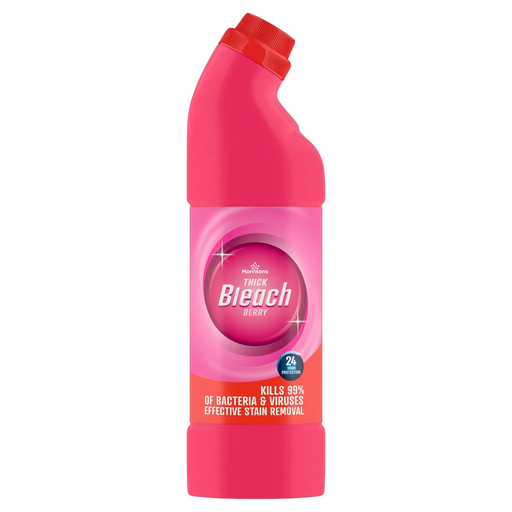
Why This Fits Their Persona: A compact 750ml format suits smaller UK homes, flats and shoppers who want an everyday toilet bleach without storing a large container. The berry fragrance is an option for households that prefer a scented cleaner.
The product information identifies a thick formula, stated stain removal and a five-minute toilet contact time, making the intended use clearer than relying on fragrance or packaging alone.
750ml size; thick bleach format; berry fragrance; sodium hypochlorite listed as the disinfecting ingredient.
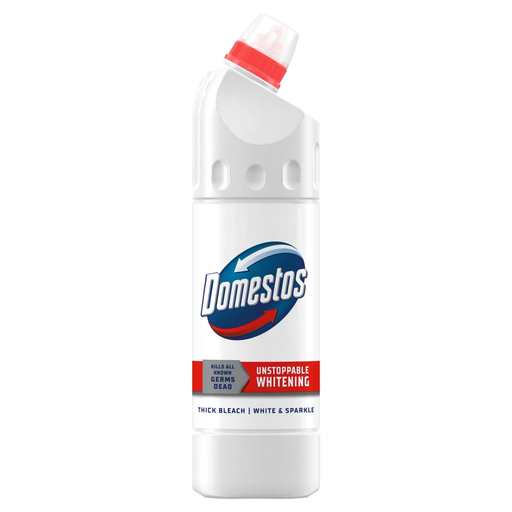
Why This Fits Their Persona: Suitable for shoppers looking for a named thick bleach with toilet, drain and diluted multipurpose applications. Its anti-limescale positioning may appeal to households dealing with recurring deposits.
Its listed directions distinguish neat toilet use from diluted surface cleaning, helping shoppers avoid treating a concentrated bleach as a universal ready-to-use spray.
750ml bottle; thick formula; listed toilet and diluted multipurpose use; White & Sparkle variant.
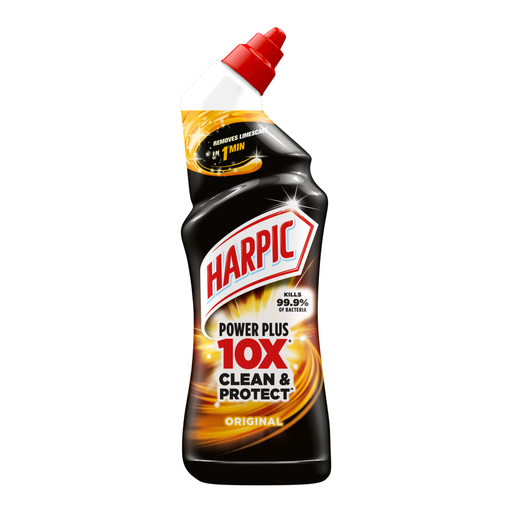
Why This Fits Their Persona: A 1-litre toilet cleaner gel is suited to households prioritising toilet-bowl stains and limescale rather than a general bathroom bleach. It is a distinct option for heavier deposit-focused cleaning.
The listed hydrochloric acid formula makes its limescale-focused purpose clearer. It should be kept completely separate from bleach and other cleaning products.
1-litre size; gel application; acid-based formula listed for limescale-focused toilet cleaning; fresh original fragrance.
We have compiled a complete, real-time list of products that fully satisfy these strict selection criteria and UK safety regulations.
It can help with hygiene, odours and some staining, but thick toilet bleach is not automatically a limescale remover. For significant mineral deposits, choose a suitable limescale-focused toilet cleaner and follow its instructions. Never use it at the same time as bleach.
Contact time varies by product. Some Morrisons thick bleach instructions state five minutes, while other toilet cleaners specify longer periods. Follow the instructions on the exact bottle you buy rather than using a general rule.
A larger bottle or multipack may reduce the cost per millilitre, but only if the product is used regularly and stored safely. Compare total volume, recommended dosage and whether the formula is suitable for your cleaning routine before choosing a 1.25-litre, 2-litre or multipack option.