Thick-cut loaf users
If you regularly bring thick farmhouse or sourdough slices, check both slot width and length against the bread you use. A wide slot alone may not accommodate an unusually long slice.


Start by checking whether the slots will fit the office’s usual thick-cut bread; unusually long slices need a length check as well. A four-slice toaster is a starting point when colleagues often toast during the same break, while six slices are worth considering if four repeatedly leave a queue. Browning controls, cleaning arrangements and suitability for the workplace also matter in shared use.
If you regularly bring thick farmhouse or sourdough slices, check both slot width and length against the bread you use. A wide slot alone may not accommodate an unusually long slice.
When several colleagues toast within a short break, the number of slices a toaster can hold at once becomes more useful than a compact footprint.
If people prefer different toast shades, adjustable browning matters. Separate controls can also be useful when two pairs of slots are in use at the same time.
Check the fit of the bread first, then choose capacity for the busiest shared break rather than for the number of people in the office.
| Concern | What to check | Who this matters to |
|---|---|---|
| Bread fit | Look for a stated wide or variable-width slot; check slot length too for oversized slices. | If I bring thick-cut or long artisan bread, I need it to fit without forcing it into the slots. Around 33% of consumers put bread fit first. |
| Break-time capacity | Compare two-, four- and six-slice capacity with the number of slices needed at once; for a larger model, check whether fewer slots can be selected. | When colleagues want toast during the same short break, I would rather avoid repeated batches. Roughly 27% of consumers prioritise capacity for that reason. |
| Browning control | Check for adjustable browning and, if two pairs will be used together, separate controls. | Different colleagues want different toast shades, so I need settings they can adjust without relying on one shared preference. Browning flexibility comes first for around 20% of consumers. |
| Shared upkeep | Check that crumbs can be removed routinely, and agree on safe siting, use and maintenance before installation. | In a multi-user kitchenette, I need cleaning and electrical-safety checks to be manageable over time. About 20% of consumers place shared upkeep first. |
Four-slice capacity tells you how many slices can toast at once, not how thick or long those slices can be.
Check the stated slot width or variable-width design, and measure the office’s usual loaf against the slot length if slices are oversized.
More slots help only when simultaneous demand calls for them. A larger toaster also needs a suitable place on the worktop.
Look at what happens during the busiest breaks. Consider six slices if a four-slice toaster would repeatedly leave colleagues waiting, and check whether the larger model can run fewer slots for a small batch.
The Health and Safety Executive says electrical equipment must be maintained to prevent danger, with checks and testing suited to the equipment and its use.
Have the responsible person assess the toaster’s location, electrical supply and condition, then establish appropriate user checks, cleaning rules and maintenance.
Breville UK’s browning guidance says moist or thick slices can require a higher setting than other bread.
Choose adjustable controls and start cautiously when the bread changes, then adjust the setting to suit that loaf.
The Buckingham 20750 is a relevant four-slice example for shared use with thick-cut bread.
The cited Lite and Classic models offer different routes for thick bread, long slices and busy breaks.
The cited Obliq VTT973 is a four-slice example for people who want flexible browning and a way to inspect toast mid-cycle.
These two- and four-slice toasters are choices to consider for thick-cut bread. Match the slot dimensions to the office’s usual loaf, then choose capacity for the busiest break; the two-slice option means more batches when several colleagues want toast.
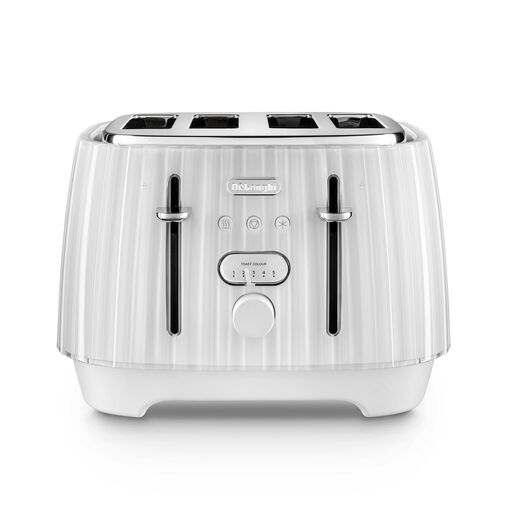 No image available
Consider this four-slice model when several colleagues need toast during the same break; confirm that its slots fit the office’s usual thick-cut loaf.
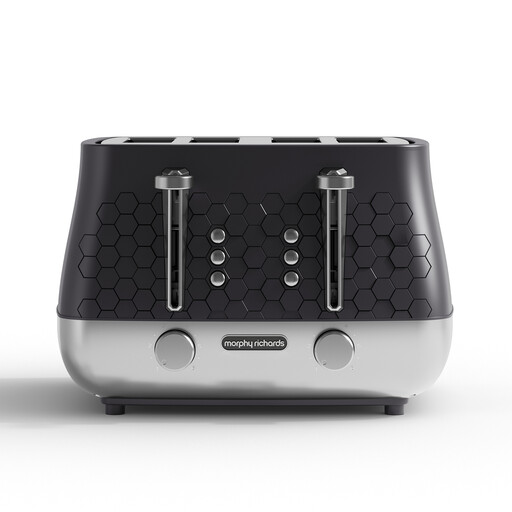 No image available
The four-slice capacity and wide-slot description make this one to check for shared breaks with thick-cut bread. Confirm the width and length against the slices colleagues normally bring.
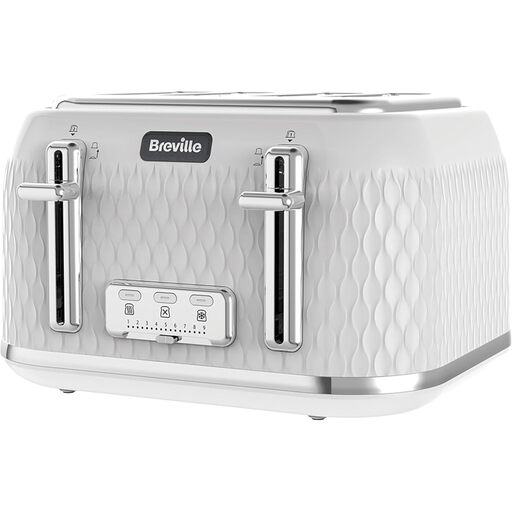 No image available
Consider the wide slots for thick-cut slices and the high-lift feature if colleagues also toast smaller items. Check the slot dimensions if the usual loaf is especially thick or long.
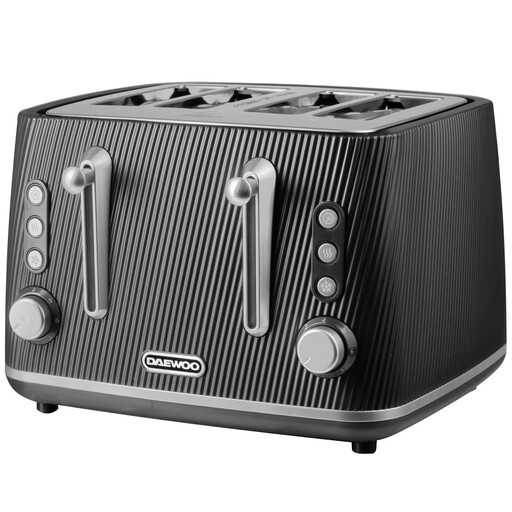 No image available
The four-slice layout suits breaks when more than one person needs toast. Its wide-slot description is relevant to thick bread, but check the usual loaf against the slot dimensions before choosing it.
 No image available
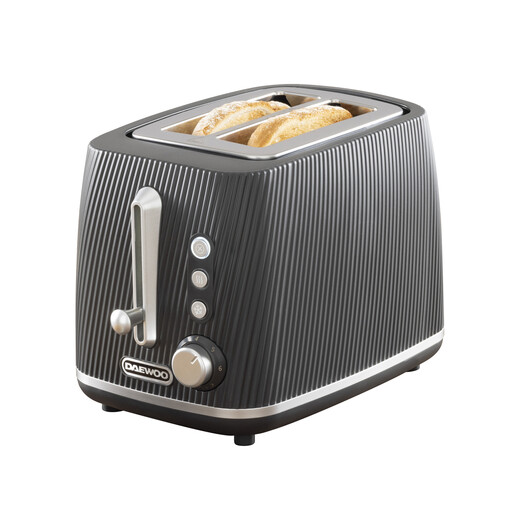
This two-slice option is worth considering when only small batches are needed, provided its wide slots fit the usual thick-cut bread. Several colleagues toasting together would need more batches than with a four-slice model.
Four slices are a starting point if two or more colleagues regularly toast during the same break. If a four-slice unit would repeatedly leave a queue, consider a larger model; Dualit says its cited six-slice Classic can heat two, four or all six slots.
Not necessarily: width addresses thickness, but an oversized slice may also need a longer slot. Check both measurements against the loaf; Dualit specifies 260 mm-long, 36 mm-wide slots for its Long Slot Lite model.
A fixed annual portable appliance testing interval is not the requirement described by the Health and Safety Executive. Employers must maintain electrical equipment to prevent danger; the appropriate type and frequency of checks, inspection and testing depend on the equipment and its use.
Unplug the toaster before attempting to remove trapped toast, as Electrical Safety First advises. Make that step part of the shared kitchenette rules, and do not put metal cutlery inside the toaster.