
24/7 Customer Support

Free returns

Same-day & Next-day Delivery

Quality Guaranteed

Unlock Your Welcome Offers: FREE Delivery | Up to 80% OFF | Free 30-day JoyPlus trial
Download the APP
A reliable exercise mat is the foundation of any good floor-based workout. Whether you are flowing through a yoga sequence, holding a plank or stretching after a run, the last thing you want is a mat that slips or fails to protect your joints. The discomfort of a thin, unstable surface can be distracting and may even lead to injury.
This guide is designed to help you navigate the key features of a quality mat. We will focus on what truly matters—thickness, material and grip—to help you find a thick non-slip yoga mat that supports your fitness goals, from gentle stretching to more demanding routines.
Choosing the right mat can significantly enhance your workout experience. Here are a few practical points to consider before making a decision.
The thickness of a mat directly impacts comfort and stability. A cushioned workout mat is essential for protecting your knees, spine and wrists, particularly during floor exercises or Pilates.
The material determines the mat's grip, durability and environmental impact. Many modern mats are made from Thermoplastic Elastomers (TPE).
A TPE yoga mat is often a preferred choice over traditional PVC mats. TPE is a more eco-friendly yoga mat material, generally free from latex and other potential irritants. Crucially, TPE mats often feature a closed-cell surface, which resists moisture and sweat, and are designed with textured patterns to provide a secure, non-slip grip on various floor types.
Consider where you will be using your mat. If you plan to take it to a studio or the gym, portability is key. A lightweight mat that rolls up tightly, especially a yoga mat with carry strap, makes transport effortless. For a dedicated fitness mat for home, you might prioritise size and cushioning over weight.
Here are a few recommendations that balance comfort, stability and practicality for a range of activities.
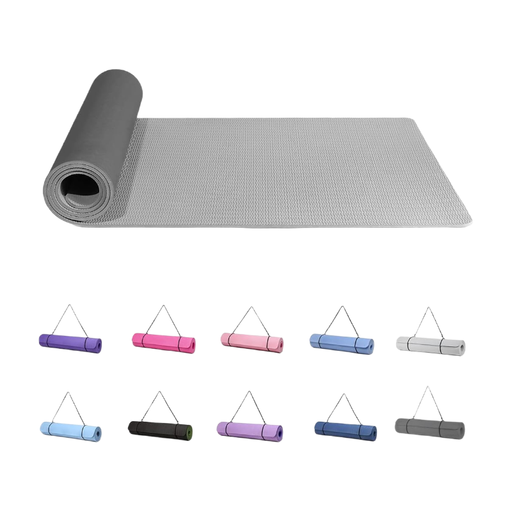
Why It Stands Out: This mat strikes an excellent balance between cushioning and stability. At 6mm, it’s thick enough to provide comfort but still allows you to feel connected to the floor during balancing poses. The dual-textured surface, with anti-slip lines and wave patterns, is designed to offer reliable traction.
Pros:
Who is it for? This mat is well-suited for yoga practitioners who need a versatile mat for both dynamic flows and floor work, as well as anyone seeking a lightweight option for carrying to and from classes.
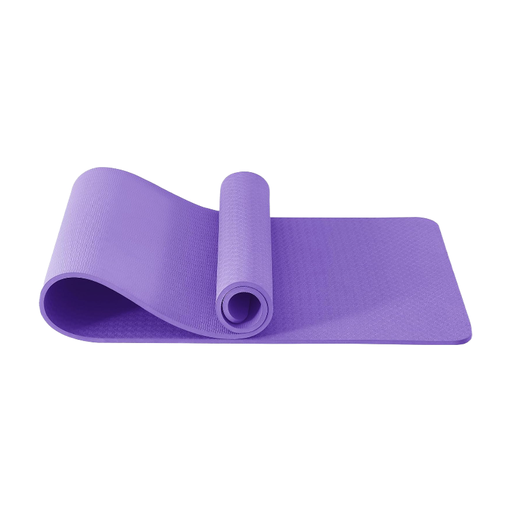
Why It Stands Out: With a generous 10mm thickness, this mat prioritises joint protection. It’s crafted from high-density TPE, which provides excellent rebound and resists compression. This makes it a superb Pilates mat or cushioned surface for any floor-based fitness routine.
Pros:
Who is it for? Ideal for individuals who prioritise comfort and joint support, especially during Pilates, stretching or restorative yoga. It’s also a great choice for beginners who may need extra padding.
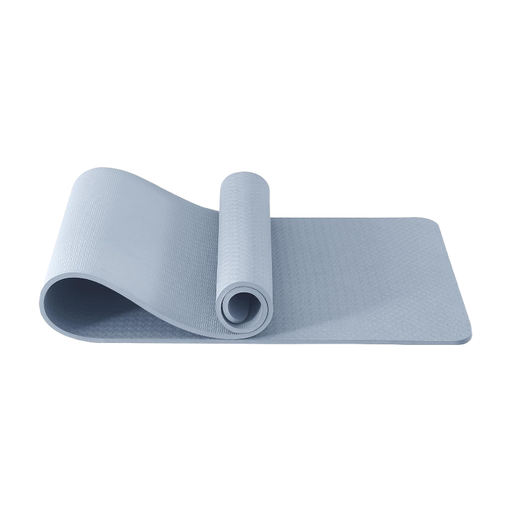
Why It Stands Out: This mat offers the same substantial 10mm cushioning as the purple model but in a different two-tone design. Its high-density TPE construction is designed for durability and comfort, while the water- and sweat-resistant surface makes it easy to clean after intense sessions.
Pros:
Who is it for? A fantastic all-purpose fitness mat for home use. It’s perfect for anyone engaging in a variety of workouts, from yoga and meditation to general stretching and bodyweight exercises.
If our recommendations don't quite match what you're looking for, or if you're interested in a different colour or style, we have a wider selection. Explore our full range of mats to find the perfect fit for your practice.
Discover more in our black gym mats collection.
The ideal thickness depends on your primary activity and personal preference.
Yes, a TPE yoga mat is an excellent choice for many people. It is a more eco-friendly yoga mat compared to traditional PVC, as it is recyclable and biodegradable. TPE mats are also lightweight, typically offer good non-slip properties and are made without the harsh chemicals sometimes found in other materials.
To maintain your mat's grip and hygiene, regular cleaning is recommended. For most TPE mats, simply wipe the surface with a damp cloth and a small amount of mild soap and water. Afterwards, wipe it down with a clean, damp cloth to remove any soap residue and allow it to air dry completely before rolling it up for storage. Avoid machine washing, as this can damage the material.