
24/7 Customer Support

Free returns

Same-day & Next-day Delivery

Quality Guaranteed

Unlock Your Welcome Offers: FREE Delivery | Up to 80% OFF | Free 30-day JoyPlus trial
Download the APP
Finding a reliable exercise mat can feel like a workout in itself. You are looking for something comfortable and safe—a thick non-slip yoga mat that supports your joints and stays put during your routine. Yet, the market is filled with options that often fail to deliver on their promises, leading to wasted money and a frustrating experience.
Before you make a decision, it is important to be aware of a few common purchasing pitfalls. Many mats look the part but hide flaws that only become apparent after a few uses.
By understanding these key points, you can better analyse your options and choose a fitness mat that truly meets your needs for safety, comfort and longevity.
To avoid the common pitfalls, focus on a few core specifications that define a quality mat. These objective factors are far more important than marketing buzzwords.
The material of your exercise mat determines its grip, durability, cushioning and weight. While many options exist, TPE (Thermoplastic Elastomers) has become a popular choice for good reason.
The ideal thickness depends on your primary activity.
A quality workout mat for home should feature a double-sided non-slip texture. This design ensures the mat grips the floor securely while your hands and feet stay planted on top. Look for distinct patterns, such as waves on one side and straight lines on the other, as this indicates a design focused on providing reliable traction from two different angles. This is a non-negotiable feature for a safe practice, whether you are a man or a woman, a beginner or an intermediate enthusiast.
Based on these practical criteria, we have identified several mats that align with the needs of different UK users. Instead of a one-size-fits-all approach, we have matched them to specific profiles.
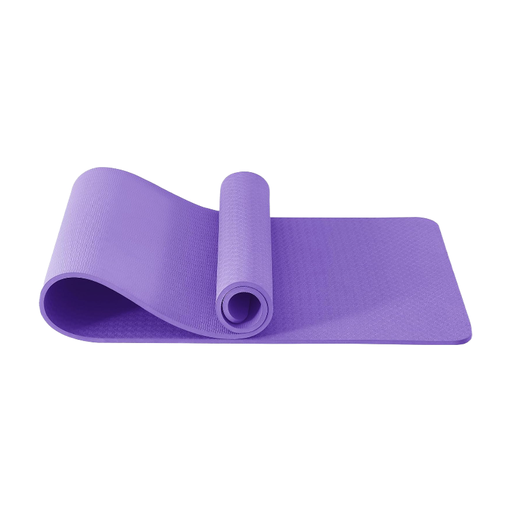
Why This Fits Their Persona: Ideal for those who primarily work out at home and prioritise joint protection. The generous 10mm thickness is perfect for Pilates, stretching and general fitness routines on hard floors, providing ample cushioning for the spine and knees.
It directly counters the "thickness vs. density" trap. This mat's 10mm thickness is paired with high-density TPE, ensuring it provides support and stability, not just a spongy feel.
Excellent cushioning for floor exercises. The double-sided non-slip texture provides a secure foundation for a versatile gymnastics mat or workout surface.
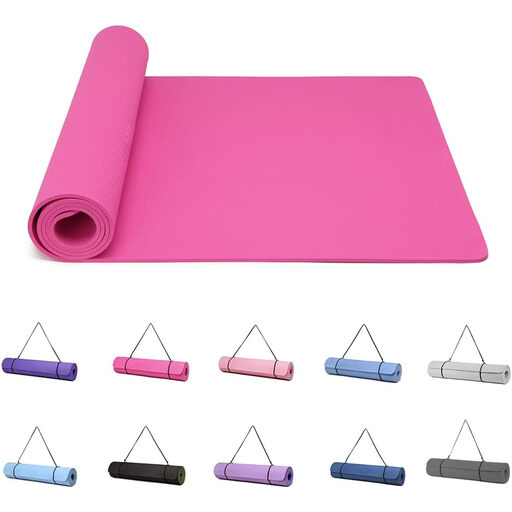
Why This Fits Their Persona: Perfect for those who attend classes at a gym or studio. At 850 grams, this 6mm mat is lightweight and easy to transport with the included yoga mat with strap, without sacrificing the essential qualities of a good Pilates mat.
This mat avoids the "slippery when dry" illusion. Its dual-textured TPE surface with distinct line and wave patterns is specifically designed to maintain grip, providing stability during dynamic movements.
Excellent balance of portability and stability. The 6mm profile offers better ground-feel for balance poses, while the TPE material still provides necessary cushioning.
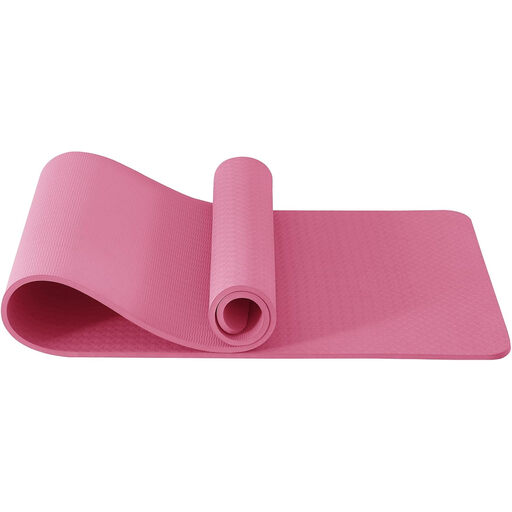
Why This Fits Their Persona: This user needs a durable, versatile mat for a variety of workouts, from high-impact bodyweight exercises to deep stretching. This robust 10mm TPE yoga mat offers the durability and superior cushioning required for a demanding routine.
It avoids the "misleading materials" trap. Made from high-density, compression-resistant TPE, it is built for longevity and performance, unlike cheaper PVC mats that degrade quickly with heavy use.
Highly versatile and durable. Its water and sweat-resistant surface makes it suitable for intense workouts, and the quick rebound TPE material provides consistent support.
We have compiled a complete, real-time list of products that fully satisfy these strict selection criteria and UK safety regulations.
Maintaining a TPE yoga mat is straightforward. After your workout, simply wipe it down with a damp cloth. For a deeper clean, you can use a mild soap and water solution. It is crucial to let the mat air dry completely before rolling it up for storage. Avoid using harsh chemical cleaners and never put your mat in a washing machine, as this can damage the material.
The lifespan of your mat depends on frequency of use and proper care. A high-quality TPE mat, used several times a week and cleaned regularly, can be expected to last for several years. Cheaper materials like PVC or low-density NBR tend to show wear much faster, often compressing, cracking or losing their grip within a year of consistent use.
This is a common concern. While a 10mm yoga mat offers excellent cushioning, it can make balancing poses slightly more challenging for some beginners compared to a thinner mat. However, if the mat is made from high-density TPE, it will provide a much more stable surface than a low-density mat of the same thickness. For those who prioritise joint protection or do a mix of floor work and standing poses, a high-density 10mm mat is often a very effective compromise between comfort and stability.